Showing posts with label increase sales. Show all posts

Tuesday, 5 April 2016

How to Turn a Marketing Faux Pas into a New Customer

No matter how hard we try, we will never be perfect. This is true for businesses, too, especially in their marketing efforts. No matter how hard they try to create the right message for an audience, mistakes happen. However, those mess-ups don’t have to be fatal. It is possible to turn a marketing faux pas, such as typos, product issues, and poor messaging, into genuine opportunities to connect with your target audience.
Your ideal customers are looking for companies that are genuine and quick to fix mistakes. Consumers are savvy: Trying to cover up a mistake and hoping it goes away can make it much worse. Instead, use the opportunity to gain customer trust. This can resolve the situation with a happier ending: a sale or loyal advocate for your brand.
Below are some of the most common marketing faux pas and how companies can not only work through them, but gain respect along the way.

Order or Customer Information Errors

Two of the most common mistakes in marketing are errors and typos.. Examples include addressing a customer by the wrong name in an email blast, or customers seeing the placeholder of [FIRSTNAME] due to an autofill glitch. Even though customers know you send emails out to many people, they may take it personally when there are errors in communication.
If a customer emails you with an error concerning their account, whether it’s their name or other personal information, it’s important to communicate how badly the company feels for this error. A touch of human humility goes a long way to remedy this mistake.
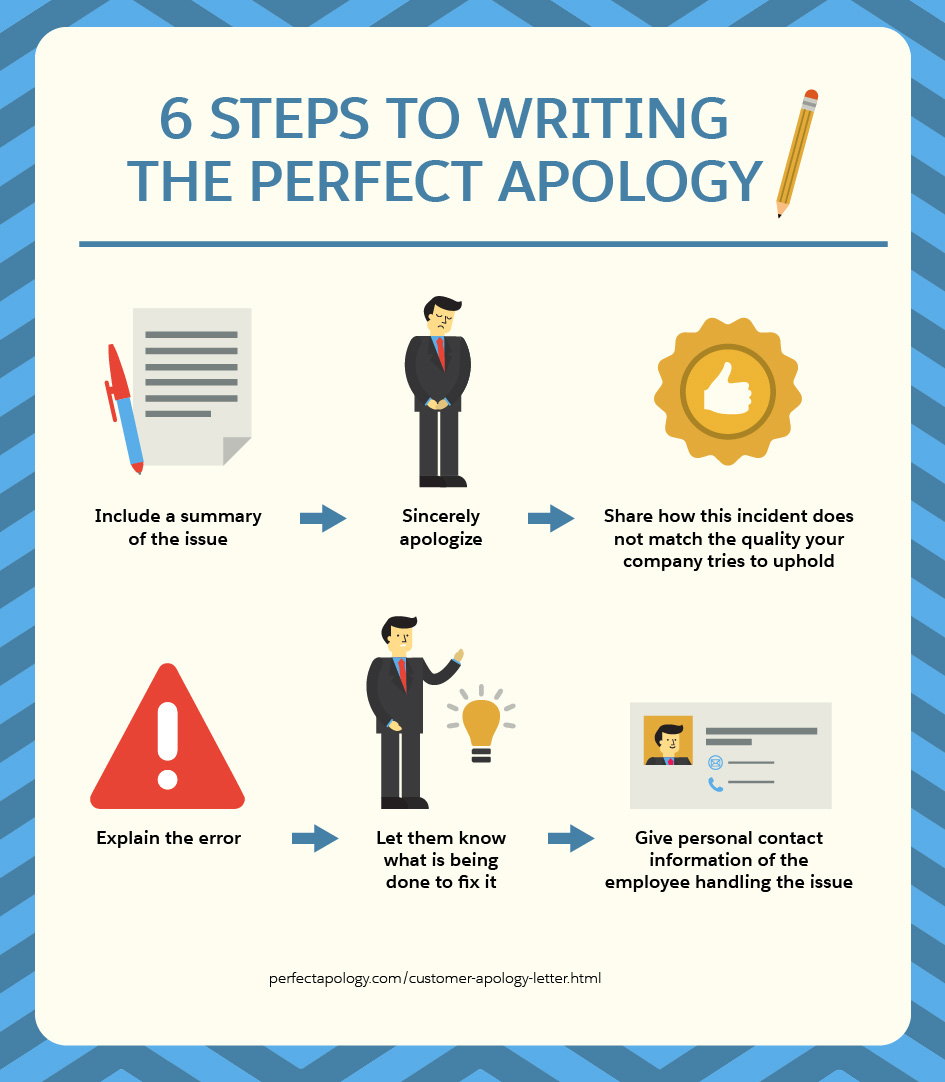
According to PerfectApology.com, the right customer apology letter for a mistake needs to include:
  • A summary of the issue
  • A sincere apology and statement of quality that the company tries to uphold
  • An explanation of the error
  • What is being done to fix it
  • Personal contact information of the employee handling the issue in case the customer has more questions they want answered directly
While the length of your apology will depend on the error, it’s important that it gets the point across succinctly. Make sure to send it as soon as possible. Customers will appreciate your speedy reply and apology.
In order to remedy the problem, do what it takes to make it right. This might be letting the customer keep the wrong product, or giving them an exclusive coupon code or gift card for causing an inconvenience.  
Going above just apologizing is what makes the interaction memorable for the customer. Any company can say, “I’m sorry.” It takes a great company to say, “I’m sorry, and here’s what I’m doing to fix it.”

Insensitive Messaging

In the fire hydrant of content and offers on the Internet, there are more chances than ever to accidentally send out a marketing message or image that may be taken in a way that wasn’t intended. A simple social media post can go wrong if there aren’t enough checks and balances in place to catch sensitive issues, or if you don’t have someone to consult to make sure the message can’t be construed as something beyond the desired intent.
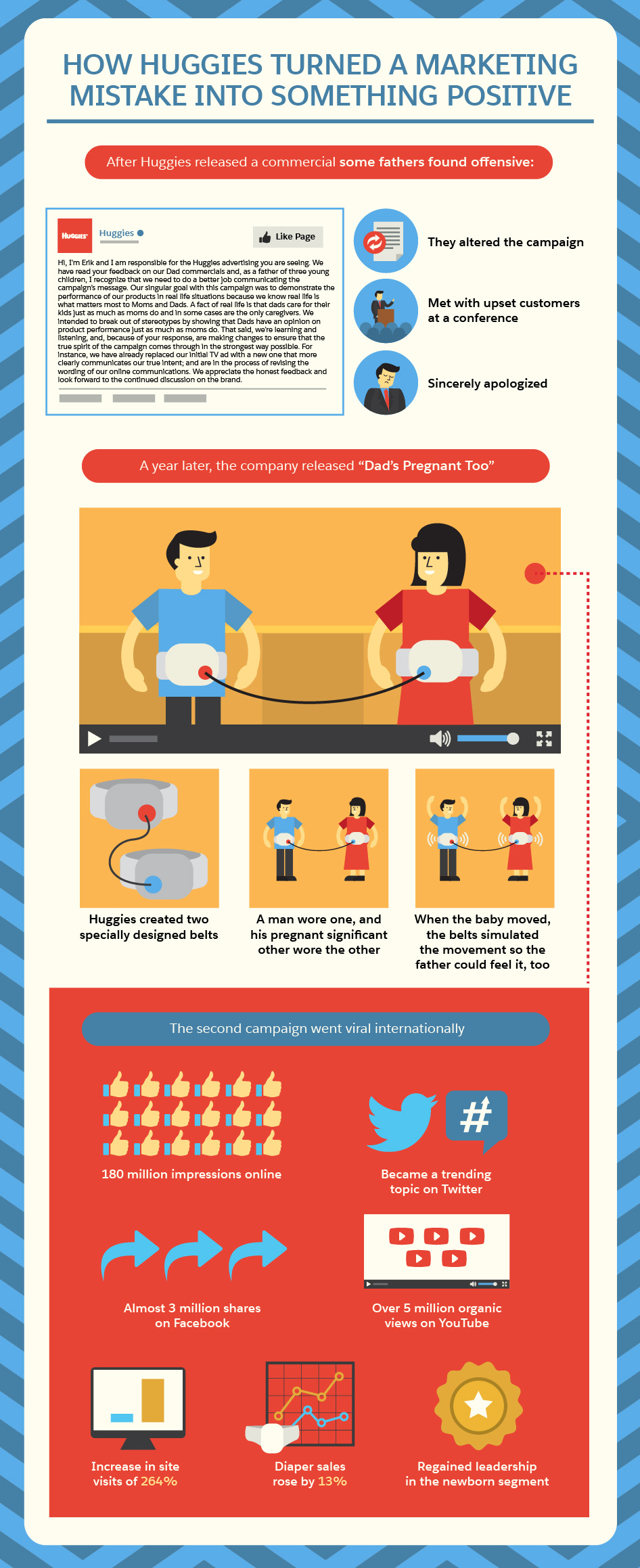
One example of a company that experienced this is Huggies, who, despite the issue, rebounded and found success. In 2012 it experienced a backlash after releasing a commercial called “Dad Test,” which portrayed fathers in what was perceived as a negative light. After consumer complaints, Huggies altered the campaign, met with angry fathers at the Dad 2.0 Summit, and issued an apology on its Facebook page.
A year later, Huggies made international news after its “Dad’s Pregnant Too” campaign, which featured men and their pregnant significant others wearing specially designed belts that let them feel when their baby moved. It was estimated that the campaign reached 180 million online readers. It became a trending topic on Twitter, got almost 3 million shares on Facebook, and had over 5 million organic views on YouTube. Huggies saw an increase in site visits of 264 per cent. Diaper sales grew by 13 per cent and the company “regained leadership in the newborn segment.” Huggies’ new point of view? “Nothing compares to the feeling of being a father.”
No matter the faux pas, it’s important to take customer’s concerns into serious consideration. Even if it wasn’t the company’s intention to insult or hurt feelings, what matters most is how the customers feel.
In order to fix insensitive messaging, remove the product or advertisement. Many companies send a donation to a related organization. However, to ensure the donation wasn’t made just to quiet complaints, a sincere, heartfelt apology for the mistake on the company’s blog and/or social media can show customers that the company has learned from their mistake. Outlining steps or processes to ensure that it won’t happen again can also help restore customer faith in a product.

Groan-Worthy or Cheesy Marketing

It can happen to any company: marketing that crosses the line into cheesy. Or a tagline that is meant to be serious isn’t taken that way. While this isn’t a mistake as much as an unfortunate circumstance, it provides the opportunity to take something that was misconstrued, and has grown into something bigger or different than you expected, and make it work in your marketing mix.
For instance, something as nuanced as the way a person says a phrase in your commercial can catch on and turn into an internet wildfire. MailChimp experienced just that with its famous ad that plays before every Serial podcast episode. The ad was meant to poke fun at the way people pronounce MailChimp’s name, but neither theSerial producers nor MailChimp were expecting so many people to embrace it as a part of pop culture.
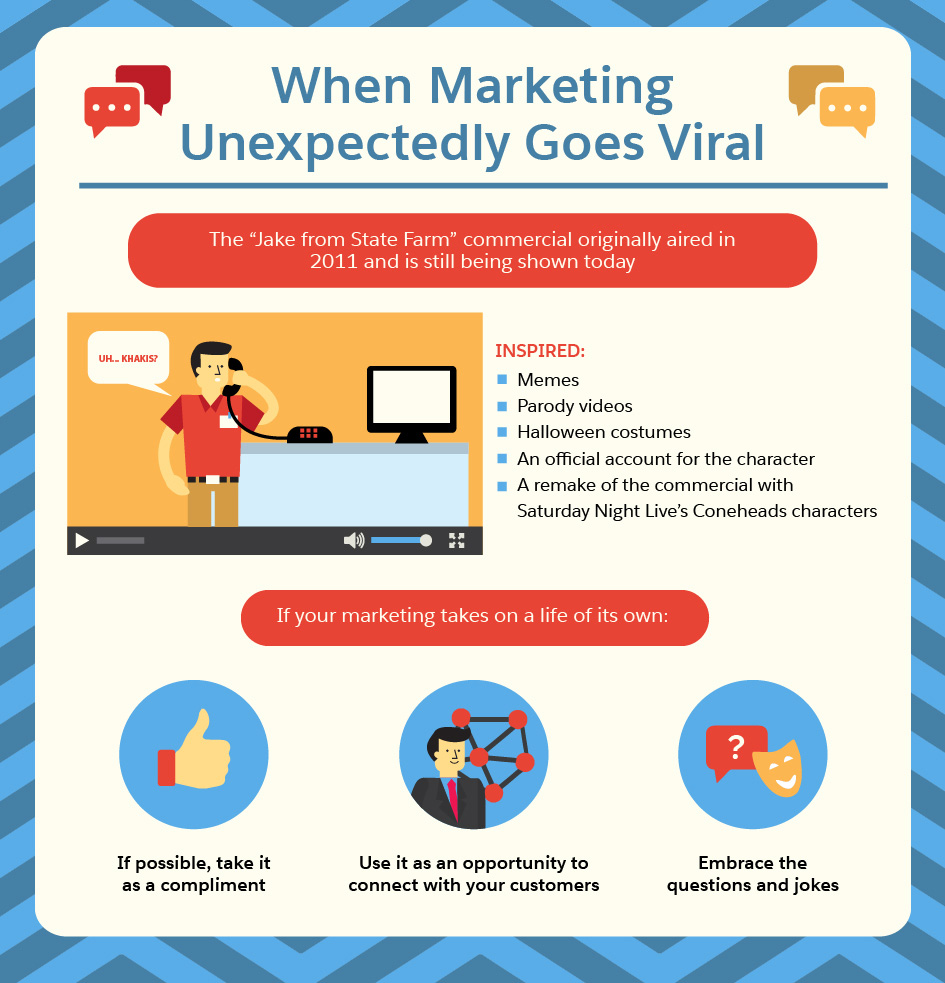
If someone takes your advertising and turns it into a joke or meme, if possible, it’s best to take it as a compliment, not an insult. The companies that are best at connecting with their customers embrace how their user base feels about their marketing. In MailChimp’s case, not only did the company keep the ad unchanged for the second season of Serial, they also created several memes on Instagram and other social media profiles that embraced users’ questions and jokes about the ad. This is a good example of a way to handle a critique of your company’s marketing or advertising campaigns.
State Farm’s “Jake From State Farm” commercial has also become something more than its marketing department could ever have expected. It has turned into a pop culture phenomenon, with memes and parodies on platforms like FunnyorDie, YouTube, and Vine. While the commercial was obviously intended to be funny, State Farm has embraced the audience making it their own through parodies. It even maintains activeTwitter and Instagram accounts for “Jake From State Farm” that uses the same kind of voice and humor that people have taken from the commercial. While State Farm may have not anticipated becoming the object of jokes and parodies, the fact that they weren’t defensive, and instead embraced how their customers took the message, made all the difference.
Accepting and going with your customers’ feelings about your products, marketing, and advertising is crucial to fixing any faux pas that might happen. Even if the message wasn’t created to offend, or the typo just wasn’t caught, being honest and upfront, and owning the situation can turn even the most critical consumer into a long-term, loyal customer.
To view the original article Click Here

Sunday, 27 March 2016

3 Surefire Ways to Make Money From Your Email List

 3 Surefire Ways to Make Money With Your Email List - Blog Template
You may have heard the saying “the money is in the list”. By “list” I mean e-mail list. Depending on the resource, the average return on investment (ROI) for all email marketing is north of 3,800% . Of the eight major types used by marketers, email marketing is, by far, the best performing – this is in spite of the world’s 4.3 BILLION email accounts being blasted with 143 BILLION emails a day. With such huge numbers it appears that all a savvy business owner needs to do is get a subscriber on their list and stand by while the money rolls in! Unfortunately, that is not usually the case. Most new email marketers have just the opposite problem. They say “I have a new email list subscriber…now what?” For those of you that could use a little help, we are going to tell you the top 3 ways we made money from our list last year.
Email ROI
First, a quick back story.
About 15 months ago we took a hard look at our online marketing model. We had almost half a million followers and fans on Facebook and Twitter and several hundreds of thousand more between the other social media sites. The issue was we weren’t able to turn those community members into paying customers. That’s a real problem if you are in a “for-profit” business and have things like payroll and rent due.
Then we read several of the same type of stunning statistics I just told you about, including the most stunning one of all…

If that were true then we just needed to add 83,333 new subscribers to our email list and that would result in an extra $1 million a year in revenue.
So, we did exactly that! In fact, we added 84,300 subscribers to our email list and pushed our count to 117,779 total. We also added MORE than $1 million a year in revenue to our business.
Email Subscriber List
There is one HUGE caveat, though, that nobody tell you about.
You actually need to have a strategy to make money from the people on your list after getting them there.
Just getting them to your list is worth absolutely NOTHING. We didn’t figure this little gem out for about the first 3 months and 25,000 email list subscribers from which we made roughly ZERO additional dollars.
So, instead of just letting you struggle with how you do it, we thought we would just tell you the top 3 ways we made money from our list last year.

3 Surefire Ways to Make Money With Your Email List

#1 – Sell them more of what you know they already like.

Our average email list subscriber gets 3-5 emails from us a week. Usually, only 1 of those emails will have anything to do with buying a product or service from us. When we do ask people to spend money with us it is usually just the people who have already expressed an interest in the product or service we are asking them to buy.
Think about that for a second and make sure you understand what I am saying. We do NOT email all of our email list subscribers every offer we have for every product we sell every time we sell it – just the ones that have already told us they are interested in what we are selling.
How do we know they are interested? Lots of ways. Maybe they opted in for one of our guides, or opened an email and clicked a link or attended a webinar we did on the subject. We recently released our new Facebook Ads Success Blueprint  course and did very well selling to the people on our list who had opted in for our Facebook Ads Jumpstart Guide or purchased our Facebook Ads Launch Pad mini-course.

#2 – Invite list subscribers to webinars. 

Last week we did a webinar called “7 Ingredients for Creating GREAT Facebook Ads”. We had 2,947 people register for the webinar of which 80%+ were email list subscribers. We knew one thing about the throngs of people who made the event live or watched the replay in the 2 days after, they were interested in learning how to do Facebook Ads. As mentioned above, it was no coincidence that we had recently released our new full Facebook Ads course. To the people who attended, offering them a chanced to buy our new course wasn’t a sales pitch, just an opportunity to learn more and better apply what they had attended the webinar to find out more about in the first place.
We used this list/webinar invitation strategy to fill over 12,000 FREE webinar seats last year and sell multiple six-figures in products.

#3 – Get repeat buyers 

Around 12% of the 84,300 new email list subscribers bought one of our upsells immediately after joining our list, usually from one of our ebooks, guides or checklists. That is a little over 10,000 new paying customers. Almost 21% of those 10,000 new buyers immediately bough the second upsell. That’s 2,000+ multiple product buyers! How many of those multiple product buyers went on to buy other products we were offering?
A lot, a whole lot!
The biggest lesson we have learned from our incredible email marketing journey this last year is this.

The easiest dollar to get them to spend in the second and every dollar after that.
THAT, in my opinion is the real magic with email marketing. If you do it right (lead with value, don’t spam the snot out of everybody and create quality products that you stand behind), the people who know, like and trust you – your email subscribers will reward you handsomely for your hard work.
Those are the top 3 ways we made money from our email list last year. What do you think? Is it time for you to jump into the email marketing world? For those of you already in it, how did you make most of your money from your list last year. We would love to hear your comments below.
To view the original article Click Here

Friday, 5 February 2016

Measuring Content Performance for Higher Sales Conversions

In the Mad Men era, marketing was considered a cost center where “creative types” made glorious advertising campaigns but had very little ability to measure their impact on sales. Now, thanks to the Internet, marketing automation, and marketing analytics solutions, we can measure nearly everything in marketing, tracing our impact all the way down to influence on revenue and ROI. This ability to measure marketing’s performance and receive instant feedback on what works has revolutionized marketing.
Analytics are the key to performance optimization. Real-time feedback on what is working empowers us to improve message quality, creative, channel and offers to quickly improve the outcome. Without accurate performance analytics, we’d be back in the Mad Men era of creating content and launching campaigns into a black hole with no idea if they worked.
And yet, that is exactly the scenario in which most organizations find themselves today when it comes to content—no ability to measure whether their content has any impact at all.
Most marketers and sales enablement professionals (research shows greater than 85%) have no ability to objectively measure whether sales reps are using their content, how often it is being used, how effectively the content engages the customer, which customers, and whether the content has any impact on sales. Without this feedback loop, these content publishers lack the technology and processes to systematically optimize content.
Why is it, that a practice we consider de rigueur in top-of-the-funnel (ToFu) lead generation marketing has not been adopted in bottom-of-the-funnel (BoFu) analysis?
Well, ‘best-in-class’ organizations have figured out that closed-loop sales enablement is the answer and are seeing incredible gains from it including 3x higher revenue growth and 50% greater sales quota attainment (compared to ‘average’ companies). By closing the loop on the ‘content value chain’ between marketing, sales and the customer, organizations have created a systematic process to improving customer engagement, communication and sales’ ability to sell.

9 Metrics for Measuring Sales Content Performance

Content Management

Content Coverage of Buyer’s Journey – To ensure that the right content is available for each of your sales teams, map content to the buyer’s journey in each of your sales segments (could be product line, geo, industry segment, or whatever else makes sense for your business.)
For instance, if you have targeted 4 stages of the buyer’s journey with your sales content (interest, education, solution assessment, decision validation) and you have 3 product lines, you want to ensure you have the right content for each stage for each product line—12 squares in the matrix. Similarly, if you have teams in Brazil, Germany, Japan and the U.S., you’ll have 16 buyer’s journey needs and 16 matrix cells to consider.
Content Freshness – Ensure that content does not get stale and out of date by tracking content age and version dates.
One of the primary activities of content managers is to keep track of the content in the system. And one of their primary checks is whether the sales teams are using outdated content.
A simple report to watch for outdated or stagnating content is to run a content aging report based on last versioned date. Content that hasn’t been updated in a long time, or before the last messaging or branding refresh should be reviewed.

Usage

Content Awareness – Are sales teams aware of new content? Can they find it? Are they adopting updated versions?
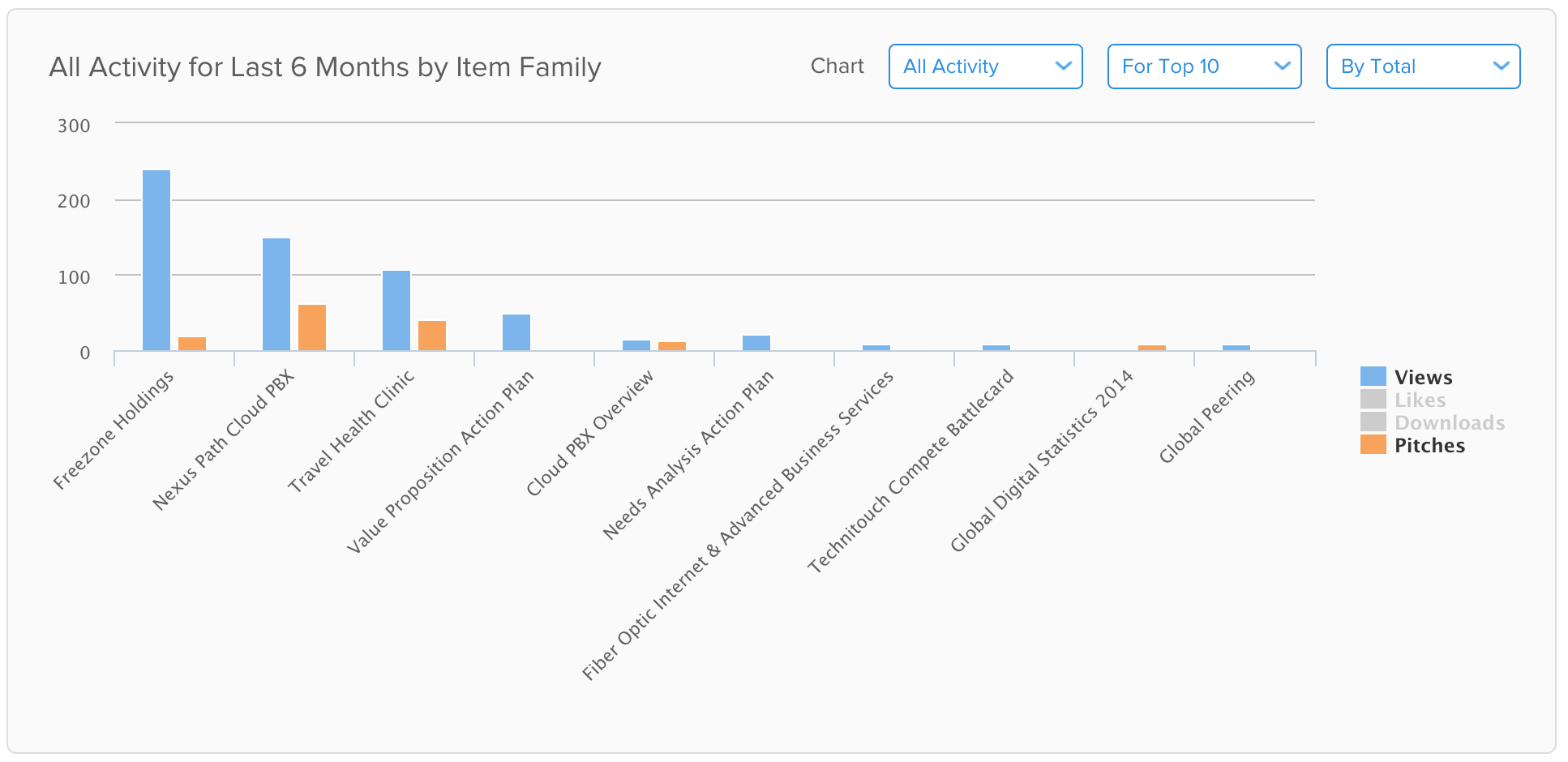
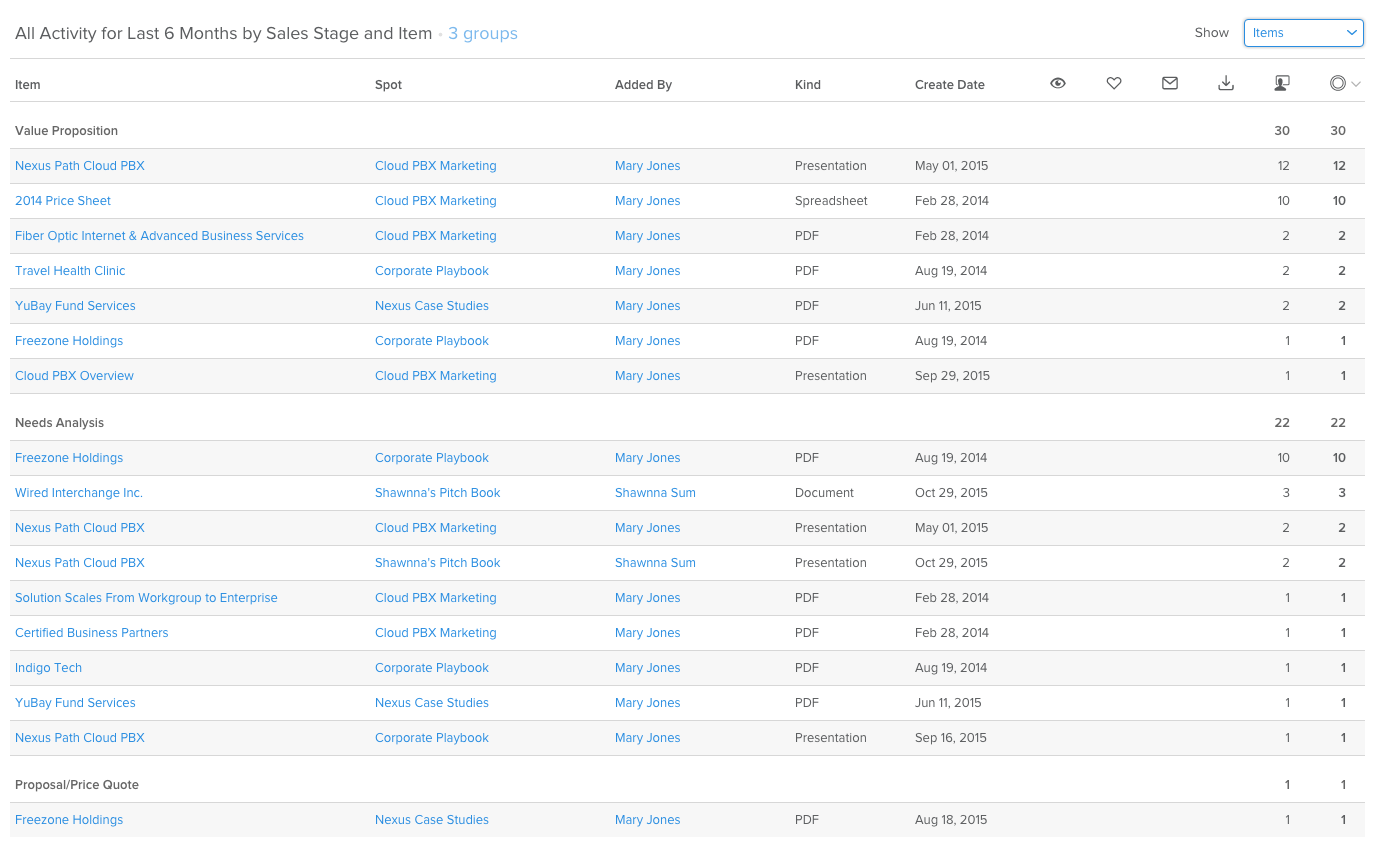
A fundamental question for sales content management teams is “Are the sales reps not using my content because they can’t find it or because they are choosing not to use it?” A report that measures the views (has a rep viewed the content), pitches (have the pitched or emailed the content) and downloads helps content owners understand why or why not their content is being used. In the figure shown, you can see that the case study “Freezone Holdings” was viewed by nearly everyone, but hardly ever used. The content owner could then follow up with sales teams to discuss why they weren’t using the new case study.
case-study-pitches
Content Usage – What content is being used in various sales deals? Which pieces are being used the most? By what segments?
SiriusDecisions research in 2015 stated that 60% of the content generated for sales is not used. One of the first things sales enablement teams must do after implementing a sales content management platform with good analytics is to understand what is being used, what isn’t, and why.
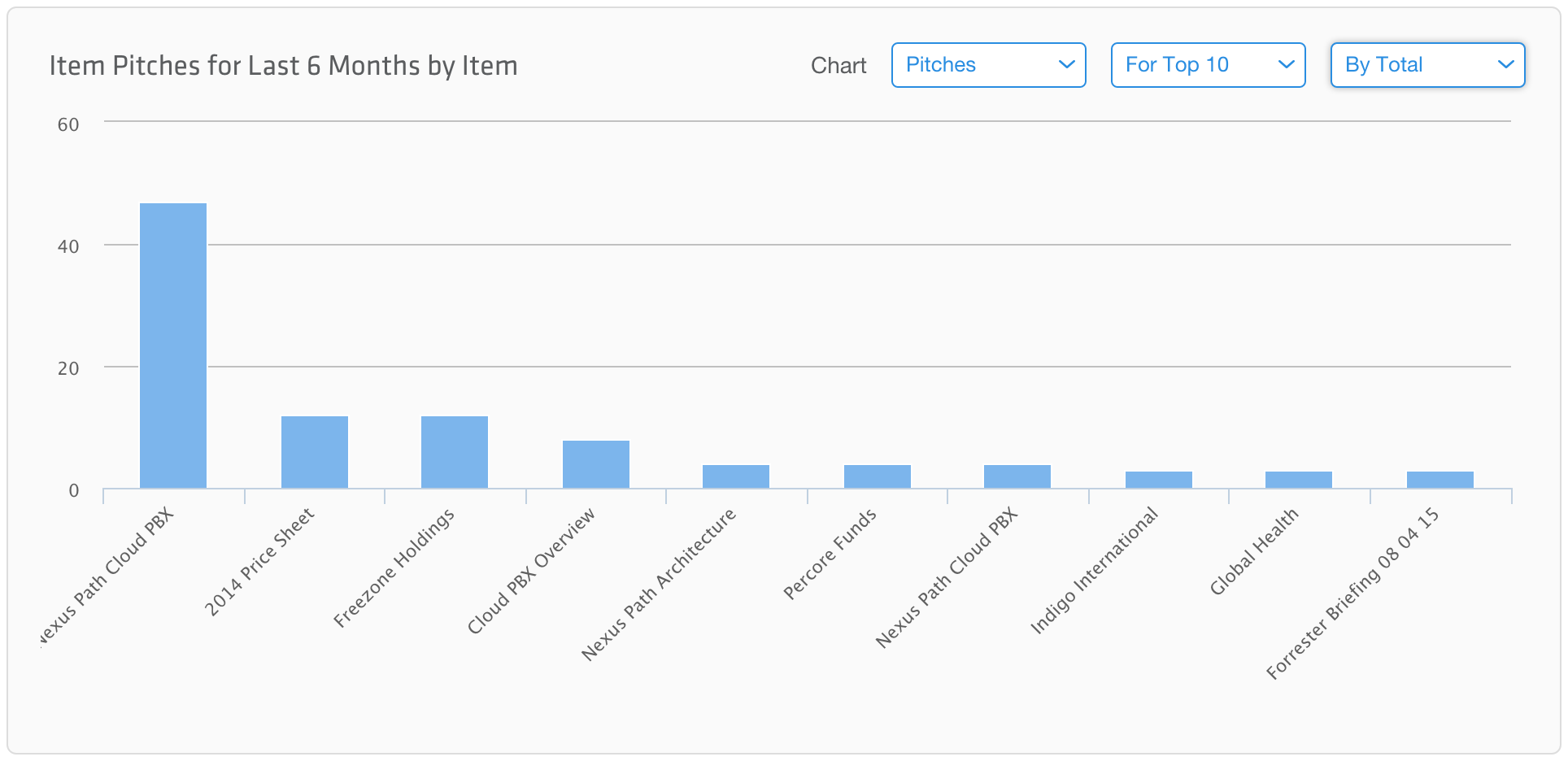
Start with a basic report on content usage (shared with the customer), first by looking at top performers and then by worst performers. Then drill into the data by sales team group, region, and product line. This often surfaces pretty useful insight. The last step is always to follow up with front line sales reps to ask why they don’t use the content. This is key to understanding how to fix it. But proper analytics will point you in the right direction and help you identify which questions to ask.
item-pitches
Pitch Activity – Track pitch activity by content piece, rep &/or account. Measure what is working and what’s not. Understand the pitching practice of your best sales personnel and share best practices with the rest of the organization.

Customer Engagement

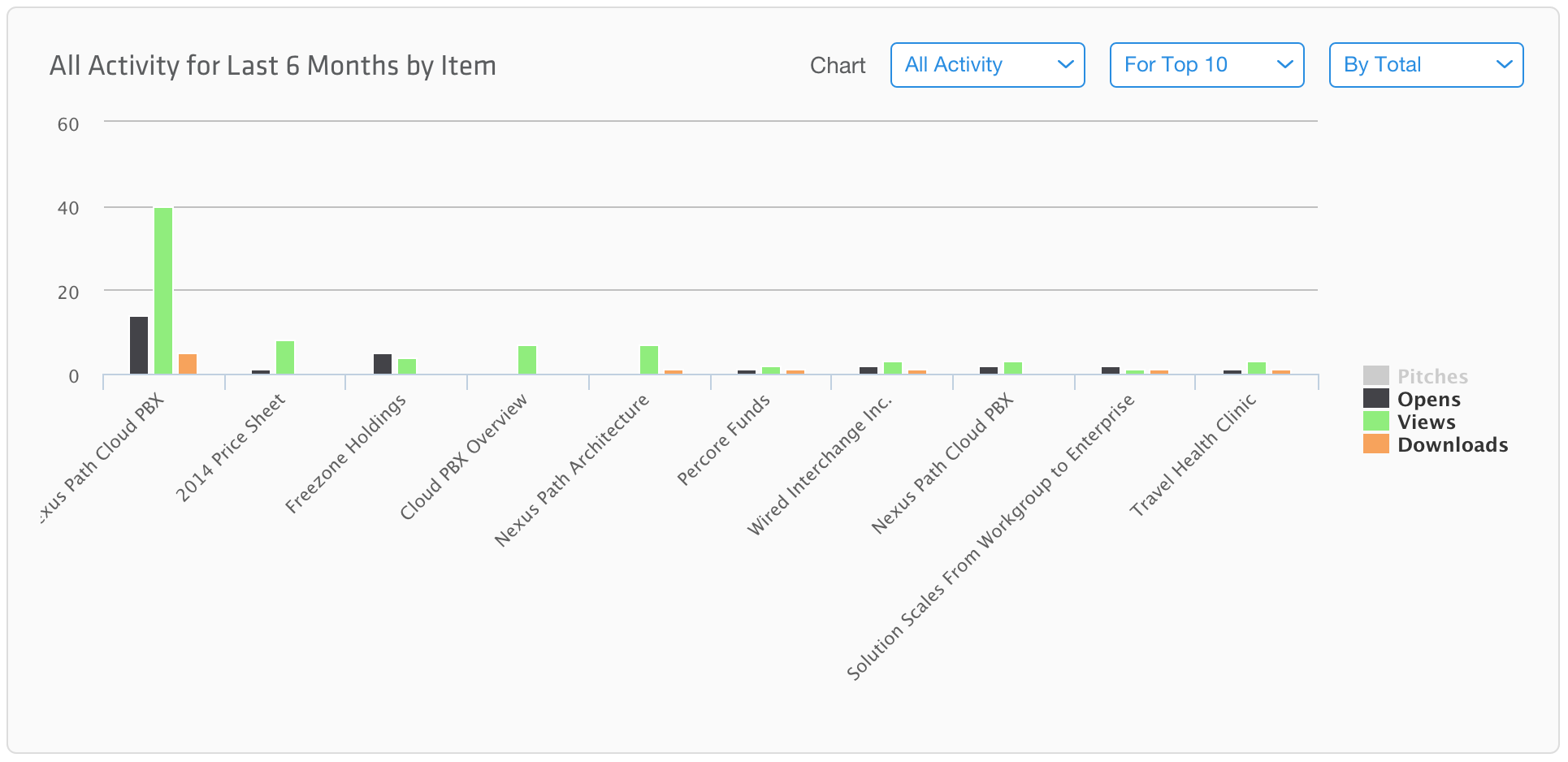
Customer Engagement – How is the customer responding to content and pitches? Measure opens, views, downloads and shares. Measure how much time customers spend on each particular page to understand what topics interest them the most.
In many respects, measuring customer engagement is the same as measuring content usage, but focused on the activities of the customer, not the sales reps. Measuring how a customer engages with your content is a powerful measure of content quality and effectiveness.
pitch-activity-graph

Content Evolution

Content Evolution – Most sales content, and particularly sales presentations, are modified in the field to customize to a specific selling situation. Often this entails updating the title of a sales presentation to customize it to the intended prospect, adding a prospect’s logo or modifying key messages to adjust to the particular sales situation. These are all practices that help engage the prospect and increase sales effectiveness. In short, these are modifications that you want your sales teams doing.
This helps marketing, too. Marketing needs to know how the content is being modified in order to improve content quality, by aligning with sales teams’ needs and getting real-time feedback on how the messaging needs to change to more effectively engage its audience.
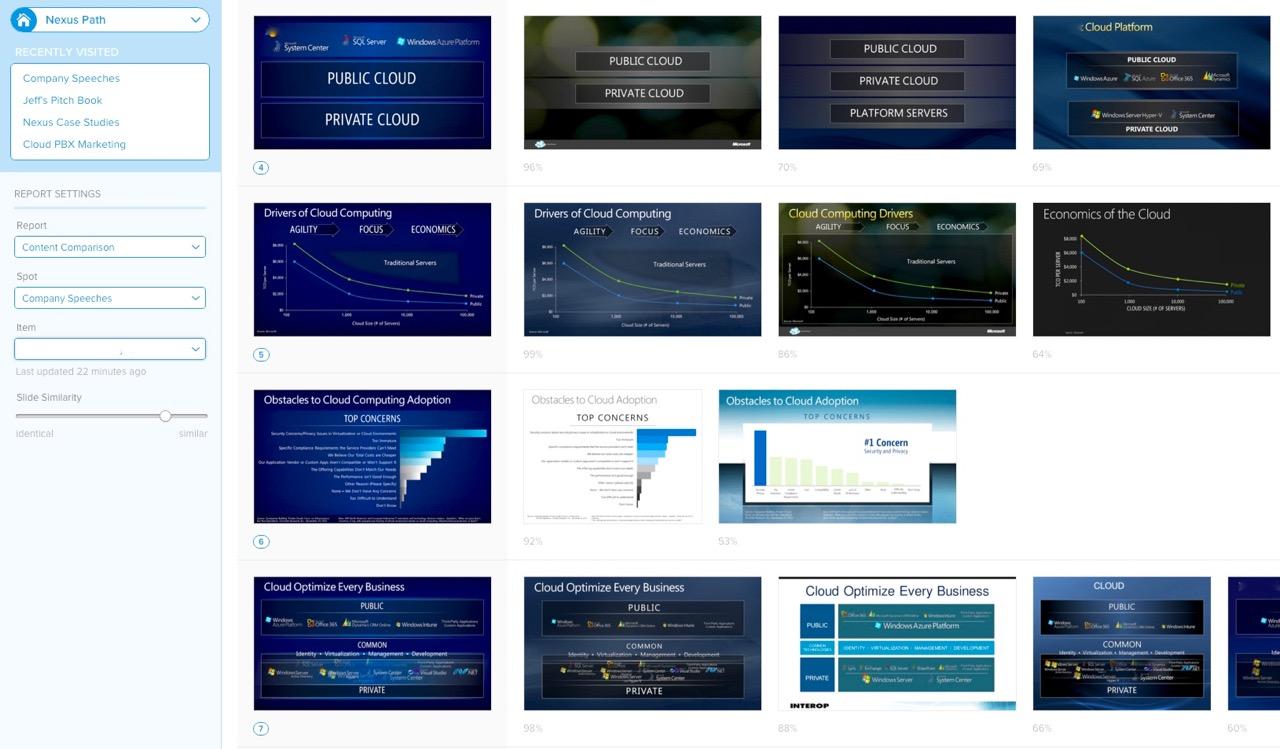
In the image below, the presentation in the column on the left is the original file. The columns to the right show slides (pages) that are similar enough to the one on the left to be considered part of the same family. In this way, content owners can see what other “similar” content is out there and how the message is evolving.
content-evolution
Performance analytics that track how content evolves provide insights into what new messages are more successful in the field are very powerful in improving content quality.
Additionally, all the content performance metrics discussed here should account for content “families” –all content that evolved from the same original piece. This is a deep pothole that many analytics solutions fall into and should be avoided. If a single sales presentation is pitched 1000 times in one month, but modified for each presentation (even a little bit), many analytics solutions treat that as 1000 different pieces of content, and in so doing, throws off all analytics on content usage, pitch performance, influenced deal conversions or influenced revenue. Only by grouping this content into a “family” of virtually the same presentation, do these analytics become useful again.

Business Impact

Influenced Revenue – Measure how content has been used to help drive revenue. What content has the biggest impact on revenue? What content is being used, but not helping close sales?
While ROI on content is not achievable, at least not yet. (I have not seen the complex attribution models necessary to accurately measure return on content. But they will come.) This is a good early proxy. By measuring the amount of revenue a piece of content has influenced, marketer’s finally have one data point on the value of content. Inherently, we know some content is used in nearly every sale. By measuring content’s usage in Closed Won deals, by revenue, it gives us a much better picture of content’s importance in the sales process.
Conversion Uplift – Measure content usage against sales stage conversion rates. What content is most effective in moving a deal to the next stage?
Content should be designed to solve a specific need for a specific stage in the buyer’s journey. Measure how effective that content is in progressing the buyer to the next stage by measuring content usage in deals that advanced vs. content in deals that didn’t advance. Between this reporting capability and the content to buyer’s journey mapping exercise, content managers have the tools to know which content is most effective in advancing deals in their specific buyer’s journey stage. And that is the holy grail to improving sales content performance.
sales-content-activity

A Phased Approach

Technology has advanced considerably in the last 3-5 years to help you with this analysis. Modern Sales Enablement platforms have moved beyond being just a content repository to also providing customer engagement (email, online pitching), integration with CRM systems and content performance analytics. Most Sales Enablement platforms provide some level of reporting—often starting with content awareness and usage. Pick a platform that meets both your short-term and longer term needs. For a complete list of Sales Enablement solution providers go here.
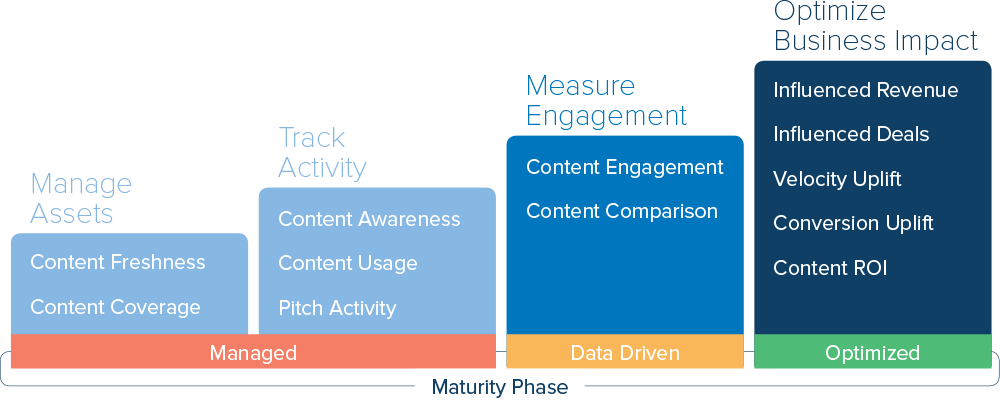
After you have put a closed-loop sales enablement solution into place, you can begin to take advantage of its features to enhance your engagement with customers. We have found that companies typically start with the basics, and then over time move to applying data-driven techniques to their entire sales process in order to analyze and optimize it.
Here is a typical path that companies follow in applying the analytics capabilities of the system.
sales-maturity-phase
It’s an evolution in which companies can very quickly establish a process to get the analytics they need to drive improvements, and then work continuously to optimize and drive greater impact. But once they have the closed-loop process for measuring content effectiveness, the improvement in content quality and sales practices drives a significant uplift in sales effectiveness.
To view the original article Click Here

Wednesday, 3 February 2016

How to Effectively Use Remarketing (Infographic)

It seems that each year that passes brings some new forms of advertising that marketers can add as another tool in their arsenal.
These past few years have brought native advertising to the mainstream, which comedian John Oliver analyzed this past August:
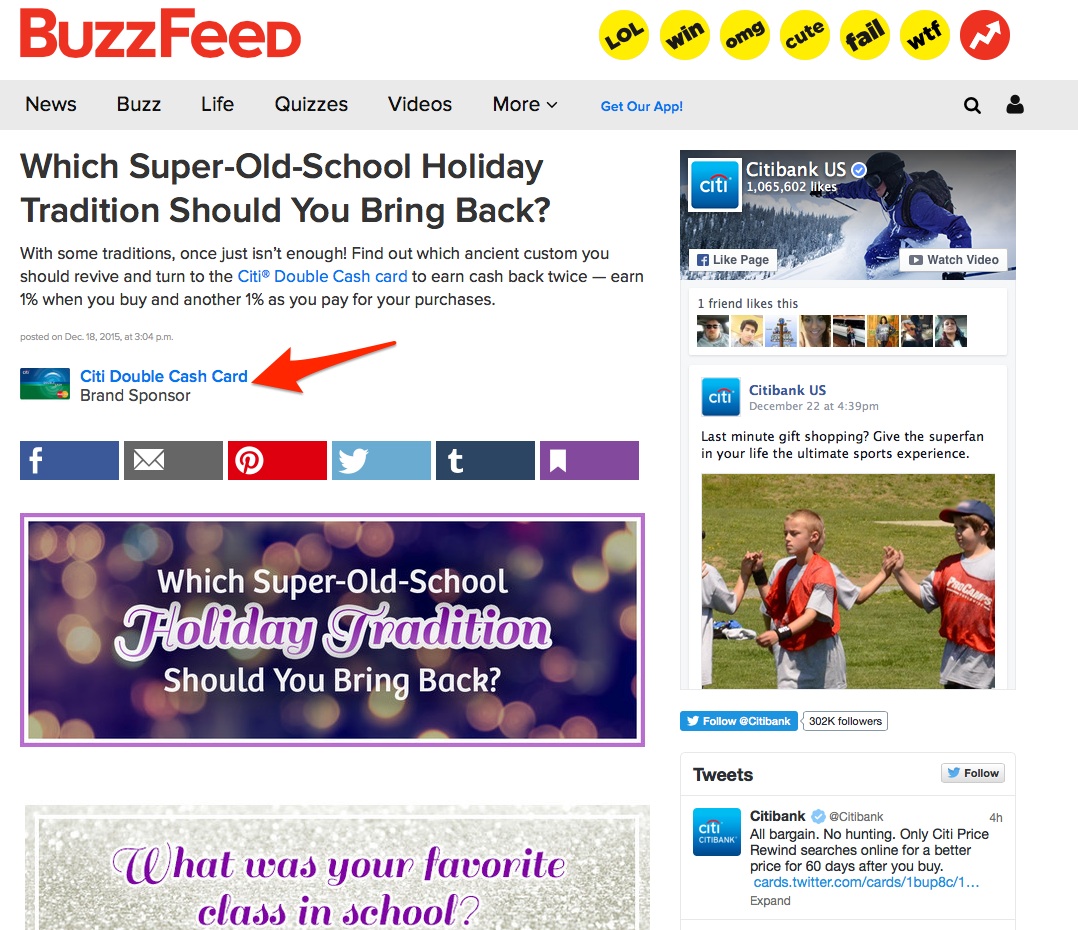
Native advertising has taken hold online. Here’s an example from Buzzfeed:
buzzfeed-native-advertising
This native advertising happens offline as well. You’ll find it in newspapers, magazines and hear it on the radio (it’s sneaky).
The web has also exploded with the growth of exit intent popups. Hover your mouse near the top of the browser to close or switch a tab and out of nowhere comes a near full page ad asking the visitor for something before they leave – typically an email address. Here’s an example, courtesy of 2xecommerce.com:
exit-intent-popup
In recent years we have also seen the growth of retargeting. This purpose of this is to advertise to people who have previously visited a specific site.
For example, let’s say you visit amazon.com today, place a few items in your cart, and leave. A few days later you’re browsing nytimes.com and see an Amazon advertisement with the products you put in your cart. You can then click the ad and are directed back to Amazon, and complete your purchase.
Sound like a new channel you’d like to test? Neil Patel of Quick Sprout has created an infographic to help you out. Whether you’re just diving into retargeting or have been around the block a few times and want a refresher on some of the principles.
How to Effectively Use Remarketing to Increase Your Revenue
Courtesy of: Quick Sprout

To view the original article Click Here

Monday, 24 August 2015

How to Write a Killer Sales Message

how-to-write-a-killer-sales-message
Every business makes use of sales messages. Any time you use copy—written, audio or video—to move a prospect toward a sale, you’re using a sales message.
A killer sales message identifies a problem or need, and explains how your business or product solves the problem or meets the need. It’s the secret to effective landing pages, promotional emails and social media posts, so its importance can’t be overstated. Once you’ve crafted an authentic and convincing sales message, everything else tends to fall into place.
Here are 5 strategies for writing a killer sales message that helps convert prospects into customers.

1. Write Like You Talk

We’re bombarded with countless sales pitches each and every day—­on cereal boxes, restaurant takeaway containers, and even bathroom stalls. Consumers are increasingly wary of what they read and see —particularly online—and tend to be resistant to “salesy” language.
Instead of trying to follow a sales message template, write from your heart. Use the voice and tone you use in your normal day-to-day interactions. Use a casual tone to show that you’re a real person, and don’t be afraid to share personal stories or anecdotes. Remember: People want to buy from other people, not nameless, faceless brands.

2. Tell the Truth

Hype is rampant in sales copy. How often do you hear claims like “We have the lowest prices in all of the Midwest!” or “Lose 20 pounds in a week with no exercise!” Hype can be as benign as a slightly ramped-up claim, or as harmful as a bold-faced lie.
Either way, using hype in your sales message is a recipe for losing the trust of your prospects. Talk about the biggest benefits of your product, and articulate how it solves a problem or meets a need. Share stories or case studies to drive home your point. But at all costs, avoid lying or writing anything you wouldn’t say to someone’s face.

3. Talk in Their Language, Not in “Biz Speak”

What words or phrases do your prospects use to talk about their needs or desires? What are their preferred modes of communication? (Written, audio, video, etc.) What is the average reading level of your target demographic?
Use language and formats that make sense for your audience. Your goal isn’t to impress them with how well you know your product or industry. It’s to communicate with them in a way that they understand. Avoid industry jargon, and use language that’s understandable and familiar to your audience.

4. Be Specific

Sweeping statements like “We are the #1 rated restaurant in Miami” may sound great at first, but without specifics to back them up, they don’t end up meaning much. Wherever possible, use cold, hard facts, research and specifics to back up your claims.
Use numbers and data where possible, and share relevant and specific details about your product to answer any potential questions or concerns your prospects may have. These specifics instill confidence and make your products and business immediately more credible.

5. Get to the Point

What’s better: long copy or short copy? The answer will depend on your business, audience and niche. However, one thing is certain: concise will beat out wordy every time.
If you truly need 2,000 words to get your message across, no problem. But avoid bolstering your copy with additional examples, explanations and statistics just for the fun of it. Tell your readers exactly what they need to know, and then leave it at that.

Final Thoughts

When it comes down to it, writing a killer sales message is more about being authentic and straightforward than about writing the “perfect” copy. Stop stressing out about following a certain copywriting template or formula, and write from the heart. Authenticity will win every time.
To view the original article Click Here

Wednesday, 28 January 2015

The Sneaky Way to Create Products that Sell Like Crazy… from Day One

Deep down, you know it’s true.
The Sneaky Way to Create Products that Sell Like Crazy… from Day OneCreating a product is a natural next step for you as a blogger.
(It’s your best chance of making some real money from your blog too.)
But building a product is scary.
Not just because it means putting yourself out there for the world to judge – though that can be pretty terrifying. No, it’s scary because of all the things that can go wrong.
What if you spend hundreds of hours to build your product, and nobody likes it?
What if you invest hundreds, or even thousands, of dollars, and nobody ends up buying?
What if you pour your heart and soul into it, and the handful of customers who do buy end up asking for refunds because they never get the results you promised them?
These fears are more than justified; this is what happens to *most* people who set out to build a product.
But it doesn’t have to be that way…

Why Most Products and Courses Fail Miserably

The rewards of creating a successful product are many, but the hard truth is most products and courses don’t succeed.
The reason is simple…
Most failed products are based on an untested assumption about what customers want.
As a blogger, you know your audience better than anyone; when you have a great idea, youjust know it will change the way your audience lives and works.
But most of the time, that gut feeling is not enough to guarantee success – and few people take the steps required to go beyond their instinct to make sure the product is exactly what the market wants.
When you have a strong sense of your audience, you also have preconceived notions of what will make a great product.
But… what if you’re wrong?
What if your audience doesn’t actually have the problem you think they do?
Or, what if you are correct about the problem they’re having, but your product isn’t the solution they are looking for?
Even if you think you have a great product idea, you place its success in the hands of fate if you don’t validate that the market will actually buy it.
By leaving this step to chance, you risk the most important thing to a blogger: your reputation.
Because if your product flops, what could happen?
  • Your previously dedicated audience is disappointed, and they unsubscribe in droves.
  • You ruin your relationships with some or all of the other bloggers and online entrepreneurs who helped promote your product.
  • You suddenly find yourself back at step one, rebuilding all the relationships that took you months or years to build – if you can salvage them at all.
Even if a product flop isn’t a worst-case scenario, it’s still bad for you and your blog.

The Sure-Fire Strategy for Creating Winning Products

Despite the risk to your reputation if your product flops, there’s some good news.
You can take steps to insure your product against embarrassing failure, and even guarantee its success.
How, you might ask?
Put your preconceptions to one side and start listening to your audience. Find out what they really want – not just what you think they want (or, worse, decide they need.)
Because if you don’t listen to your audience, you risk a scenario like the following:
A technology blogger wants to build a product that helps people learn how to use the hottest new tech gadget.
Since it’s something he’s certain will be helpful for his audience, he decides to move forward with creating the product.
He doesn’t take the time to see if any of his audience members have actually been asking about the gadget, or if they have complained about not understanding how it works.
When the product launches several months later, he wonders why very few of his audience want to buy it.
Do you see the problem here?
The blogger went ahead and created his product based purely on his own idea, rather than identifying a real need.
In other words, he created his product based on an untested assumption.
Fortunately, a better way exists:
Find out what people seem to want, and quickly test to see if they really want it.
But that prompts the question: how do you find out what they want?
It’s easy – you spy on them.

How to Gather Vital Intelligence About Your Audience

I can hear you now.
“Spy on my audience? Isn’t that illegal?”
Unless you’re the NSA, then the answer is likely yes. ;-)
But what we’re talking about here is less like agency-style spying and more like playing detective, as Leanne Regalla writes in her post on developing empathy.
Even if your blog doesn’t have much of an audience yet, you can still gather intelligence by spying on your desired audience in the places where they already hang out online.
Study comments left on popular blogs and forums related to your topic. What questions are people asking repeatedly?
Eavesdrop on conversations happening on social media. Which topics appear most often?

Create a Secret Dossier of Revealing Information

As you make observations about the topics and issues that come up most often, keep track of the data you gather.
Add this information to a spreadsheet, keeping track of which blogs or social media accounts the comments came from, and the exact language used.
As your spreadsheet grows, look for patterns. Does one topic area come up a lot? Within that topic area, is there a specific question that many people ask?
Before long, you will likely find a problem that you can solve for them!
And once you’ve narrowed in on a specific problem, it’s time to gather more in-depth information about it.

How to “Interrogate” Your Sources with Surveys and Interviews

The best way to gather information about what your audience wants is to ask them!
One way to do this is to create a simple survey, just one or two questions, asking what their biggest challenge is.
(For a more in-depth look at the subject, Linda Formichelli wrote a great post here at BBT on how to find out what your audience really wants.)
Share this survey with everyone on your email list, and also reach out to the people in your spreadsheet. You can also share the survey link on social media or advertise the survey online.
Take the information you gather from the survey responses and add it to a new sheet in your spreadsheet.
After you have gathered all the responses to your survey, you can go even deeper by conducting informational interviews with members of your audience or the survey respondents.
You can conduct these interviews over the phone or by video chat – and you’d be surprised how eager people are to share their perspectives with you, if they think you really want to know. During the interviews, you can go in depth about the topic and the problems they have.
Take the information you gathered from your in-depth interviews and… you guessed it: add it to your spreadsheet, on the same page as your survey data.

But What If Your Sources Refuse to Talk?

You may find yourself in the following situation:
You gather data for your spreadsheet by eavesdropping on blogs, forums, and social media feeds, but when you reach out with the survey questions, you get nothing but crickets.
Or, maybe you get a few responses, but they are all either off topic or unenthusiastic about the topic you asked about. Likewise, your offer of in-depth interviews was met with similar disinterest.
These are all strong signs you should go back to the drawing board.
Maybe you’ve focused on a problem people don’t feel strongly enough about. Or a problem they don’t believe anyone else can solve. But whatever the reason for the lack of interest, it’s probably time to move on.
But don’t be disheartened. This is actually a positive result. You just saved yourself a lot of wasted time and effort developing a product people don’t want!
Return to your spreadsheet. Eavesdrop in some new places. Gather more data. And repeat the process until you have a bunch of enthusiastic responses to your survey and interviews.
Remember that by conducting as much detailed research as you can in the beginning phases, you will avoid setting yourself up for a product flop later in the process.
By the end of this process, you should have quite a bit of data.
But what do you do with it all?

How to Get Laser-Focused on the Problem Your Product Will Solve

You’ll have collected a lot of data during the information gathering phase and it may seem like you have easily enough information to move forward.
But in truth, your data is still a little too raw to use for making important decisions about your product. You still need to do a little more work on it to ensure that your audience will respond enthusiastically when you make your eventual offer.
So your next step is to analyze the information you collected from your spy mission.
Open up the spreadsheet where you’ve been keeping all your data to the sheet with your survey and interview responses.
Here’s what to do next:
Sort the data by how in-depth the responses are and then discard the shortest answers. You’ll want to keep approximately the top 80 percent of the answers you received (i.e., remove the shortest 20 percent.)

Why Should I Throw My Hard-Earned Data Away?

It may sound counterintuitive to get rid of data that you worked so hard to gather, but the people who take the most time to respond and write the most detailed responses are also the most likely to pay for a solution to their problem.
Really!
After discarding the shortest responses, look at how many times each problem comes up, and see if there are patterns to the questions.
By the end of this process, you have likely uncovered the problem that your audience is practically begging you to fix for them.
But, before you move forward, one word of caution.
As you look for patterns, make sure you aren’t using the results to validate an idea youalready have, or throwing out any data that doesn’t support that original idea.
Consider this scenario:
A personal development blogger wants to teach a course that helps her audience overcome childhood trauma, based on a method that worked for her personally.
To validate her idea, she polls a number of friends in the health care and psychology fields and some of her audience members. The data comes back with mixed responses, but she sees that some of the responses include the method she is familiar with.
Based on those responses, she decides to move forward with creating the course.
Only a few students enroll when the course launches several months later. When she factors in the time costs of creating the material, the course ends up barely breaking even.
Do you see the problem this time?
The blogger selected the data points that confirmed her own idea, instead of objectively analyzing the data to find out what her audience really wanted to learn.

How to Determine If People Will Really Shell Out the Dough

By this point in the process, you’ve discovered and validated a problem that your audience (or desired audience) wants solved. You may even have some clues about the direction the solution should take.
So you can finally start creating your product, right?
Actually, no.
Let’s revisit the example of the personal development blogger. Not only did she let her own personal biases skew the data, but she also made another mistake. She created her course without validating the basic idea first. That’s why her launch was a flop.
Before creating your product, it’s crucially important to confirm it’s a solution people will pay for.
And the best way to do that is to sell a pilot version of the product.

What the Heck is a Pilot?

What we mean by a pilot is to offer a bare-bones version of your product or course to people who will be “early adopters.”
Most people won’t be willing to take the chance on your idea at this early stage, but that doesn’t matter. You’ll target those who are enthusiastic about getting in on the ground floor of your idea.
Your pilot members will be offered a significant discount off the eventual price of the full program in exchange for being actively involved in giving feedback as the product is in development.
To create your pilot, you’ll start with an outline of the material to be covered in the course, and only build out the course to what we call “minimum viable richness” – only as much content and supporting material as absolutely necessary to solve the problem for most people, and no more.
But, before you create any of that content, there’s one final level of validation: selling the pilot.

Let’s Sign Up Your First Paying Customers!

The ultimate validation of whether you have a viable product idea is to find out if people will actually open their purses and wallets to get it.
And the only way to do that is to offer your yet-to-be-created product for sale. Here’s how to do it.
First, you open a brief registration window for your course.
When you reach out with your sales pitch, you will want to use the same language your audience uses to describe the problem your pilot solves.
This is where the in-depth research you did in previous steps will really come in handy; look back at the survey responses and notes from your interviews. How did the respondents describe the problem? Use their exact words in your sales copy.
(We’ve created a free set of templates that can help you with the sales portion of your piloting process. These templates include a sales conversation script as well as email swipe files that you can use to entice your audience to join your pilot.)
You’ll base the number of spots available in the pilot on the costs you need to cover, balanced against the number of people that you feel comfortable supporting during the pilot.
While your registration window is open, promote it like crazy. Email your own audience, call in favors from other bloggers, and talk about it on social media.
Once your registration window has closed, and assuming you’ve reached the numbers you need for a successful pilot, it’s time to start creating the content based on your outline.
For many products – like training courses – you can roll the material out incrementally, module by module, collecting valuable feedback along the way. This way, your eager customers are not waiting months to get the product.
Once the pilot is complete, you can use the feedback to build out your full product and relaunch it – with an increased price tag.

What If Not Enough People Buy The Pilot?

If you don’t fill enough spots to make your pilot viable, then it’s a sign that your product is not a good match for the market.
This is disappointing of course, but not nearly as disappointing as creating the entire product and then finding out nobody will buy it! In this Kickstarter era, most people understand that not every cool new product sees the light of day.
So if you’re candid with your early adopters, thank them for their support, and (of course) issue a prompt refund, you should find they’ll be receptive to hearing about your next product.

Discover Your Perfect Product and Watch It Sell Like Crazy

This process may sound like a lot of work, and the truth is… it is!
Creating products that solve people’s thorniest problems requires time and effort.
Of course, as a serious blogger, you’re not afraid of working hard – if it gets results. So there’s one type of hard work you want to avoid at all costs…
Hard work that turns out to be wasted effort.
That’s why it’s much better to spend time up front to determine if your product will sell, rather than spending countless hours and dollars to create something that flops.
So what are you waiting for?
There’s an audience out there that wants to pay you to solve their biggest problem.
Go solve it!
To view the original article Click Here