Showing posts with label retargeting. Show all posts

Wednesday, 3 February 2016

How to Effectively Use Remarketing (Infographic)

It seems that each year that passes brings some new forms of advertising that marketers can add as another tool in their arsenal.
These past few years have brought native advertising to the mainstream, which comedian John Oliver analyzed this past August:
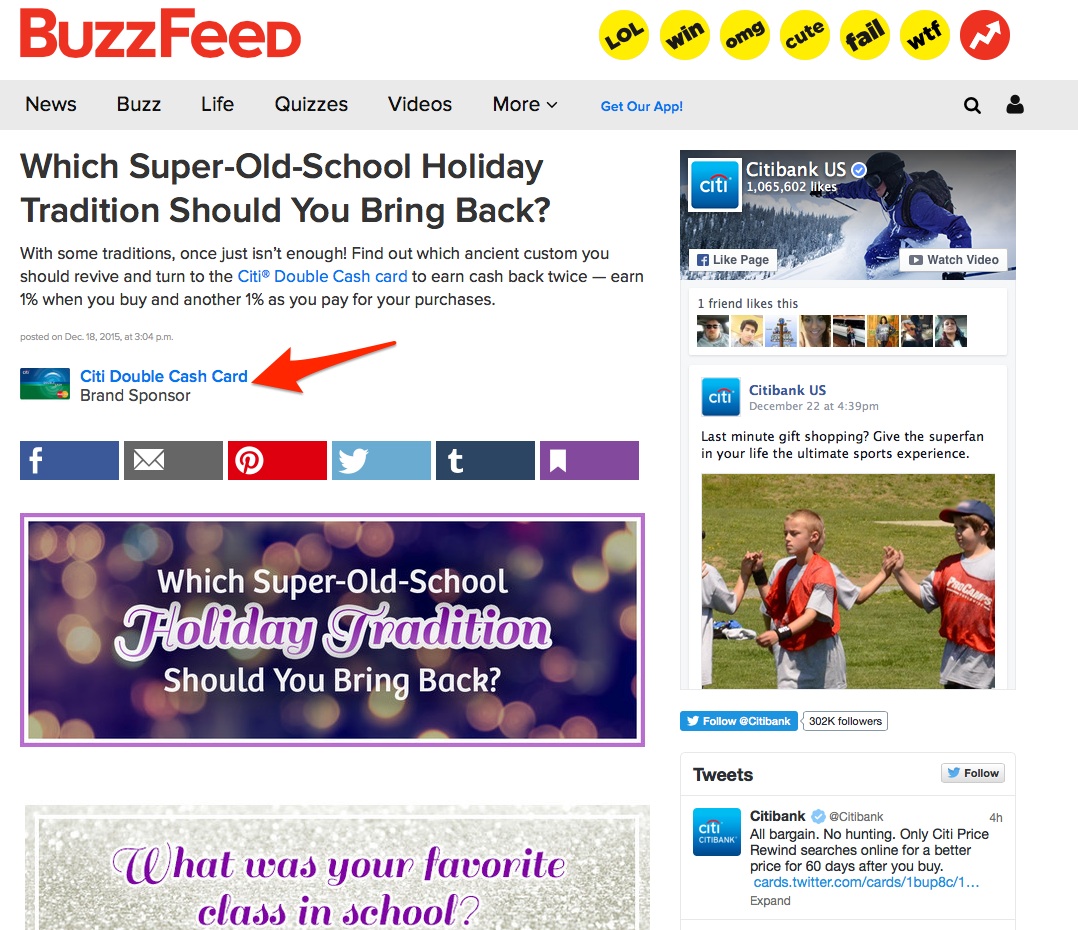
Native advertising has taken hold online. Here’s an example from Buzzfeed:
buzzfeed-native-advertising
This native advertising happens offline as well. You’ll find it in newspapers, magazines and hear it on the radio (it’s sneaky).
The web has also exploded with the growth of exit intent popups. Hover your mouse near the top of the browser to close or switch a tab and out of nowhere comes a near full page ad asking the visitor for something before they leave – typically an email address. Here’s an example, courtesy of 2xecommerce.com:
exit-intent-popup
In recent years we have also seen the growth of retargeting. This purpose of this is to advertise to people who have previously visited a specific site.
For example, let’s say you visit amazon.com today, place a few items in your cart, and leave. A few days later you’re browsing nytimes.com and see an Amazon advertisement with the products you put in your cart. You can then click the ad and are directed back to Amazon, and complete your purchase.
Sound like a new channel you’d like to test? Neil Patel of Quick Sprout has created an infographic to help you out. Whether you’re just diving into retargeting or have been around the block a few times and want a refresher on some of the principles.
How to Effectively Use Remarketing to Increase Your Revenue
Courtesy of: Quick Sprout

To view the original article Click Here

Wednesday, 14 October 2015

Remarketing to People That Have Already Visited Your Website

Someone visits your website once, doesn't convert, and goes on with their day. How in the world do you win them back? Well, the answer may lie in a topic we haven't discussed for a while: remarketing.

In today's Whiteboard Friday, Rand discusses how to get back in front of folks who have visited your site or engaged with your industry, new options in retargeted ads, and offers some best practices to follow.

Remarketing to People That Have Already Visited Your Website Whiteboard

Transcription 

Howdy, Moz fans, and welcome to another edition of Whiteboard Friday. This week we're chatting about remarketing to people who've already visited your website and then left, or already interacted with your niche, your service, your community, and then gone off somewhere else.

This is actually pretty interesting. A lot of times when we talk about the organic marketing funnel—someone performs a search, they follow you on a social network or they see a tweet from you, a Facebook update and they come to your website—well, we focus a lot on trying to convert that person either to a customer or convert them to signing up for an email newsletter, subscribing to something, following you on a social network, or becoming a part of your community.

But there's actually a lot of data suggesting that the overwhelming majority of people who visit your website... I'll use Fitbit as an example here. Brad, one of Moz's investors and also Fitbit's investor, sent me a Fitbit recently, which is very nice. What am I at today? Let's see, 5696 steps.
A lot of people who visit Fitbit's website, I don't actually know this for sure, but probably about a tenth of a percent of them are converting to a sale or actually buying one of these things. Then, 99.9% are going somewhere else. The idea here is: What can we do to capture this audience again, to get in front of them? We know that at some point they were interested in our product or our service. We want to get in front of them again.

Retargeting

This is something we've covered a little bit, but there's actually a bunch of new options that have surfaced from the advertising and web marketing world that we should probably be aware of. A few of these include things like classic retargeting, aka we follow them around the web like a lost puppy dog. 

The ads that you see on the side of everything after you looked at that one pair of Zappos shoes that one time, and now you just can't seem to get them out of your head or your browser. Maybe someone's visiting The Next Web and if page X over here on Fitbit's website was visited in the last 1, 2, 30, or 60 days, we want to show this particular ad with a bid price of XYZ.
This is kind of cool. I think where retargeting has really become more sophisticated is in some of the options. We can filter and configure and modify this and model it in such a way that we can say if you visited this page but not these other pages, or if you visited these three pages in a row, we want to show you this. 

If you interacted on our site in this particular way, we can now do things with apps. If we know that someone has interacted with an app, we can start to do retargeting and remarketing personalized to them.

Moz has used a service called AdRoll in the past. There are a number of them out there. Obviously, Google has a pretty powerful display network around this, too.

RLSA (Remarketed Lists for Search Ads)

Another thing that has been around for a couple of years but we haven't talked about too much on Whiteboard Friday here is RLSA. That's remarketed lists for search ads.
This means if we know that Sonja visited—I think it's Tory Burch who's a fashion designer who designs a special kind of Fitbit—the Tory Burch page on Fitbit and then we know that she searched for bracelets or watches, even though bracelets and watches are something we would never ever want to bid on as Fitbit because we're not in the fashion category, but if we know that Sonya has previously visited a page on Fitbit or any page on Fitbit's website potentially, well, now that she's doing these fashion related searches, we might say, "You know what? Let's show our Tory Burch ad specifically for that product, which is a fashion product, in the search results in the ads there." 

That's pretty cool.

We can customize this in a ton of ways. You can imagine a bunch of different uses based on what people visited and then what they searched for. Of course, you can bid a lot higher for those types of ads because you know the prior behavior. You can also expect a much higher click-through rate and probably a much higher conversion rate from those ads because that person has already visited your website and is familiar with your product or your brand.

If you have their email address...

If you have an email address, or a social ID, or an app ID, or even a phone number actually, you can use Facebook and Twitter's custom audiences, which are pretty cool to do targeting specifically to people on Facebook or on Twitter whose email address you've uploaded. 

If a lot of people have signed up for your email newsletter or have started your product purchase process, maybe they went to Fitbit. They entered their email address to sign up, and then they never completed a purchase. We can get back in front of them using Facebook or Twitter custom audiences or using AdWords.

Actually, as of two days prior to us filming this, but probably a few days before, maybe a week or two before this Whiteboard Friday comes out, Google just introduced something called customer match in AdWords. You can upload an email list and then get it in front of those emails specifically when they're performing searches or across their display ad network.

You can do those via places like Retargeter and AdRoll and Google. Those are the CRM retargeting models and services. That's pretty cool.

Or their social ID...

If we have social IDs, for example, if you Facebook connect to Fitbit or if you connected via Twitter, I think you can also use Facebook's connection on Instagram for Instagram ads now if you're part of Instagram's ad program. A bunch of options there as well.

A few best practices before we finish here.

  1. First off, whenever you're doing any type of remarketing or retargeting through any of these types of services, make sure that you have smart burn pixels and burn pages, meaning if someone finishes the checkout at Fitbit, don't show them the ad any more. You don't want to keep marketing to someone who's already completed that conversion process. Likewise, you probably want to have a burn after a certain number of days. If you can see that after 8 days or 12 days or 15 days you just are getting very low click-through, very low conversion, you know what, maybe it's time to give up on the ad.
  2. You also want to be smart about limiting the exposure and/or changing the message. If someone has seen your ad four, five, or six times as they're browsing across the web, maybe you want to say, "Hey, let's either give them a new message or wait for them to visit again before we keep trying to advertise. Otherwise, we could be burning dollars and bids that could be better spent on other customers or other marketing channels."
  3. We want to customize based on behavior. I think one of the big advancements here is that remarketing, when it initially came out, used to be pretty dumb and pretty basic. It was, "Did they visit your site? Then you can show them this one ad." Now people have gotten way more sophisticated, and ad networks have gotten way more sophisticated. We can say, "Hey, they performed this action. We only want to be in this network. We only want to do this if they've done this specific group of things in a row or completed these processes." That can really improve your click-through rates, improve your conversion rates, and improve your targeting.
  4. Don't ever assign 100% credit to any one of these. Remember that whatever initially brought them to the website should receive at least as much, if not more, credit and investment than whatever brought them back to purchase. This is a way of recapturing folks, not an initial way. If you're assigning 100% credit, what happens is that you'll stop investing at the top of the funnel and soon you'll just be remarketing to the same smaller, shrinking group of visitors over time. That can get really dangerous.
  5. Don't limit ads to sales focus only. If you know that you can convert from other sources, from content, from multiple visits, from someone signing up for an email newsletter, from someone attending an event, from participation on your platform or in your community in a certain way, you don't need to only market the product that you are selling. I think this is something where folks have gotten very narrow. You can see some innovative companies doing some really smart stuff in retargeting and remarketing, looking earlier in their funnel and saying, "Hey, we know that 30% of people who do this activity will eventually become a customer of ours. So let's also remarket this activity, and we can bid a third of the price of whatever we know the conversion leads to directly."
  6. You can also try remarketing for really creative stuff. I've seen it for job ads, which I think is brilliant. If someone visits your Jobs page and you're having trouble hiring, hey, follow them around the web like a lost puppy dog. Get in front of them on their social networks. If they have been to an event of yours and you have their email address, you can now market through here.
Campaigns to influencers, I've seen some really creative content marketers who said, "Hey, you know what, we know that here's a list of journalists and bloggers that we've reached out to. We can take that email list and upload it." You need a minimum of a thousand email addresses for all three—Facebook, Twitter, and Google—for the CRM style stuff. Make sure that you have that many emails before you try and upload. If you do, you can get in front of those influencers with content. If that's leading to links and press coverage and stories and the bid prices are low, which they often will be, you may have some big advantages there.

Hopefully, I will see some very creative ads from all of you following me around the web. I look forward to discussion in the comments. We'll see you again next week for another edition of Whiteboard Friday. Take care.

To view the original article Click Here

Tuesday, 4 August 2015

5 Things You Need to Know About Content Targeting

5 Things You Need to Know About Content Targeting
It used to be that digital content was anyone’s game. You wrote or filmed or drew something, pressed publish, and let the Internet decide whether it was worthwhile. If your content was good, it rose to the top—the classic oil and water analogy.
Now, the space is more than just crowded—it’s suffocating. Content on every possible topic, in every possible format, presented in every possible way battles for our attention. The old ways of building an audience (creating relationships with other sites, link sharing, syndicating, cost-free social media promotion, and, above all, patience) are no longer enough to get your content seen. If you’re covering a subject that’s already saturated—like, say, beauty, or finance, or parenting—then you’re guaranteed to be fighting with umpteen other brands and publishers to be seen.
Does this mean there’s no point in even trying? Should companies pack up their content departments and shut off the lights in defeat?
Not at all.
Rather than wring our hands about the influx of competition, we need to get smart about a concept that’s become necessary for success: amplification.
Amplification is just another way of saying “finding the best new way to get my content within eyeball range of my desired audience.” These new ways don’t always involve money, but they usually do. While the classic audience-building strategies are mostly still free of charge (not counting time and resources), they’re also massively time-consuming, and rely heavily on luck. Does it happen to be the right day at the right time with the right influencer retweeting you to the right people?
The new generation of amplification is all about tools, and those tools dig deep into solving the two most important questions for success with content marketing: 1) What is the audience this post needs to reach and 2) How do we get it to them?
Where the targeting part comes in is in answering these questions using—what else—data.
Since data and the tools to use it properly cost money, it’s critical to understand what your targeting options are, how they work, and which one is right for your content. Here’s a breakdown of the types of targeting at your disposal.

The basics

The content-amplification juggernauts, which most of you are already using, are Facebook and LinkedIn. While both used to offer substantial organic reach, these social networks got wise to the fact that they can charge brands that want to get content in front of their gazillions of users and shrank organic reach accordingly while ramping up their content targeting offerings.
Today, paid distribution is arguably the most effective way to use both social networks.
The targeting ranges in price, but it’s all based on information that users provide in their profiles. So when you’re trying to figure out where to allocate your amplification dollars, you’ll need to do some analysis. Are you B2B? Looking to reach CMOs? LinkedIn is probably the better choice for you. Is your desired audience mothers of small children? Go for Facebook all the way. The pricing all depends on how many people you want to reach.
Keep in mind, however, that the only data these networks have to work with is the data that users provide. Which may be perfectly adequate for your needs—or, if your audience is more niche, it may not.

The next level

Beyond the social networks are tools that target content based on basic info that they can obtain from large data management sources, such as Bluekai. So you can choose a demographic for your content based on data that the social networks may not have, like age, household income, recent browsing behavior, and other data points. Then the targeting tool dips into their data management source and pulls a population to target based on the data points you chose. Then your content gets spread out to this group, either via a social network or as an ad-esque unit on a well-trafficked site.
These tools can be useful to spread a wide net while still keeping some targets in place, but they keep it somewhat surface level when it comes to the actual demographic you’re reaching. For example, women in urban areas might be the top layer of your audience/customer demographic, but adding even more specific criteria (education level, profession, marital status, online spending habits, etc.) will dramatically decrease your cost-per-lead.
(Note: If you’re creeped out by the fact that all these services have such detailed data on you and everyone else, welcome to the club.)

Retargeting

These are the tools, such as SimpleReach, that focus specifically on people who’ve already visited your website and/or interacted with your content. It nabs their identity, then sorts them by demographic info (household income, etc.) and targets them with a sequence of additional content.
The idea here is to keep people who’ve already expressed interest inside your orbit. The limitation, however, is that you’re only playing with a group that have already showed up. What about the masses who don’t even know there’s a game going on?

Going deeper

Tools on the somewhat cutting edge of amplification treat targeting like a chess game. It involves seeing into the minds of your desired audience, then conducting large-scale surveys asking key questions that will help determine who the most likely people are to become your potential customers.
For example, let’s take a shoe-delivery service. It’s meant for busy people who need great, stylish, in-season shoes, but don’t have the time or energy to shop for them. The top layer of info about this target demographic would be: gender, geographic location, education level, occupation, household income, etc. But there’s another key question here: Who among that group is the type of person who would let a service pick out their shoes? That takes a level of trust, and a certain type of personality.
The job of these amplification tools, such as Storylift, is to craft surveys to this demographic that point to whether or not X or Y person will be more likely to use this service. An example survey question might be “Are you someone who’s willing to let a travel agent plan your yearly vacation?” or “Do you subscribe to a meal-delivery service that chooses a menu for you?” Once you’ve narrowed down those people, and targeted your content to them (usually through a Facebook post, though some tools use other methods) your cost per lead drops dramatically.

Paying for it all

So how much can you expect to spend on all this? Cost for each tool varies based on volume, targeting level, and other factors. Facebook tends to be the cheapest option, but that doesn’t mean it’s the lowest cost-per-lead. Picking the right tool that will give you exactly what you need—but no more—to reach your desired audience is critical to keeping your cost-per-lead optimized. How to pick? Working with a skilled content strategy firm (shameless plug alert!) will help you figure out which tools are worth your time and money—since choosing the wrong ones, or not using any at all, can severely limit the effectiveness of everything you produce in content marketing.
To view the original article Click Here

Sunday, 2 August 2015

3 Marvelous Behavioral Retargeting Hacks For Power Marketers

Emergent retargeting tactics segment cookie pools in clever and exciting ways. This article highlights three cool behavioral retargeting hacks: internal site search, multiples and extrapolated shopping segmentation.  These tactics apply to ecommerce, lead generation and most any digital marketing assignment. Sound like a techno-geek mouthful? Well it IS, so read on digital media-buying geeks!
[LAY PERSON VOCABULARY: “Retargeting means setting cookies and following site visitors as audiences most anywhere they go on the Internet, except for Google networks. “Remarketing is Google’s product name for retargeting within Google’s vast network. We’ll refer to both remarketing and retargeting as “Retargeting.”]
Retargeting Organic Site Search
We’ve written extensively about retargeting curated audience segments. Most marketers use page-touch metaphors when retargeting, following all unconverted users who hit specific URLs along the purchase pathway. The result is often a mish-mash-of-a-retargeting-bucket: some blend of search PPC, psychographic display, organic social, Facebook Ads, Twitter referrals, keyword not provided SEO, etc.
follow-me
Any and all traffic sources are lumped together and retargeted as a single audience follow-cluster. This catchall approach can result in missed opportunities because not all users are best served by the same retargeting approach.
Consider retargeting internal search queries separately. Marketers tend to bemoan the loss of Google organic search data to keyword not provided because we can’t easily retarget segmented SEO traffic. Yet some forget the inherent value of internal organic site search data.
[VOCABULARY: “Internal search” means when site visitors utilize native search functionality on a website.]
rh
What’s cool about internal search retargeting segments is that site owners already own behavioral data. There’s not need to buy AdWords and visitors need not even touch a category or product detail-URL to set a retargeting cookie. Visitors can be cookied via landing on internal SERPs. This solves a couple of problems; how to follow site visitors earlier in their buying cycle and getting around unfocused internal SERPs returned for obscure and unmapped semantics.
[VOCABULARY: “SERPs” means search engine results page.]
Segmenting unmapped internal searches for retargeting
  • A Pottery Barn site visitor searches for “Old looking tables.” “Old looking tables” is not a keyword used as often in the product description for most “Reclaimed wood” or “Recycled wooden” tables.
  • As a result, internal SERPs may be a bit off for a site of Pottery Barn’s technical stature. More than half the results in this case are unfocused. There are not enough recycled wooden tables featured. Visitors may not find and visit the correct product pages. Just as importantly, we won’t retarget these visitors appropriately, perhaps not at all.
pottary-barn
  • First, do the obvious and take the clue. Map the keyword “Old looking” to “Reclaimed” so the NEXT visitor searching with obscure semantics is better serviced via internal SERPs. Enterprise internal search is all about mapping obscure semantics to common keywords.
  • Next, append the unrequited SERPs touch to the internal cookie pool themed from “[similar adjectives] + table.” Set the cookie when the users hit the SERPs page. You’ll now follow these users, even if they never hit the landing page for a specific product. Remember to filter out any users who have already converted.
  • A main advantage here is that users never have to click on a result in the SERPs and hit a category or product landing page to be retargeted. You may be catching them earlier in the buying cycle. It’s just as possible the reason your visitor did not click in the SERPs is because the internal SERPs are not as strong as they could be.
  • Retargeting themed internal site search is an antidote for imperfect SERPs because subsequent retargeted banner, driving visitors to a very specific landing page, gives marketers another crack at the SERPs. Retargeted ads are essentially enhanced “SERPs” in banner space.
Retargeting Multiple & Extrapolated Shopping SegmentsDynamically retargeting multiple products (in one banner) and extrapolated shopping segments (in the next) is freakin’ genius… hot, hot, hot.  We can’t reveal data but the tactic speaks for itself.
  • A user shops for a high-end stove on the Home Depot website. As part of the process, he compares several high-end products, visiting the pages and using the comparison engine.
  • A few minutes later, the shopper visits Yahoo, Right Media’s exchange on Criteo’s retargeting network. An animated banner ad displays, which shows recently viewed products side by side, with text that cuts from product to product, price to price. This is pure genius.
  • Upon refresh the next Home Depot ad shows other products the visitor did not view. Additional products are extrapolated from data, which portends products commonly purchased by users based on our visitor’s previously viewed products.
hd-1
criteo
pb-banner
Pottery Barn also retargets multiples based on last products viewed and perhaps extrapolates. I viewed and eventually purchased the product on the left but did not view the product on the right.
Nascent retargeting tactics segment cookie pools in adroit and thrilling ways. Consider checking out these three excellent shopping behavioral retargeting hacks: internal site search, multiple and extrapolated shopping segmentation. Rock on, marketers!
To view the original article Click Here

Sunday, 19 October 2014

10 Ways Paid Marketers Can Leverage Inbound Marketing

It happened friends. After years of Rand exposing me to the many benefits of inbound marketing I am ready to admit it...{big gulp}...today's marketer needs to be doing more than paid marketing. In fact, I'd go as far as to say, if you are only doing paid marketing you are failing yourself and your company. THERE I SAID IT. I feel better. Way better actually.

Because it's true. Things have changed. There is no longer two main players in the game (SEO and PPC). Search marketing itself has evolved. We've covered a great deal of this here on the blog so I won't go into it too much. If you need a reminder, I urge you to go check out Rand's posts where he outlines The New Era of Inbound Marketing, and outlines how quickly it is growing. As marketers, we saw the shift coming, and now we are feeling it in our every day gigs. Our roles are expanding as traditional SEO itself expands. There is so much happening all around us. Who is freaking out? Yeah me too.
paid and inbound marketing crossover
 
The real question you may be asking yourself is, "why is this paid marketing lady talking about inbound marketing?" Good question. The other day I was running through my to-do list and I couldn't help but notice how not-focused it was on paid marketing. In fact, most of my day was spent brainstorming with others on how to better share data, repurpose existing assets, and collaborate. While Justin and I manage paid marketing here at Moz, more and more of our time is spent on learning and leveraging our inbound efforts more effectively.
I thought I'd run through some ways that I'm leaning on our inbound marketing efforts to both reduce Moz's costs and capture more leads. Did you all know you could get leads for free? Yeah, crazypants I know. Anyway, here are the top ten ways I've leveraged inbound as a paid marketer here at Moz;
#10: Share Persona Outlines
You know who is really good at researching a target audience? Content writers. Recently, Michael King actually did a killer webinar on understanding your target audience and using social media tools to help define your best audience. It covers this concept really well. The idea is there are so many excellent demographic tools available to us now that these social networks want us to buy ads on them. We can look at audience sizes, location, categories, etc. All of this information has been helping organic marketers write targeted content for years. Paid marketers should be leaning on this data. What have they discovered that could help me better target high-value leads?  Outline your target audience and extracting personas can be really challenging, but the more teams connect on this the better all our marketing efforts are targeted.
#9: Leverage Landing Pages
Design resources are hard to come by. Here at Moz we have Derric and Ramil basically sleeping in the office and we still have a backlog of projects that need their creative brains. Ask any paid marketer what is the bottleneck and often you will hear design resources pop up. So what can we do? Use landing pages that our inbound marketers have already queued up for us! Brilliant! Often times these pages are beautifully designed, and laced with excellent engagement opportunities. These are mandatory in a solid inbound marketing page and they are requirements of a successful paid search lander...coincidence? I think not. 
#8: Exchange Conversion Reports
Oh conversion data, how sweet you are. I think most paid marketers are looking at the SEO data at their company. At least I hope they are! Beyond that though, there is more data you should be looking at. Here at Moz, we are a little data crazy. Jen, our Community Wrangler, puts together amazing metrics on our social activities every week. I have found that by mining her weekly data summaries I can see what content has gone hot and where. I can see where we are increasing brand awareness and what type of people are taking to the Moz brand. From there I can better allocate our budget to supplement these efforts. 
#7: Collaborate on Keyword Research
So this one is one of those things we keep saying we are going to do, but rarely does it actually happen. I am always amazed by the keyword research process. First off, it's really time consuming. Secondly, it's not effective as a one-time step, it really needs to be done in an ongoing basis. Yet despite all this, both paid teams and organic teams have been doing separate keyword research for years. Ick. Yuck.

An awesome benefit to doing inbound marketing is the speed in which we can detect if something resonates. Where as before I might have used paid search budget to test an adjective or product description, I can now push out a targeted piece of content and see how the audience responds. It's immediate data collection and its statistically valid. I can't get over the power of the social graph when it comes to crowdsourcing reactions to certain keywords. This is the new keyword research in my opinion. We must combine our traditional keyword tools with audience response across these inbound channels. 
#6: Repurpose Content
This one is pretty obvious, yet, so easy to skip over. I am guilty of this too often myself. Paid marketers need to be driving traffic to past inbound marketing wins. For example, about a year and a half ago we updated the Beginners Guide to SEO. This has gone on to be downloaded close to a million times, translated into other languages, and continues to be an excellent traffic driver. Guess how much of my paid marketing budget goes to driving traffic to this excellent piece of content? Yup you guessed it...none.

In the past, my argument was "it didn't drive enough free trial signups to show ROI." What I've realized over the past few months is I need to go deeper into what "conversion" means. What does acquisition meanWhat does growth mean? My paid marketing efforts should be wrapped around these already successful content pieces. Repurposing hot viral content through paid marketing channels is a great example of how we can accomplish cross-channel marketing. Isn't it pretty when we all get along? Who wants to hug? Bueller?
#5: Share Customer Feedback
Customer feedback is gold, pure gold. Inbound marketing is about being found online through a variety of activities -- content publishing, social engagement, etc. A huge benefit of these conversations and interactions is the wealth of feedback you can receive from the community you have created. Often here at Moz, we will ask our community team to help us understand what our customers really love about our PRO service. We can hear right from them what keeps them happy, and what we can do better. This helps drive our marketing messages and our product roadmaps. Sharing the customer feedback and voice is so important, and the value found in sharing that across multiple teams in the organization is huge.
#4: Planning for Resources
Over the past few years we have seen the expectations of an online marketer change. We have more on our plates, more tools to log into, more reports to pull, more content to write, and so on and so forth. Inevitably these demands require more resources and more talent on any given project. I have found that by asking the organic marketers and community marketers here at the company what they are working on, I can better plan for my paid projects. If we are contracting a copyeditor for a content piece, I can slip in a request to revisit some ad copy headlines in the same contract. I can also repurpose design resources for banners, and landers. By knowing what your inbound team is working on, all of us can push out more faster. This is a huge benefit to connecting the to teams in both goals and resource planning.
#3: Fuel the Fire
I am a big fan of the halo effect as it applies to marketing. The halo effect, for those that might not know, is when customers show a bias to a product or brand based on some favorable or pleasant experience they have had previously. The beauty of it as it applies to today's marketing efforts is there are so many opportunities for a brand impression, and most of which are free.

A positive conversation a brand representative has with a user on a Facebook page may be enough to persuade a user to click a retargeting banner when faced with the brand's logo. Those two combined may build enough trust to persuade them to take a free trial. I call this "fueling the fire." While paid marketing may be measured on a CPA basis, there is a lot that happens prior to an action that influences the likelihood of a conversion. Inbound marketing offers mutiple opportunities to positively bias a potential customer. The goodwill a customer has in a brand often has very little to do with push marketing efforts, but has everything to do with these more organic experiences.
#2: Prequalify a Message
At the heart of it, marketers are story tellers. We love to persuade. As a paid marketer I spend most of my time coming up with ways to message my audience. Sometimes it's a new audience and sometimes it's my current audience, but either way I need to constantly be testing new ways to capture their attention. Prequalifying a message can be time consuming and can cost a lot of money depending on how I test it.

In the past I may have run a banner campaign on a relevant blog post and looked at metrics like CTR and CR. I may have also thrown money at a focus group (and whoa those can cost a lot) to see how people responded to a story we had crafted. These days I can use the power of social to test messages in record time. I can put together a presentation or a white paper and see how many times it gets shared, viewed, and downloaded. By counting these "social votes" I go beyond just clicks as a means of pre-qualification. It's a really great way for me to collect good data fast.
#1: Strengthen the Brand's Story
While the other nine ideas are great, this is my favorite. Nothing is more powerful than a consistent marketing message. Over the years I've worked to connect retargeting banners, paid search ads, landers, affiliate banners, and social advertising to send a strong and cohesive message. You know what stinks about that? All of those cost me money...which is no fun. Keeping money is fun. Spending all your money...not fun.

For promotions or time sensitive messages, if I really wanted to see an impact, I had to have serious budgets. There has to be a better way. Aligning some of these paid efforts with some inbound efforts makes for an even more compelling story for half the cost. As you push out new things and try to create buzz, you need to be asking yourself, "Is this the best use of my time and money?" I think as a paid marketer we can often forget to take that pause. We rest on the channels we know well but we need to push for more.

In Conclusion

Rand was right. In fact, all of my SEO friends were right. While paid marketing has a role to play in all of this, the direction the web has taken demands more from us marketers. While I am not sold that inbound marketing is all any marketer needs, I do believe there is a synergy between the two that can be very powerful. If we share resources, connect data, and collaborate rather than compete I think both teams win. I'm super excited about what this means for the future of paid search marketing. If you do paid and you aren't connecting with your organic marketing and social teams, you really are making your job harder than it needs to be. 

I'd love to hear from you guys if there are other ways you have seen the teams connect and work more effectively together. Where do you see this all going as social marketing and content marketing continue to take more of our time as marketers? Where does paid fit into this? 
To view the original article Click Here