Pay-Per-Click (PPC) is without exception, the single fastest way to get directly in front of consumers who are looking for your products and services. However it’s not without limitations and risks.
One of the biggest issues I see with poorly run PPC campaigns is under-budgeting. Sure, sometimes an overzealous entrepreneur over bids past the point of diminishing returns, but face it, you…and everyone you know is trying to scrape by with less.
Assuming that budget is an issue (and it’s always an issue) you need to bid smart. You need to pony up with enough budget, and you’ve got to have realistic exceptions. With Googles latest move of removing the entire right side of the paid search listings (the sidebar) you need to bid enough to show up in the top 4 search results. Otherwise you get banished to the dungeon…the bottom of the search page where advertisements go to die.
So how do you parley a finite budget into a profitable PPC campaign? Here’s a hint; you have to compromise. Yep, sorry to break it to you but you have two choices; go wide…or go deep.
It’s all about the eye balls
Pay-Per-Click, is just what it sounds like. You pay every time someone clicks on your search ad on Google, and goes to your website. Understand that PPC is a competitive, real time market bid system. You are actually competing with other companies that sell the same products and services as you for that precious real estate on the Google search results page.
The more keywords you are bidding on, or the larger the geographic area (more competitors), the larger the budget that you need to be competitive. You’re going to get a finite amount of clicks before eventually depleting your budget.
Trying to bid on too many keywords across too big of an area dilutes your ability to compete consistently for each of those keywords. You either have to cut down on the keywords, or cut down on the area. In other words, go wide, or go deep…
Suppose you sell glass and mirror products, such as glass shelving, shower door enclosures, bathroom mirrors, etc. Your service area is all over Southern California. You have several major categories (ad-groups) that you want to promote:
Glass Shelves
Bathroom Mirrors
Shower door enclosures
Storefront windows
Commercial glass doors
Those categories add up to a lot of keywords spread across a lot of area. It would take a fortune to compete against all those other glass & mirror companies throughout all of Southern California. If you have a sufficient budget you could dominate the market, but that would be quite an investment.
2 Strategies when you have a finite budget:
Suppose you identified your growth markets with the highest margins in the residential area as Shower Door enclosures, and your highest margin items in the commercial sector as Storefront Windows. Unfortunately you don’t have enough budget to bid on all those keywords for both product lines across all of Southern California. What do you do?
Scenario #1: Go Wide:
Perhaps you made the decision that you need to grow the residential area of the business and expand your service area. You might opt to “go wide” by focusing your budget on just shower door enclosures and put the Storefront Windows on hold for now (or just advertise locally). Because you are not diluting your budget across all those “Storefront Window” keywords, you now have enough budget to bid higher and get top placement for the “Shower Door” keywords.
This strategy allows you to expand geographically while promoting your chosen high-margin growth product. You can then roll some of the ROI into promoting your next product(s) in this expanded area.
Scenario #2: Go Deep:
Suppose you’re committed to growing both the residential and commercial sectors of your business and product expansion is more important than geo-expansion. Then you might opt to run a balanced campaign that promotes multiple product lines…but in a more localized, concentrated geographic area.
This strategy allows you to market more of your products and services in a smaller, local area. You can then roll some of the ROI into expanding your geographic reach.
The key to parlaying a modest budget into an effective advertising campaign is to be strategic, patient, and to not bite off more than you can chew.
Do you know where to spend your social media marketing dollars?
Wondering what works for other businesses?
In this article you’ll discover recent insights on the effectiveness of paid social media marketing.
Discover insights revealed by new research on the effectiveness of paid social media marketing.
Listen to this article:
Audio Player
00:00
00:00
Use Up/Down Arrow keys to increase or decrease volume.
Listen now: Play in new window | Download
#1: Majority of B2C Marketers Find Promoted Social Posts and Ads Effective
In fall 2015, the Content Marketing Institute (with MarketingProfs) surveyed 3,714 marketersfrom around the world about content and other digital marketing successes. While just 263 identified as B2C marketers and business owners, their insights are still instructive.
As revealed in the chart below (from eMarketer), 76% of B2C respondents use promoted posts (for example, boosted Facebook posts and promoted tweets and pins). Sixty-one percent of these users found promoted posts effective, rating them either 4 or 5 on a 5-point effectiveness scale (3 is neutral).
The majority of B2C marketers rate promoted social posts and ads second only to search engine marketing (SEO and SEM) for all marketing tactics.
As for LinkedIn, Facebook, Twitter, and other ads (as opposed to the more editorial-style posts), 59% of respondents rate these 4 or 5 on the 5-point effectiveness scale (74% of those surveyed report using them).
More interesting is the jump in marketers’ perception of effectiveness from Q4 2014 to Q4 2015.
Perceived effectiveness stayed mostly even for offline promotion, online banner ads, andnative advertising. Conversely, the number of marketers viewing social ads and promoted posts as effective leapt by 20% and 30% respectively for each tactic. Still, given the small sample size, smart marketers must explore the experience of B2B marketers and others when considering paid social ads.
B2C marketers surveyed by the CMI also put Facebook at the top of the heap in terms of effectiveness, with YouTube coming in second.
B2C marketers and businesses report they most effectively reach their audiences via Facebook.
Key Takeaway: That only 263 of the CMI’s 3,714 survey respondents identified as B2C suggests that B2C lags behind B2B in adopting the more sophisticated social marketing tactics of promoted posts and social ads. These early adopters find them effective (worth 4 or 5 on the scale) at rates of 64% and 59%.
A satisfaction rate 10% to 15% higher than what B2B companies report (see below) could reflect that the B2C space for these two marketing tactics is not as saturated. B2C is getting better results because with less competition, each campaign draws more eyeballs.
#2: Fewer Than Half of B2B Marketers Find Promoted Social Posts and Ads Effective
The CMI data came from one survey, but it divided the numbers into two reports. With the majority of its respondents in the B2B space (1,521), the Content Marketing Institute had a robust sample from which to draw insights for this vertical.
Of the 93% of B2B marketers and business owners using paid social media, 52% use promoted posts and 51% use sponsored ads. Forty-eight percent of promoted post users and 45% of sponsored ad users rate these tactics 4 or 5 on the 5-point effectiveness scale (again, 3 is neutral).
To compare tactics, B2B marketers pinpoint search engine marketing tactics like PPC or paid search advertising as the most effective paid marketing tactics, with 55% rating them 4 or 5. At the other end of the scale, traditional online banner ads disappoint with only 29% of respondents finding them somewhat or very effective.
Breaking it down further, B2B marketers do have favorite social media platforms.
Twice as many marketers find LinkedIn effective as those that find Facebook effective.
A darling of the B2B world for years, LinkedIn has become the salesperson’s hunting ground. The platform has always enjoyed a more serious reputation than Facebook with its memes and fun apps that appeal to a diverse audience.
Key Takeaway: When using social media channels, keep in mind that consumers go to Facebook and LinkedIn with different goals and mindsets. Facebook provides a fun and entertaining diversion from work. Marketers and companies that provide lighthearted content there generate goodwill with engagement following from that.
B2B marketers, on the other hand, must recognize that LinkedIn users’ goals have more to do with career advancement. In turn, they should provide content that helps users build skills for their current job, find vendors to solve business problems, or get another job. In LinkedIn’s case, providing critical, career-building information creates the goodwill that could lead to a sale down the line.
#3: Advertising Executives Rate Facebook and Pinterest Highest for ROI
Advertising executives get to survey a variety of clients’ ROIs from an enviable height. Recent check-ins with industry experts add another dimension to the evolving picture of social advertising possibilities and limitations. While this study doesn’t analyze specific marketing tactics like promoted posts and social ads, it does provide a general idea of which platform drives ROI the best.
eMarketer’s report Social Advertising Effectiveness Scorecard: Industry Execs Grade the Leading Platforms surveyed executives at 29 companies. While the report didn’t look at B2B versus B2C, in general, executives graded Facebook higher than Pinterest, which earned the second-highest scoring of the contenders with a solid B.
Advertising executives are most pleased with Facebook’s potential to drive ROI.
Key Takeaway: Snapchat received a C– grade, but it only recently brought down its minimum advertising budget from the $700,000 mark. This means few companies have any experience on the platform.
While Instagram scored only a C+, the Facebook-owned platform just recently opened advertising to the masses with APIs that make self-service advertising as easy as it is onFacebook. Snapchat is in talks with developers now about creating the APIs that will eventually allow businesses of all sizes to advertise on the platform without the interference of third-party developers and agencies.
Advertising agencies, marketers and business owners are still sorting out which industries do best on which social platform. With best practices proven more anecdotally than quantitatively at this point, the burden rests on each business to measure all leads and sales resulting from social media to truly understand their own ROI.
#4: Sponsored Social Posts Are Another Marketer Favorite
A few years ago, average everyday people from around the world began sharing their video-gaming, makeup, and fashion tips on YouTube or via their blogs. When they became sensations, a new type of brand advocate was born.
Recent research suggests that sponsored posts are selling products. Creative online marketplace Izea, along with research firms Halverson Group and The Right Brain Consumer Consulting, surveyed 511 marketers with experience in sponsored social efforts.
Sponsored social posts are one of the most effective traditional marketing approaches.
Users admit to being influenced more by messages coming from their social heroes than almost any other person or platform.
Grading on a curve, sponsored social posts are just 0.5 points behind the winner, content marketing, which scored 7.75 out of 10. More interesting, sponsored social posts are 1 full point ahead of celebrity endorsements. Of the companies that Izea and Halverson surveyed, 52% reported that they had a stand-alone budget just for sponsored social in their marketing mix.
The social media users who graded how well they responded to messages from their favorite bloggers, podcasters, and YouTube sensations back up this finding. The chart below, created by eMarketer, visualizes data from the same study mentioned above. This time, the chart reflects the study authors’ survey of 1,003 social media users.
Users admit to being influenced more by messages coming from their social heroes than almost any other person or platform.
Sponsored social posts on all of the channels beat out SEO (#15), PPC (#18), and print ads (#19). Only television ads and sponsored television programs could compete with sponsored social posts in effectiveness, according to consumers.
Key Takeaway: While sponsored posts can be one of the more expensive social marketing tactics, a good return justifies any expenditure. If consumers admit that they’re most influenced by social media stars, companies must adjust their tactics accordingly. Again, however, the relative newness and lack of saturation for sponsored social posts also give them an edge.
Conclusion
According to the Global Alliance of Data-Driven Marketing Associations, social media management and content enjoyed the biggest spending growth and performance change in 2015. While other marketing elements look poised for an influx of dollars in 2016, social media’s latest marketing tools and paid advertising opportunities clearly have marketers’ attention.
What do you think? Does your company have a sponsor, social ads, or even a new platform in its future?
Have you had robust results from any of these tactics? Let us know in the comments below!
This question has come up a lot lately with PPC accounts that are expanding into Facebook Ads. “Why are my Facebook conversions higher than Google Analytics?” The problem is we are trying to compare Facebook conversions similar to how we track AdWords and Bing traffic, but it’s not the same.
When it comes to comparing conversions, it’s not that Facebook is necessarily over reporting or Google Analytics is under-reporting, they just are different. Below I will break down how Facebook and Google Analytics report conversions and tips for how to close the gap.
Why Conversions Don’t Add Up
When comparing conversion tracking across various platforms or 3rd party reporting systems, it’s fairly typical for conversions to be off by at least 10-15%. This is due to a number of factors including de-duping logic, where the pixels are implemented on the site, and a host of other issues. A few other reasons that prevent Facebook and Google Analytics from matching up include:
Cross-Device – Majority of Facebook interaction is on mobile which is difficult for Google Analytics to track across devices and browsers
Different attribution models
Facebook counts multiple conversions vs. unique (1-click)
In addition, many 3rd party-tracking providers like Google Analytics use referrer URLs to credit conversions back to ads. Due to this method, these providers generally under-report Facebook conversions by about 40%. This is due to the fact that roughly 40% of Facebook users browse Facebook using HTTPS instead of HTTP. So when a user clicks a Facebook ad and converts on site, the referrer cannot be recorded since the user left an HTTPS environment and entered an HTTP environment. The other piece in why they don’t match up comes down to attribution and the default reporting setting for Google Analytics and Facebook.
How Facebook Reports Conversions
Facebook tends to be more generous with conversion tracking compared to Google Analytics when comparing the default models. Facebook default conversion tracking is as follows:
24 hour view through
28 day click through
Any comparison you do against other conversion reporting data should be within the same attribution model.
Facebook conversion reporting tips to keep in mind:
Conversions are attributed to either a view through conversion or click through – never both
Clicks take precedence over views
Conversions are attributed to the most recent ad someone clicked or viewed.
Any events outside the maximum conversion window (28 days) are not counted.
The Facebook conversion tracking process looks something like this:
Clicked ad from Facebook > Left site > Converted on website 3 days later
How Google Analytics Reports Conversions
Google Analytics only reports conversions that resulted from a direct referral. Even if you created a campaign using URL parameters to track the link used in your ad, Google only reports those conversions that happened in a straight line:
Clicked Ad > Converted
As I mentioned above, by default, Facebook counts view through conversions that happened within the first 24 hours where Google Analytics only tracks last non-direct clicked conversions.
How To Close The Conversion Gap
Facebook
While it’s likely Google Analytics and Facebook will never match up 100%, below are a few tips for trying to close the gap.
Customize Facebook attribution window
Updating the attribution window so that it more closely aligns with Google Analytics can help close the gap. For example, you can remove 24-hour view through conversions. You can customize the attribution window by going to:
Review the Multi-Channel Funnels > Top Conversion Path reports to get a sense of how Facebook is actually supporting the funnel. Typically you will see that Facebook falls higher in the funnel – generally higher first click attribution.
From here you could use this information to potentially create a customattribution model for Facebook. For example, you could test potentially a Position Based model which attributes 40% to the first and last touch points or look at creating your own custom attribution model.
Compare Conversion To Offline Data
If you have access to offline conversion data, understanding what percentage difference there is between offline data and the various platforms will also help you have a better understanding when it comes to optimizations. If you regularly track what percentage conversions in Facebook and Google Analytics are off by compared to offline data as the benchmark, this can also help to determine if there could be a potential tracking issue over time, helping you optimize and budget accordingly.
Closing Thoughts
Tracking is always a tough maze to navigate. If you don’t take the time to understand how each platform tracks and reports, you could be trying to compare apples and oranges. Understanding the attribution, timing and then customizing reporting to better align the platforms, can help close the gap and help you start comparing different types of apples vs. oranges.
I’m about to go on vacation, which means I’ve been searching for the best clothing and gear to buy for my trip, adding my favorites to my Amazon wish list. Those picks, in turn, have been following me to social media sites like Facebook, reminding me how excited I am to travel—and that I still need to buy another cute outfit before I go.
That’s what today’s marketers want: targeted ads that get consumers excited. And increasingly, they’re buying those ads via social.
A new infographic from Kenshoo reveals that social has grown significantly in the marketplace. Marketers are increasing their social spend by 50 percent year over year, and click-through rates have grown 64 percent. The big factors: the rapid evolution of Facebook as an incredibly powerful advertising platform, and the introduction of Instagram ads.
Search is also showing a significant boost, with spend growing by 8 percent year over year. Savvy marketers know that mobile is the best platform for both search and social; in fact, mobile accounts for the majority of growth in paid search spend.
Marketers are also embracing more product listing ads, which have expanded from 8 percent to 26 percent of all search impressions. But most of the product listing ads that catch my eye come from Facebook, which is another testament to the power of social.
Take a look at the infographic below for more insights into marketing trends—and see if you can remember the last social media ad that made you excited to buy.
Since the dawn of mankind – and since the dawn of pay-per-click marketing – we have been inventing new tools to help us survive and overcome challenges. All our tools began as very primitive and basic, but have evolved greatly as time went on.
Now in 2016, tools are essential for professional marketers. The right PPC tools will save you time, provide crucial insights, inspire you, and ultimately make more money for your company or your clients.
If you’re ready to take an evolutionary leap of your own, check out this list of 29 amazing PPC tools you need to try this year.
Note: These are all tools that I use and recommend. Some I use daily, others less often or I have used in the past, but each tool on this list is valuable and useful. None of the creators of any of these tools asked to be included on this list or paid for the privilege.
PPC management
1. AdWords Editor
If you regularly work on large campaigns or campaigns across multiple accounts in Google AdWords, then you need AdWords Editor. It has almost everything you need for bulk edits and optimizations. Although it looks similar to the AdWords you’re used to online, the desktop version is probably about three to five times faster. Essential!
2. Bing Ads Editor
If you’re using Bing Ads (and you should be), then Bing Ads Editor is a must-have. It’s a solid all-in-one tool for managing your Bing Ads campaigns.
3. Optmyzr
At the U.S. Search Awards, Optmyzr won for having the “Best PPC Management Software” and for good reason. Optmyzr offers a variety of tools (optimization suggestions, data visualizations, advanced reporting, and scripts) to help you manage AdWords and Bing Ads campaigns. Plans start at $116 a month, and you can try it out for free for 14 days.
4. Free AdWords Performance Grader
Get a thorough audit of your AdWords account in 60 seconds or less with the Free AdWords Performance Grader from WordStream. Full disclaimer: I’m the CTO of WordStream. So seriously, don’t take my word on it. Here’s an actual review from Sharon H. on G2Crowd:
“WordStream makes sense out of Adwords and goes a long way to eliminate the frustration and cost. WordStream gives me important feedback on critical performance factors, and makes it easy to adjust and improve campaigns.”
5. AdEspresso
AdEspresso is a great tool for Facebook advertisers to create, optimize, and analyze campaigns. You can check it out for free with a 14-day trial; monthly pricing starts at $49.
Keyword and competitor research
6. SEMrush
Need to gain insight into your competition? SEMrush is one of the best tools to find valuable, detailed keyword and domain data. It costs $58 per month if you sign up for their annual plan.
7. Spyfu
SpyFu has some really cool features other tools lack, such as the ability to download all of your competitors’ keywords. It also has a slick interface with plenty of important at-a-glance information easily available. Annual plans start at $49.
8. iSpionage
ISpionage is easy-to-use competitive intelligence tool. It provides accurate, up-to-date competitive intelligence information and is a great way to size up competing websites and their online marketing efforts. Plans start at $59 per month.
9. Google Keyword Planner
I’d be shocked if you aren’t already using Google’s Keyword Planner. It’s an essential PPC tool for keyword research.
10. Google Trends
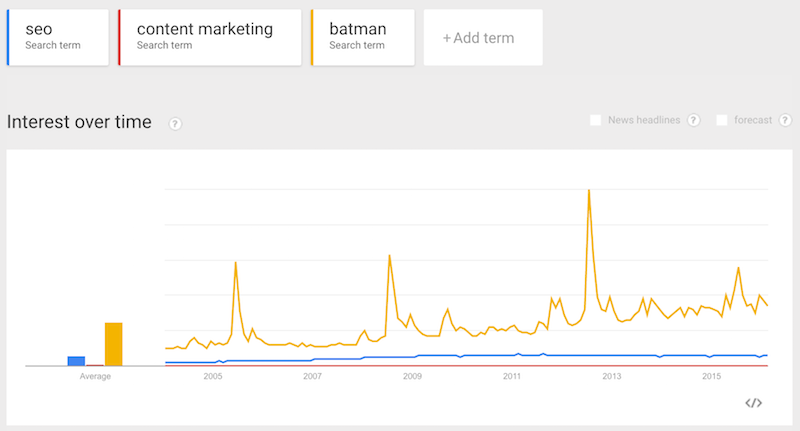
Search trend data can be incredibly valuable when adjusting campaigns to match seasonal demand.Google Trends is an essential free data source smart PPC marketers should be consulting.
Call tracking, analytics, and conversion rate optimization
11. Invoca
Phone calls are incredibly valuable to businesses. You need to understand who is calling and why.Invoca provides an solution to capture, manage, and track those all-important calls. It integrates with 30 platforms. Pricing starts at $1,000 per month.
12. Twilio
Twilio is a great option for call tracking and analytics. You can cheaply and easily buy phone numbers (local or toll free) and record phone calls to those numbers. Pricing is on a pay-as-you-go basis.
13. Call Rail
CallRail is another option for phone call tracking, recording, and analytics. CallRail features Google Analytics and AdWords integration. Pricing starts at $30 per month, with a 14-day free trial.
14. Google Analytics
Google Analytics provides everything you need to track the effectiveness of your PPC campaigns and website performance. It’s free, but there is a Premium option for large enterprises.
15. Twitter Analytics
Twitter Analytics provides a wealth of data. I won’t lie, I’m a bit obsessed with Twitter Analytics data. You can discover how many people are really seeing and engaging with your tweets, whether your campaigns are effective, and all sorts of valuable demographic data about your followers.
16. Certified Knowledge
Brad Geddes has a nice suite of tools at Certified Knowledge that will help you analyze data, create tons of ads; and optimize your quality score. Prices start at $79 per month.
17. Unbounce
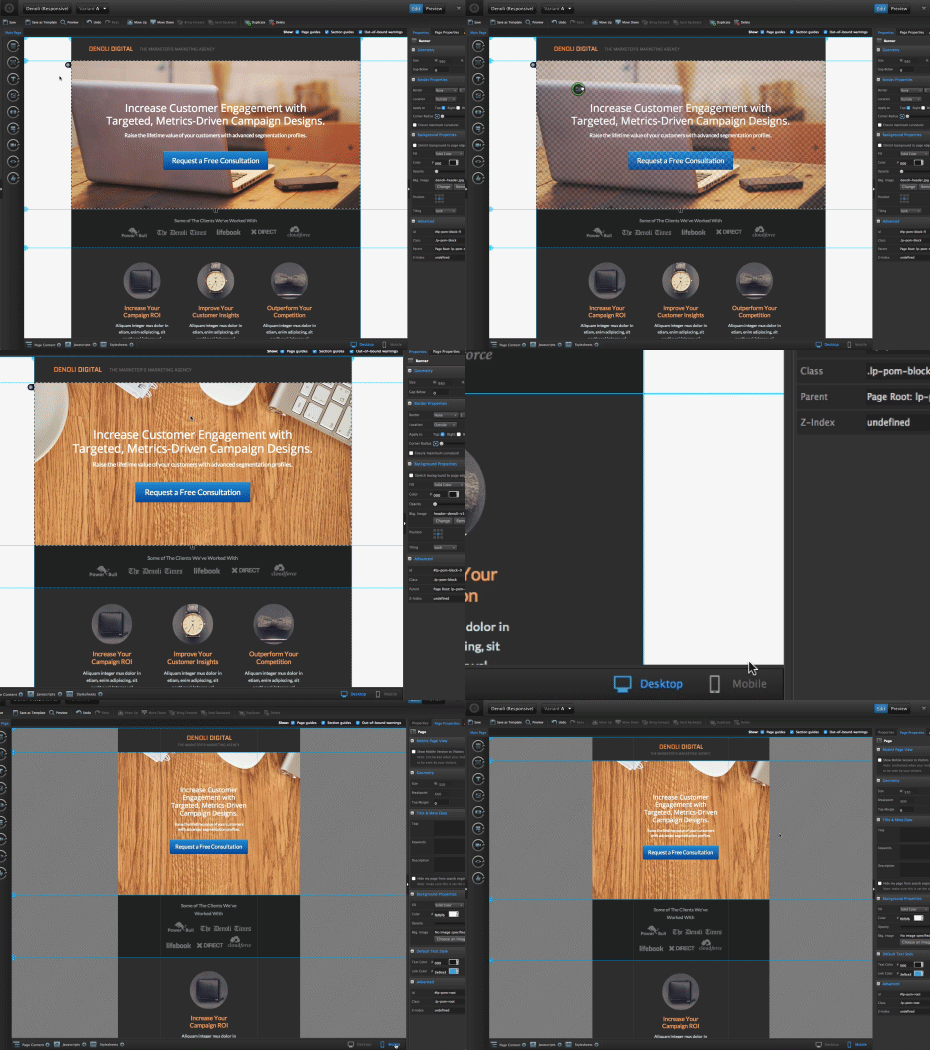
Need to build a landing page? Meet Unbounce, which offers more than 80 templates for just about every type of landing page you need (products, sales, lead generation, eBooks, etc.). Pricing starts at $49 per month, but you can sign up for a free trial.
18. LeadPages
LeadPages offers a simple landing page builder, as well as dozens of landing page and minisite templates to choose from. Yearly packages start at $25.
PPC ad copy inspiration
19. BuzzSumo
BuzzSumo is all kinds of awesome. It shows you the most shared content. Catchy article headlines (the type that get tons of shares and links) will also make catchy PPC ad headlines! BuzzSumo plans start at $99 per month.
20. Ubersuggest
You can get some good keyword ideas from Ubersuggest. This popular free keyword tool offers thousands of suggestions based on the keywords you type in.
Display ad image inspiration and creation
21. Share as Image
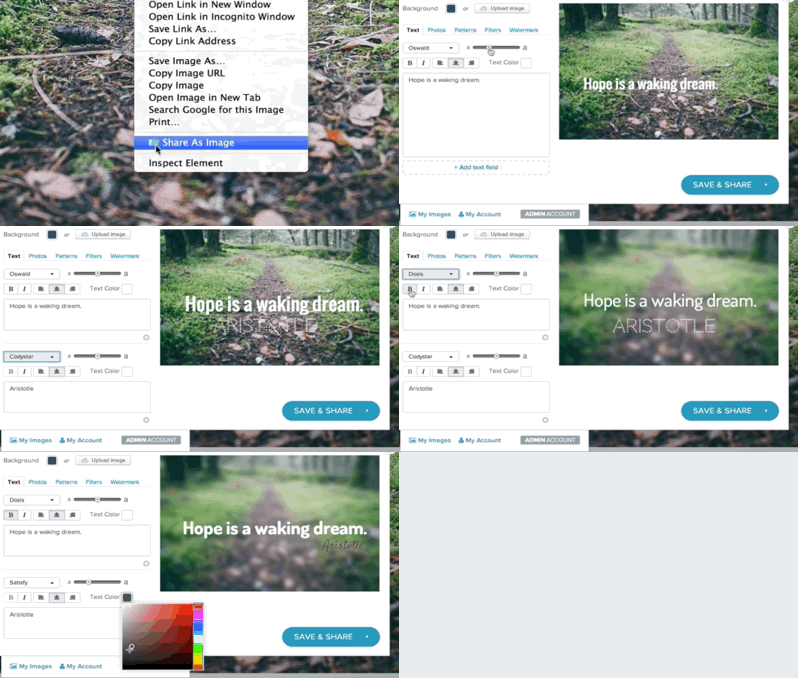
Share as Image is mainly touted as a tool for content marketers, but you can also use it to quickly create awesome display ads. Just be sure to check image copyrights before taking your ad live! Share as Image offers a free account, as well as a monthly plan starting at $8.
22. Canva
Canva is another tool that you can use to easily create striking display ads with their drag-and-drop interface. Upload your own assets to work with (for free), or pay a small fee to use images from their library.
23. Pinterest
Need some inspiration for display ad images? Spend some time browsing on Pinterest. It’s a fantastic tool for saving, organizing, and discovering amazing visuals to get your creative juices flowing.
24. Facebook Text Overlay Tool
Facebook has a frustrating rule that your ad (images and video thumbnails) can’t contain more than 20 percent text. To make sure you’re compliant so your ads can run on Facebook (and Instagram), use the Facebook Text Overlay Tool. If your text spills into 6 or more boxes of their grid, you’ll have to edit your ad and check it again until you get it right.
25. gifntext
Gifntext is so baller – and non-obvious. You can use it to create amazing GIFs for use in social and display ads! I almost hate to give this one away because I love that nobody is using it. So seriously, don’t use it. :)
PPC Automation
26. AdWords Scripts
Love AdWords Scripts? Who doesn’t? Scripts let you automate nightmarishly time-consuming tasks. Daniel Gilbert and Brainlabs have an insanely awesome collection of AdWords scripts – everything from advanced A/B testing, to close variant matching, to competitor tracking. Amazing stuff here!
Apps
27. Google AdWords App
If you ever need to do some AdWords campaign management in a taxi/Uber/whatever, you’re in luck. This beautiful and fast app for Android and iOS lets you adjust keyword bids, enable/disable AdWords objects (e.g., campaigns, ads, ad groups), and act on various recommendations from AdWords. You can’t create new text ads or campaigns or add keywords manually, however.
28. Facebook Ads Manager App
The Facebook Ads Manager App (for iOS and Android) lets you manage your campaigns. You can track the performance of your ads, edit ads, adjust your budgets, and even create new ads – all from your mobile device.
29. Google Analytics App
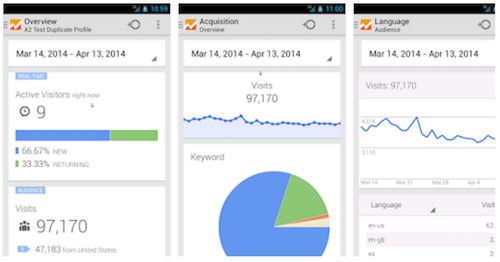
The Google Analytics is a bit limited – and by a “bit” I mean a “lot”. But if you’re on the go and need to quickly check on your stats or reports, this app will let you do just that.
What’s your favorite tool?
What PPC tools from this list do you use and love? Any tools I missed? Share your recommendations in the comments.