Showing posts with label customer retention. Show all posts

Friday, 8 January 2016

7 Strategies to Make Your Lifecycle Emails Work Smarter For You

One of my favorite learning moments this year was hearing from StatusPage.ioCEO Steve Klein how getting your lifecycle emails right can increase your conversion rate and revenue to the point where you gain the breathing room to concentrate on other priorities.
Lifecycle emails give your business breathing room
In this tinselly time of year for reflection and resolutions, I’m reviewing our own lifecycle emails here at Customer.io and thinking about how we can make them work smarter for us. What better time to dig through our posts from the past year to round up our best tips and strategies for creating lifecycle emails that drive customer engagement and happiness.

1. Use the Princess Bride formula for the best welcome emails.

Welcome emails are your chance to create a positive first impression and secure the trust that will fuel a long-term customer relationship. All you have to do is follow the lead of that fictionally famous swashbuckling swordsman Inigo Montoya.
Every welcome should have a greeting, an explanation of who you are, and set up what comes next:
  • Hello — the Greeting
  • My name is Inigo Montoya. You killed my father. — Who you are: a name and identifying information that provides the context required to make a connection (what you do, your interests, cares, and concerns)
  • Prepare to die. — What’s next for the reader? What should they do?
Princess Bride email formula
More about how to use The Princess Bride Formula or catch up with our whole class on how to create welcome emails.

2. Get smart about segments.

Stop hollering your message at whoever is out there — and communicate with specific people who are most ready to lend an ear (or eyes) with smarter segmentation. It’s the smarter way to email — cutting a shorter path to better engagement, deliverability, and revenue.
Modern platforms like Customer.io can segment people based on real-time activity and customer lifecycle. If you have a business where your customers are logging in with accounts, there’s no reason to get stuck on static lists that require constant upkeep and syncing or guess at engagement by looking at email opens and clicks.
You have the best chance at relevance when you can respond directly to individual context — so that your message feels personal and relevant rather than random shouts in the dark.
Get inspired with our collection of segmentation recipe ideas at “33 Ways to Personalize Your Emails at Scale.”

3. Don’t just send one email per goal.

People are busy and have more important things to do than deal with the loads of email flying about out there — which means there’s a really good chance that someone will miss your carefully crafted lifecycle email. And even if they do open and read you message, they might not heed your call to action.
If you only send one message for each goal you have, you’re greatly reducing your chances of success.
Send a series of drip emails for important goals that stop once people have taken action. Check out the drip series for iDoneThis, which aims to remind and convert free trial users to upgrade to a paid subscription. It takes more than one try.
iDoneThis trial email stats
The smartest marketers understand that persuasion takes time and follow-up and will not only implement behavioral drips for their conversion goals, but also try different tactics in different emails. For instance, if you’re trying to nudge someone to complete a key activation step, you can send a series of behavioral drip emails that employ different persuasion principles.
Catch up on targeted behavioral drip series in “What You Can Learn from Abandoned Cart Emails to Boost Sales” and different persuasion tactics you can use.

4. Use loss aversion.

Speaking of persuasion, there’s a pretty powerful psychological principle called loss aversion. People hate losing stuff — so much that they’re motivated to avoid it. If your product has a free trial, you can rely on the psychology of loss aversion to motivate people to reengage and convert to a paid subscription.
Here’s a striking example from Mention, a social media monitoring tool.
Mention trial retention email
Mention prompts people to act after a period of inactivity by proposing the suspension of your account altogether. It’s a powerful tactic that both spurs new users who want to avoid that loss to make a decision while filtering out user segments who were probably never going to activate.
More on loss aversion: “The Psychology of Upgrade Emails: Make Something to Lose”

5. Use video to activate and onboard users.

Video and email are a powerhouse combo when it comes to engaging and teaching people. Video can help you improve clickthrough rates, fast-track activation, and make stronger emotional connections. StatusPage.io even boosted trial-to-paid conversion rate by 2.4x by sending onboarding emails with video to get people to try key features.
A quick best practice tip for incorporating video into your emails: don’t embed the video itself into the email since email clients don’t all support it. Instead, use a screenshot or thumbnail with a play button laid over the image and link that to the page with your video.
For more tips and examples, check out “Why You Should Use Video in Onboarding Emails.”

6. Sound like a real human being.

Just because you’re automating messages or represent a business doesn’t mean you can skip out on the actual communication part and sound like a robot. Emails, like all types of great, effective content, take work!
Write like a normal human being, tell stories instead of commanding readers to do your bidding, and show who you are as a brand and an organization.
The comedian Louis C.K. does a great job of sending emails in his voice. It feels personal and resonant, all while promoting his business. He accomplishes this by telling stories, deviating from stock email scripts, and using a super simple, readable text-only layout. Here’s a a quick example:
Louis C.K. promotional email
Learn the complete Email Marketing Lessons from Louis C.K., plus how organizations use similar tactics to get through to their readers.

7. Treat Email as Part of User Experience.

People are checking email way more often than they’re using your product. That’s why behavioral emails are so powerful. As Olark’s Sunir Shah reminds us, what’s paramount is the entire flow that people go through to complete their goal in a product or app.
Once you can reach out to people based on their activity and interactions with your business — you can make that flow a better experience. Your emails are part of your product and user experience.
  • Check out 7 examples of retention emails
  • Learn how Instacart uses email successfully as part of a broader user experience.
  • Why behavioral emails make your job easier.
Have any favorite tips that you’ve incorporated in your lifecycle emails this past year? Share with us in the comments!
To view the original article Click Here

Wednesday, 25 November 2015

5 Creative Ways to Use Social Media for Customer Retention

5 Creative Ways to Use Social Media for Customer Retention
The Internet is peppered with blog posts about how to generate leads and get more customers through social media and rightfully so; it’s a fantastic topic worth talking about. But I rarely (if ever) see posts about how to use social as a means to retain current customers.
That’s astounding to me, especially considering what an amazing tool social media can be for surprising and delighting your current customers to keep them coming back! Soooo, I decided to do something about it and this post is that something.
The statistics vary quite a bit, but the consensus is that it cost four to 30 times as much to attract a new customer versus retaining a current one. Even on the low end of the spectrum, that’s HUGE!
customer-retention-ctt-1
So how can you use social to retain customers? Let’s take a look at five ideas for using social media to keep your customers coming back for more:

1. Use Social Media as a Customer Service Tool

Okay, I admit this one isn’t really “creative.” But if you do nothing else, for the love of dog, monitor your social media accounts to provide customer service and support.
More and more, people are taking to social to complain about a bad experience (which happens even to the best of businesses from time to time), and they expect a response. Don’t believe me? Go to Twitter and search “#complaint.”
This poor gal apparently created a Twitter account just to lodge a complaint! All five of her Tweets were about this issue and she stated in one of them that she’d been waiting over a week for a response through other channels.
I’ve protected her identity because, well, I don’t really know the rules and better safe than sorry.
how to use social media for customer retention
Anyway, do you think Anonymous here would rent a car from Avis again if she didn’t get a response? (For the record, Avis did respond and provided a customer service email address for her within 24 hours; I checked.)
In many cases, a prompt response to rectify a bad situation can earn you a customer for life. Showing genuine concern and remedying a bad experience often leaves a more lasting impression than if everything had gone well in the first place. Embrace these opportunities.
Monitoring social media for complaints can also be a great indicator of a serious organizational problem. If you’re dutifully watching your social media accounts and notice the same or similar complaints consistently popping up, there’s an issue you need to address.

2. Create a Check-In Campaign on Facebook

When someone checks into your business, Facebook will send you a notification; ignoring those is a huge wasted opportunity. Basically, someone likes your business enough to share with their friends that they’re patronizing it. These people are sharers by nature. Harness that and use it to your advantage!
how-to-use-social-media-for-customer-retention-check-in-ss
Try this: every time you get a notification that someone has checked into your business, leave a comment in their post and tell them, “Hey, thanks for stopping by [insert your business name here], we hope you had a great time! If you send us a direct message saying “I want a surprise,” you might just get one!” or something along those lines.
Then follow up with a coupon for a small discount off their next visit. Think about it, you’ve rewarded them with an incentive to come back, given them a reason to check in again, and chances are (because they’re sharers, remember) they’ll tell their friends what happened and encourage them to try it for themselves.
Admittedly, this method is going to be a tad labor intensive as there’s no real way to automate this process. For small businesses this may be a challenge to keep up with. But keep in mind, you don’t have to be Johnny-on-the-Spot and send the post right away. Have one of your employees dedicate some time at the end of each day look for check-ins and make the comments.
If you get to the point where it becomes a full-time job to keep up with all your check-ins, that’s what we’d call one of those “good problems.”
Record how many messages you’re sending out versus how many coupons are redeemed and judge if the promotion is worth it. My guess is that it totally will be.

3. Feature Customers on Social Media

People love to be recognized. Featuring your customers on social media is a great way to honor your most loyal patrons and show new ones that you care.
Imagine asking one of your customers if it’s okay to feature them as the “customer of the month.” Get their permission, snap a quick photo, make a nice template for a “Customer of the Month” image, and slap it up on Facebook or Instagram or wherever.
If we did one, it might look like this:
how-to-use-social-media-for-customer-retention-customer-of-month
Personalize it in the post with some details about your regular customer, like what they order, or that they pop-in every Wednesday morning like clockwork, whatever the case may be.
Do you think that’s something they would share on social media? I know I do! That’s amazing PR for your business and it didn’t cost you a thing.
You may even have customers come in inquiring about what it would take for them to be the Customer of the Month. If you have enough interest, feature a customer of the week or day!

4. Create Follower-Exclusive Specials

Entice your Fans to keep an eye on your Page by offering Fan-Exclusive deals that are announced only on social media.
If you do run a promotion like this, my advice is to make it easy for your customers to take advantage of it. Don’t require them to print something out or search for the post for proof. Just have them mention that they saw the post and give them the deal.
Again, make sure to have your employees track how many of these discounts are given out and you can gauge the success of  these campaigns.

5. Use Social Media to Announce News and Specials

Got a hot new product or running a time-sensitive deal? Make sure your customers are aware of it by posting it on social media!
For something like this, you should consider paying to promote it, especially on Facebook. You want to make sure this reaches as many of your fans as possible, which an organic post simply won’t. But, don’t fret; you won’t need a huge budget for this. It’s pretty amazing how much increased reach you can get for just a five or 10-dollar boost.
Even if you’ve never done Facebook advertising, this is a super easy task. You don’t even need to create an ad, just boost the post with a few clicks.
After the post is live, click the “Boost Post” blue button in the bottom left of the post. When the pop-up appears, choose the “People who like your Page” option for the audience, choose your budget, how long you want the boost to run, and you’re done.
how-to-use-social-media-for-customer-retention-facebook-boost-ss
Remember, if people have liked your Page, they’re interested in your product or service. Use this method to stay top of mind and give your customers a reason to come back.
Don’t worry about giving a discount to a customer that’s already going to come back either. If they’re repeat customers and following you on social media, reward them! This is another way to create not just repeat business, but customers for life and brand ambassadors through word of mouth advertising.

Wrapping Up

We’ve gone over five ideas to use social media to retain your current customers, but really the opportunities are boundless. You have a direct line to you customer base when they choose to follow you on social. Get creative and put your own spin on these ideas or come up with some of your own (and if you do, I’d love to hear about them in the comments section).
Just remember that social media marketing entails more than generating new leads; it can also help nurture your current customers and leave them craving for more of what you have to offer.
To view the original article Click Here

Tuesday, 19 May 2015

How to Market to Customers When The Free Trial is Over

The free trial is a common SaaS marketing strategy. According to Totango, 44% of SaaS companies offer a free trial. But the strategy is only as good as how far it gets you — to the end of the free trial.
What happens after the free trial? You can’t rely on the free trial alone to persuade customers to convert. You must have a method for retaining the customers once the free trial is over.
This article shows you how to do that. What you’re about to read are seven techniques that will give you the most marketing bang for your buck. This is the point at which it really matters. Don’t let those potential clients get away!

1. Offer your free trial without requiring credit card information.

Let’s back up to the beginning of the process. In order to best convert customers at the end of the free trial, you must make sure that you’ve created the best process for them to do so — the beginning of the free trial.
That brings us to a crucial question.
Should you require users to provide their credit card information in order to get a free trial? If you do, then you may be able to convert them easier when the free trial is over, right?
There are two strategies surrounding credit card information.
  • Strategy 1: Require the customer to provide credit card information in order to start a free trial. This makes it easy for the customer to convert after the free trial. However, it may cause the customer not to try the free trial at all. You sacrifice lower initial conversion rates for higher post-trial conversion rates.
  • Strategy 2: Don’t require credit card information to start a free trial. Instead, only require credit card information when it’s time to purchase an actual subscription. This makes it easy for the customer to engage in a free trial. However, it may produce lower post-trial conversion rates. You sacrifice high free trial users for lower post-trial conversion rates.
So, which one is better?
Don’t guess. Instead, look at the data.
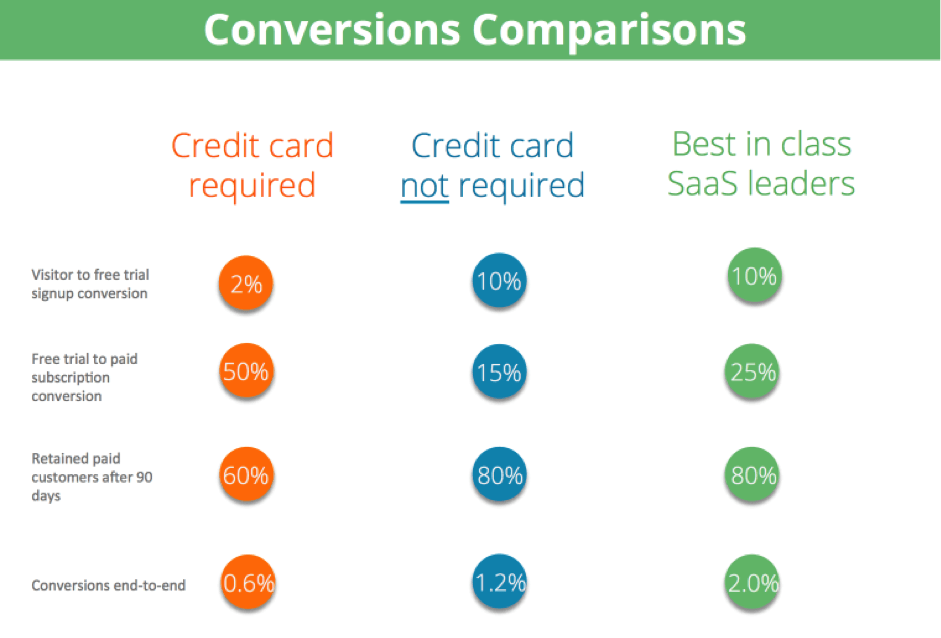
conversion comparisons
Based on this information assimilated from 100+ SaaS companies, your overall conversion rates will be better by not requiring credit card information upfront.
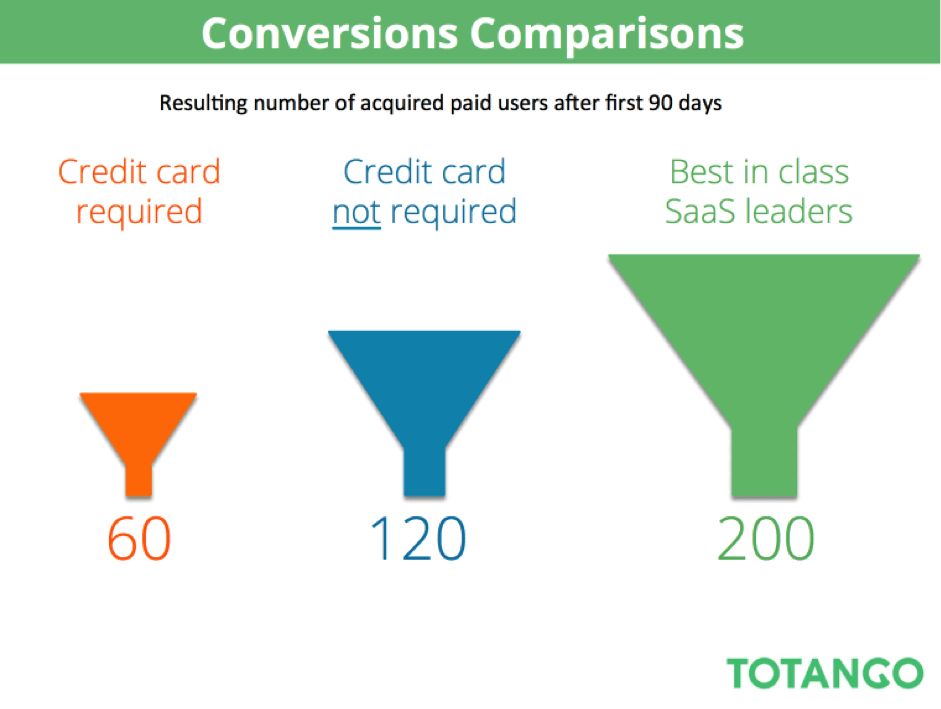
Viewed another way, the no-credit-card method earns 120 customers after 90 days, while the credit-card-required method earns only 60 customers in the same amount of time.
number of acquired paid users
This approach — not requiring a credit card — reinforces one of the essential tenets of SaaS marketing. What is that essential tenet? Engagement!
Lincoln Murphy beats this drum all the time: “Let me be 100% clear… it is up to you to drive engagement using whatever channels make sense.”
If that channel is to remove credit card barriers in order to introduce engagement, then so be it. The app is supposed to sell itself, and the only way it can do that is through sparking customer engagement.
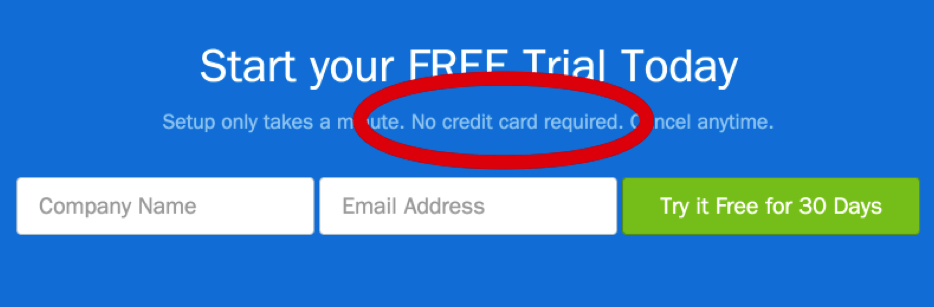
start your free trial today
Signup page for FreshBooks
Now, your app may be different for whatever reason. You may have compelling reasons to require credit card information before a free trial.
Keep in mind, though, the data says this: Not requiring payment generally produces improved conversions. However, you must aggressively maintain other methods of marketing to customers after the trial.
As New North’s Tobin Lehman wrote, “With a SAAS model, the best acquisition plan can be crushed with poor followup.”

2. Use email.

Your number one tool for gaining free trial users is email.
Early on in the process, you should have gained the user’s email address. Now, it’s your chance to use that email address to send marketing emails.
The best way to communicate with users during the trial period and once it’s over is email.
This is an obvious point, right? Yes, but you’d be surprised at how few companies are actually using automated emails to keep in touch with their customers.
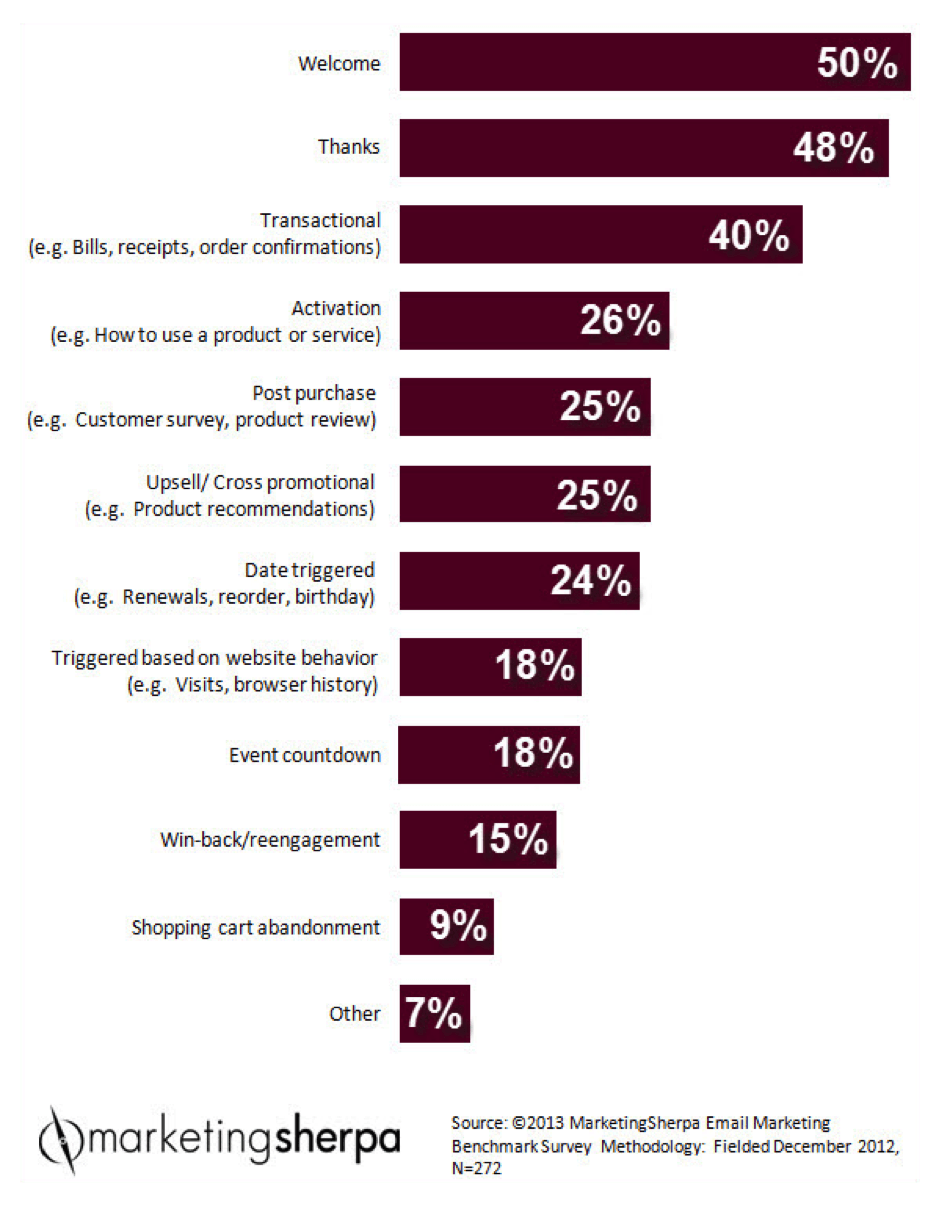
The term for getting a customer to use the software is activation. Only 26% of companies are using the strategy of automated and event-triggered emails to keep in touch with free trial users.
marketing sherpa email marketing survey 2013
Image source
If you don’t have a system in place for activating users via email, it’s time to get it going.

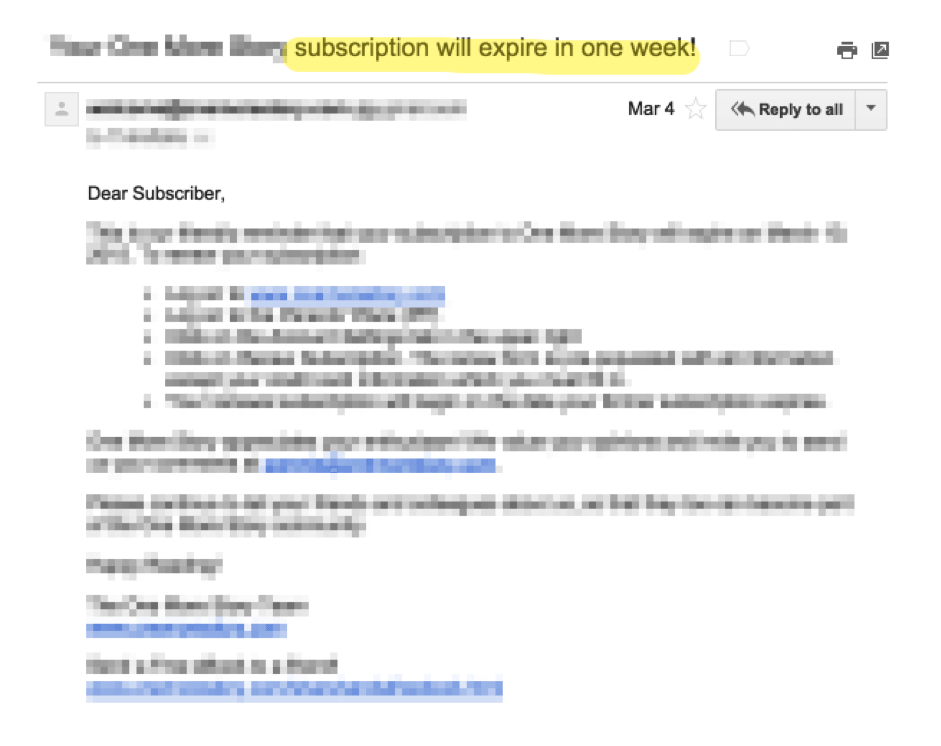
3. Remind them when the free trial is going to expire.

It’s common to send SaaS customers emails after the expiration of their trial. What’s not so common is to send free trial customers such emails before the expiration.
subscriptions will expire in 1 week
You should send at least one email before the trial expires. This way, the customer is prepared for the cutoff date. Depending on the duration of the trial (e.g., 15 days or 1 month), you should probably send even more emails.
The idea behind these notifications is to remind the customer to use the software. The only way that you’re going to gain a customer is if that customer engages with it. Reminders will help encourage usage. Maybe they forgot about the free trial. Maybe they didn’t realize how soon it will end. Maybe they just need a reminder.
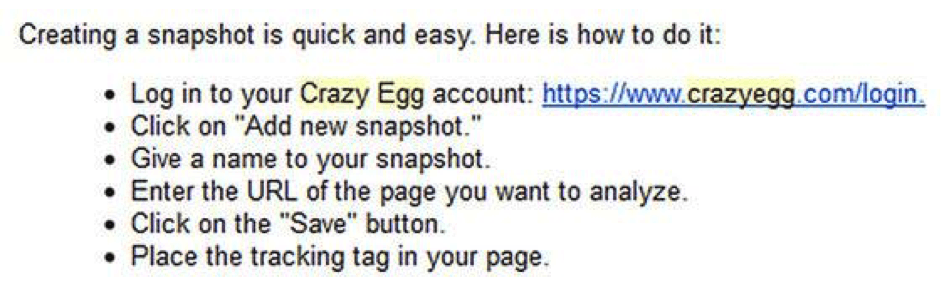
You can be really simple with it. Just a few bullet points will do it.
just a reminder
So, go ahead, remind them before it’s too late.

4. Provide an early discount if they buy before the expiration.

Among many SaaS products, it’s popular to lure the customer in with a discount if they don’t purchase within 30 days after the free trial.
That’s a fair approach. However, I suggest using this strategy in reverse.
Here’s how it works. The customer signs up for two-week free trial.
One week into the trial, they receive an email that says something like this,
Hey, we just wanted to let you know that if you’ve decided on subscribing to ABC, now would be a good time.
For the next five days of your free trial, we’re dropping the membership price to only 20%.
Click this link to subscribe. We won’t be able to offer this discount once the free trial has ended, so please consider purchasing now.
This way, you can earn more active signups during the usage phase, rather than at the end of it.

5. Ask for action, any action.

I like the way that the article from Inbound put it: “Encourage the prospect to take the next baby-step down the sales funnel.”
Baby steps. Anyone can take baby steps, even reluctant customers. To enhance the likelihood of a free trial user becoming a customer, they need to take some sort of action. It doesn’t matter if that is a big action or a little action. They just need to take action — to do something.
Here are some of the actions that you can request.
  • Read a blog. If you’re doing content marketing (and you should be), ask the user to read your blog. The very act of reading your article helps the customer to engage with your business.
  • Provide feedback/fill out a survey. Sometimes, surveys can be very annoying. Other times, they could be exactly what a customer needs in order to take action. Surveys provide a good excuse to get back in touch with the free trial user, and to ask her to do something. Make sure that the survey is easy, simple, and friendly.
  • Send an email. Make sure you allow them to simply “reply” to this email. Sometimes, a potential customer simply needs to air his concerns, or ask a question. That’s fine. A few simple exchanged emails could be the perfect way to tip the scales in your favor. Don’t merely allow the customer to ask questions or provide feedback; ask for it.
When they take action, it builds their trust in your business and product. Action tends to create a sense of connection and obligation.

6. Allow the free trial user to extend their trial period.

Go ahead, and give them a few more weeks. More time to use the product does several things:
  • Allows them to use it if they haven’t had time.
  • Allows them to depend on the product more.
  • Allows them to deepen their experience with it.
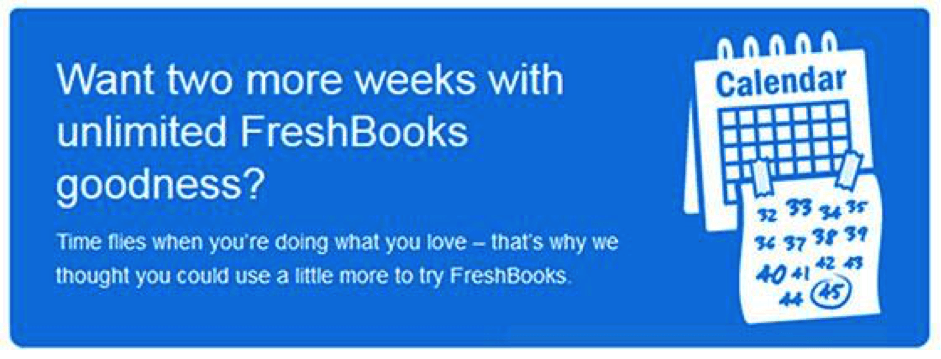
Here’s what Freshbooks does when the free trial expires:
freshbooks goodness
Image source
Why not? If the user hasn’t effectively engaged with the product, then how can they validate their interest in purchasing it? Give them a second chance.
What do you have to lose? Oh, nothing, except maybe a customer. That’s all.

7. Make it easy for the customer to buy.

Once the free trial has ended, it should be absolutely easy for the customer to buy the full version.
Too often, developers and marketers overlook this crucial stage. They assume, somehow, that the user is going to know how to purchase and activate a full version.
Don’t assume that. Customers need to be told, step-by-step, how to buy the product. And it shouldn’t be complicated.
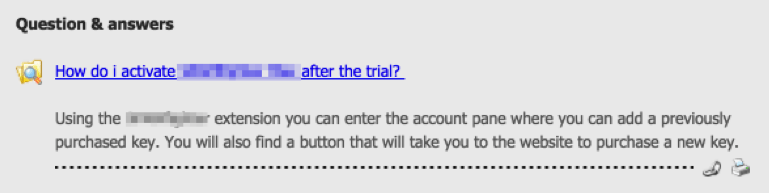
Here’s a SaaS FAQ that I came across while researching. This is an example of how not to do product purchases.
questions and answers neil patel
By the way, if the customer has to ask how to buy the product or activate a new account, you’re doing it wrong. The process should be childishly simple.

Conclusion

SaaS companies are obsessed with customer retention, and rightfully so.
But what about the retention phase that matters? Let’s view free trial phase as a form of customer retention. They’re not paying…yet. The goal is to retain them as a user right into paying phase.
As soon as you turn up the marketing charm, they’re going to be on board. It’s time to take your marketing to the next level with a little bit of post-free trial marketing.
What techniques do you use to encourage free trial customers to convert?
To view the original article Click Here