
How Not to Comment on Blog Posts (and How to Do It Correctly)
There’s a right way and a wrong way to do just about anything. Commenting on blog posts is no exception.
If you’re of the opinion that commenting on blog posts is a great way to boost your traffic and even give you a bump in Search Engine Results Page (SERP) ranking, you’re right. It’s a great addition to your overall online marketing strategy.
However, as with so many other aspects of digital marketing, if you don’t do it right, you could do more harm than good. Not only could Google penalize your site for spamming, but you could also lose some good will when people who read your comments think that you’re the online equivalent of a used-car salesman or you’re just trying to create a backlink to your site.
Fortunately, those problems can be avoided with a little education about how not to comment on blog posts. Here are a few pointers.
DON’T USE A FAKE OR BRANDED NAME
If you want to leave a comment anywhere, do so with your own name.
Certainly, avoid using a branded name. Nothing screams “I AM TRYING TO SELL YOU SOMETHING” like a comment from “XYZ Company, Inc.” or some other similar name. If you go that route, you’re already setting up a hurdle you need to jump over.
Also, don’t use the default name that some comment systems will provide you. If your real name is a common one (like “John Smith”), then you might get a helpful suggestion from the system to use something like “js19043” as your name because “John Smith” is already taken. Instead of accepting that default, find a creative way to spell out “John Smith” using a combination of characters and symbols that hasn’t already been taken.
The bottom line is this: you want to strike a note of authenticity when you leave comments. One of the best ways to come across as genuine is by using your real name.
DON’T USE AN ACCOUNT THAT ISN’T CONNECTED TO GRAVATAR
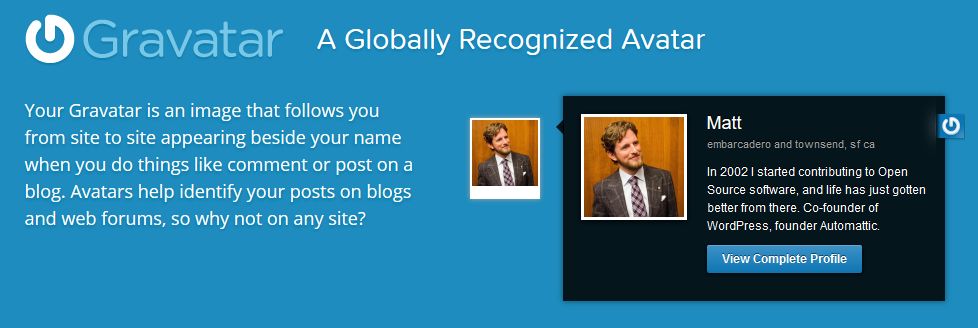
By now, you’ve probably heard of Gravatar. It’s a web application created by Automattic, the same company that brought us WordPress.
How Not to Comment on Blog Posts – Gravatar
In short, Gravatar gives you a way to set your avatar once and use it just about anywhere. That way, you don’t have to upload your picture to a bunch of different websites every time you register to comment.
The catch here is that your Gravatar image is associated with the email address you used when you registered on the site. So, if you use a different email address to register on one or more websites, your account will not be associated with your Gravatar image. That means you’ll likely end up with one of those ugly silhouettes as your avatar instead of your attractive face. That’s going to be a problem if you want to build trust.
To avoid falling into that trap, always register to register for comments with the same email address that you used when you registered at Gravatar. That way, your Gravatar image will be shown next to your comments on every website.
This is also a good time to remind you that your Gravatar image should be your real face and not a cartoon or image of your favorite pet. If possible, it should be a portrait that’s been taken by a professional photographer.
Why is that so important? Remember, you want to come across as authentic. To do that, you’re going to need to show people your real mug.
DON’T COMMENT ON JUST ANY BLOG POST
 How Not to Comment on Blog Posts (and How to Do It Correctly)
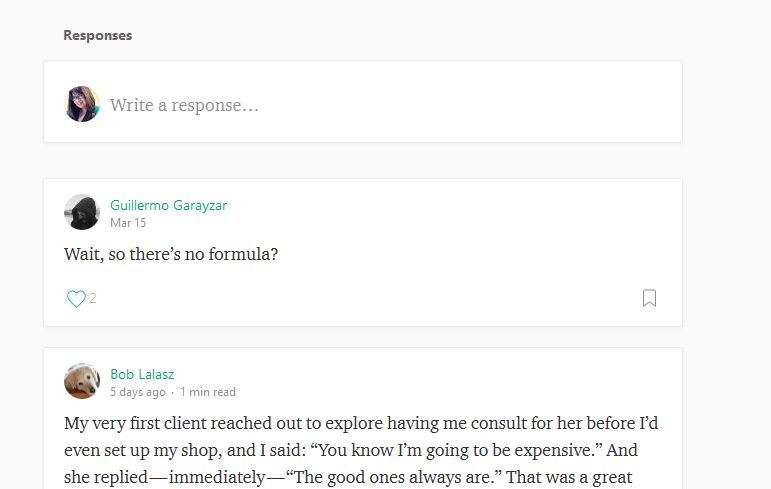
If you want to get flagged as a spammer in a hurry, leave a comment on blog posts that aren’t even related to your industry.
Sure, there are a lot of readers over at The Huffington Post, Business Insider, and Forbes. However, two of those sites cater to a general audience and the third might not reach too many people who are in your target market.
Instead of just posting comments anywhere and then checking your analytics to see what sticks, why not approach blog commenting the same way that you (should) approach marketing in general? That is, find a site or two where people in your target market like to hang out and start posting comments there.
Incidentally, that’s a better strategy even if those blogs don’t get as much traffic as The Huffington Post or Business Insider (and they likely don’t). Why? Because targeted marketing is almost always going to give you a better bang for your buck than trying to reach a massive audience of people when most of them aren’t interested in what you have to offer.
DON’T WRITE COMMENTS THAT AREN’T RELEVANT TO THE TOPIC OF THE POST
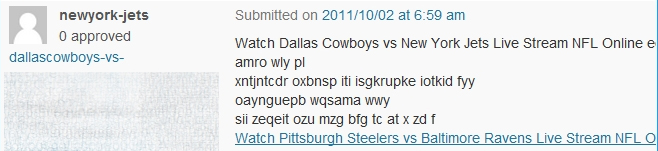
Another outstanding way to get banned from the comments section of a website is to leave comments that aren’t related to the post and clearly intended just to gain yourself a little more exposure or provide a backlink to your site.
How Not to Comment on Blog Posts (and How to Do It Correctly) – Spam Comments
Avoid that by visiting some great sites and searching for posts that are relevant to your niche. Then, offer some helpful content related to the topic of the blog post. Add a backlink as well if it looks natural.
If you add valuable content to the post with your real name and a professional image attached, you’ll be viewed as someone who’s a contributor rather than a spammer.
DON’T GO FOR THE “HARD CLOSE” IN A COMMENT
Use the comments section to build your reputation and gently lead people down the sales funnel. Avoid using it to move right in for the “hard close.”
You’ve probably read some comments on a blog post that were obvious spam. They usually begin like this: “My niece makes $500 a day working from home…” It’s an obvious attempt at someone trying to sell a work-at-home scam. Clearly, though, some people fall for it because those ads are all over the comments sections of popular blogs.
While you might not come across as quite that harsh, you can still appear a little too aggressive in your online marketing efforts with blog comments. For example, if you’re an expert in keyword research, you might comment on a blog post about that subject with something like: “Not sure about keyword research? I can help. Visit my website…”
That’s a little too forward. Instead of taking that approach, offer a couple of good pointers about keyword research (yes, for free) and maybe one pointer with a curiosity gap (e.g., “Don’t forget about all those great tools for keyword research.”) Then, leave a link to your site so people can contact you if they want more information.
DON’T USE AUTOMATED COMMENTING SYSTEMS
If you’re like any other effective digital marketer, you’re always looking for ways to automate certain tasks so that you can be more productive. There’s nothing wrong with that.
Unfortunately, you’re not going to be able to automate commenting on blog posts. Not yet, anyway.
Certainly, there are some tools, widely used by practitioners of the SEO black arts, that will spam comments to the farthest reaches of cyberspace. You might think that you can save some time by purchasing one of those tools and letting it rip.
It’s not likely going to do you any good.
Why? For starters, when you comment, you’re doing more than providing a backlink or offering some helpful advice and then getting out. You’re networking. You’re trying to build relationships with people who could be customers or clients.
An automated process doesn’t do a very good job of building relationships.
That’s why it’s better that you invest the time necessary to find the best places to add comments, structure your comments appropriately, and respond to people who reply to your comments.
It’s going to require an investment of your time. At this point, it can’t be automated.
DON’T GET INTO ARGUMENTS
Alas, everybody has a strong opinion about something. When you start making a habit of leaving comments on blog posts, you’ll encounter a variety of unsavory sorts who will call you names, challenge your points, and/or tell you that you don’t have a clue.

How Not to Comment on Blog Posts (and How to Do It Correctly) – Arguing in blogs
That’s par for the course.
If you want to establish your presence online, you’re going to have to put up with those types of responses. The good news is that you don’t have to lower yourself to their level.
Usually, trolls feed off of attention. Starve them by not giving them any.
If somebody attacks you in an unprofessional way, just ignore them. Instead, address people who have legitimate, sincere questions and comments about what you’ve written.
You’ll look weak and petty if you insist on responding in kind. That won’t help you build your brand.
DON’T BE LONG-WINDED
Look, you might know a whole lot about the subject of a particular blog post. You might think that there are at least 7 things that the author didn’t cover and you’d like to address them in your 1,000-word comment.
Resist the urge to do that.
Remember the advice of William Shakespeare: “Brevity is the soul of wit.” Keep your comments terse so that readers can quickly grab a few key points from them.
Why? Because everybody is busy and almost nobody has time to read a lengthy comment.
Also, you can generate a bit of a curiosity gap in your comment (e.g., “There are also at least six other ways to solve this problem”) and include a link that will direct people to your website. That will get you some hits and possibly a few more customers.
DON’T JUST REPEAT WHAT’S IN THE POST
It’s not uncommon for some well-meaning commenters to just provide a synopsis or overview of exactly what was written in the post. That doesn’t add anything to the conversation and will likely result in people putting you on mute or mentally ignoring you in the future.
If you don’t have anything of value to contribute, it’s probably best if you didn’t write any comment at all.
DON’T BE AMONG THE LAST TO COMMENT
A good blog post is like a fine bread left out at room temperature. It’s going to go stale eventually.
Even the most viral posts are eventually forgotten. That’s why it’s important that you, as a blog commenter, strike while the iron is hot.
Grab the RSS feeds of all the blogs where you think your comments will be the most effective. Add them into your copy of Feedly and browse through them once or twice per day. That way, if you see a blog post that’s relevant to your niche, you can quickly comment on it.
You’ll get bonus points if you comment early on a blog post that eventually goes viral. If your comment is towards the top of the stack, then it’s likely to receive maximum exposure.
On the other hand, if you comment on a blog post that’s three days old and has already “run its course,” then you’re limiting your exposure. Don’t expect too much traffic from that effort.
HOW TO DO IT RIGHT
Now that I’ve covered what not to do when commenting on blog posts, I’ll offer a few pointers about the right way to add comments.
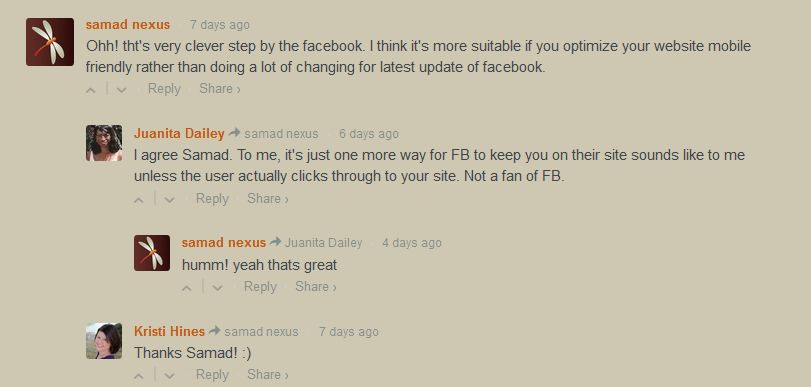
For starters, leave a very valuable, insightful comment. Say something that contributes to the subject in a meaningful way or other commenters will just gloss over your remarks.
Keep in mind that a great comment will allow you to get noticed by the author sometimes. I say “sometimes” because some authors have a “never read the comments” policy when it comes to their own blog posts. They’ve adopted that policy thanks to the abundant number of trolls that infest cyberspace. However, for those authors that do read the comments, they’ll take notice of a comment that adds value to the subject. They’ll also take notice of the commenter.
How Not to Comment on Blog Posts (and How to Do It Correctly) – How to do it right
As a rule of thumb, leave five comments over time on a particular author’s work. That way, the author will see your name repeatedly and you’ll establish yourself as someone who’s knowledgeable about the same subject.
After a while of commenting, you could end up building a business relationship with the author. Obviously, that’s going to benefit both of you. If you’re just getting started, though, it’s likely to benefit you a whole lot more.
Once you’ve established a relationship with an author, ask about guest posting opportunities. Please note that guest posting is a two-way street. You would like the opportunity to guest post on the author’s blog and, in exchange, the author can guest post on your blog.
Alternatively, you can also ask the author to feature your work on his or her own website. That will increase your reach.
Once you’ve established yourself as a bona fide commenter and not a spammer, you can leave links in your comments. Just remember that patience is a virtue here. Avoid leaving links until you’ve earned your stripes as someone who brings value to the discussion.
The bottom line: use commenting as a relationship-building tool. Engage with authors whose business interests intersect with your own to create joint ventures and build your network.
WRAPPING IT UP
Commenting on blog posts is like anything else in this way: you have to learn how to do it right. Now that you know proper etiquette when it comes to offering comments on blog posts, it’s time to find a few blogs featuring authors you’d like to add to your network and start commenting.
Good luck!
To view the original article Click Here