Showing posts with label facebook ads. Show all posts

Thursday, 9 February 2017

How To Use Facebook Messenger Ads in Your Business

MessengerAdsBlog_V1
Want to learn how to drive quality traffic from platforms like Facebook, Google, YouTube and LinkedIn? Become a Certified Customer Acquisition Specialist and have a guaranteed traffic plan for acquiring new customers. Learn more now.
January 24,2017 by
Molly Pittman
Pick legible, clear fonts, especially if it’s going to be a small Facebook ad.
When Facebook began rolling out Messenger ads on November 8, 2016, I knew we were in for some excitement!
DigitalMarketer has been testing ever since, and in this post, I’m explaining the ins and outs of Facebook Messenger ads and how to strategically deploy them in your business. how-to-use-facebook-messenger-ads
But before you can put them to work you need to know the why—why this ad type matters to ANY and EVERY business…
I know it’s easy to assume that this ad type (or channel as a whole) would only work for “high-tech” audiences, or “big” companies that have the resources to man a customer communication channel…. but, stay with me.
That’s not the case.
After doing a bit of thinking and research, I realized that assuming Messenger only works for highly technical markets is like saying that Facebook as a marketing channel only works for highly technical markets…
facebook-messenger-ads1
This chart from Business Insider is mind-blowing. At the beginning of 2015, monthly usage of the top four messaging apps surpassed usage of the top four social networks.
And, over ONE BILLION people use Facebook Messenger as a whole. Even my great-grandmother (she’s in her 90’s) uses Facebook Messenger…
My point is that we must not only enter the conversation that’s already taking place in our customer’s head, we must BE in the places where our customers are having their conversations.
Aside from even advertising through Messenger, being reactive and responsive to your people throughout the entire Customer Journey via Messenger is essential.
I recently experienced this as a consumer.
I was driving down the road and saw a new apartment complex. I reached out via Messenger from their Facebook page to inquire about the property.
Every step of my Customer Journey, from scheduling a tour to negotiating the lease, was done through Facebook Messenger. It’s very likely that if they weren’t as responsive on Messenger as they were, I would’ve ended up living somewhere else.
how-to-use-facebook-messenger-adsIf you get nothing else out of this article remember this… Messenger will continue to become an essential communication channel.
Facebook reported that more than one in two people say they’re more likely to shop with a business they can message, and 67% of people expect to message businesses more in the next two years.
It’s how people are communicating with family and friends. A large portion of our society prefers to communicate via a messenger with quick responses.
Adapt… or lose business to your competition.
Now, we, as marketers, have the opportunity to tap into this tremendous channel to grow our business and better serve our customers.

Here’s How It Works…

There are two different “types” of Facebook Messenger ads.
  1. Facebook Messenger as a destination (I’m calling them destination ads)
  2. Facebook Messenger as a placement (sponsored messages)
Let’s start with…

Facebook Messenger as a Destination (Destination Ads)

Destination ads appear in the newsfeed, and when clicked on, open inside of a Facebook message (instead of sending traffic to a URL):
facebook-messenger-ads4
You can find this destination option at the ad level when creating a campaign in Ads Manager or Power Editor.
The ad looks and feels like a normal ad, with the option to include an image, video, carousel, slideshow, etc.:
facebook-messenger-ads5
A few things to note about destination ads…
  1. You can target ANYONE (this is important – you can target interests, behaviors, custom audiences, etc.)
  2. Available in the newsfeed (desktop and mobile)
  3. Available for campaigns with the objective “page post engagement” or “send people to a destination on or off Facebook” – so, don’t panic if you chose another objective and don’t see Messenger as an option
Ways to use this ad type…

1. Retargeting

What’s the biggest “hang-up” in your Customer Journey?
Use destination ads to give people an extra touch point with your brand. Help them overcome any barriers to purchase.
For example, we use Messenger ads to retarget people who visit our sales pages but don’t purchase the product. If you visit the sales page for DigitalMarketer Lab but don’t buy, you’ll see this ad:
facebook-messenger-ads6
There’s usually a reason people don’t buy, and if you give people a platform to ask questions and help overcome doubt, it works wonders. For example, people want to know if the product will actually work for their business, if there is a contract or commitment, if they can add team members, etc.
Once their questions are answered, most are ready to purchase the product. This entire conversation is happening via Facebook Messenger.

2. Cold traffic

We have the option to run destination ads to cold traffic (people who have never heard of our brand). how-to-use-facebook-messenger-ads
This can be used to raise awareness and acquire customers, but—it must be done right.
The key here is to make sure the ad prompts an ideal sales conversation. For example, if your ad asks people to respond with their favorite color, it’s probably going to be a waste of time and money.
But, if you can prompt a conversation that leads to your ideal sales conversation… you’re golden.
Imagine you own a home improvement company that provides a slew of services: plumbing, landscaping, painting, etc.
You run an ad in your local area, “If you could ‘fix’ one aspect of your home, what would it be?”. People respond with “landscaping” or “I’d paint my home.” You now know their pain point and can cater your conversation to this topic, hopefully ending in a sale.
Again, I wouldn’t recommend starting here as I don’t believe this is the most highly leveraged activity within Facebook Messenger ads, but, it’s worth a shot when you’re ready for scale.

Facebook Messenger as a Placement (Sponsored Messages) 

Sponsored messages appear inside of the Facebook Messenger inbox.
facebook-messenger-ads7
It’s an identical experience to receiving a Facebook message from a friend, these just come from a brand.
You can find this option at the ad set level when creating a campaign in Ads Manager or Power Editor:
facebook-messenger-ads8v2
When creating an actual message, you can include links and images:
facebook-messenger-ads9
A few things to note about sponsored messages…
  1. You can ONLY target people who have previously messaged your page in the past.
  2. It’s available for campaigns with objectives of “send people to a destination on or off of Facebook” and “website conversions.”
  3. Facebook charges advertisers by impressions, you are charged whether the end user opens the message or not… unless you use a tool like….

ManyChat.com

facebook-messenger-ads10
ManyChat is much more than a “bot” (in my opinion, the bot is the least sexy feature).
ManyChat builds a list of subscribers that you can send sponsored messages to; people who have previously messaged your page:
facebook-messenger-ads11
Although Facebook is building this list, too, the benefit is ManyChat allows you to broadcast sponsored messages to your subscriber list for just $10/month (instead of paying Facebook on a CPM basis):
facebook-messenger-ads12
We’ve sent four sponsored messages to our subscriber list, and the open rates have been INSANE (especially compared to email open rates)!!
facebook-messenger-ads13
So far, we’ve only sent promotional broadcasts (that mimic our email promotional calendar) to sell tickets to our annual event and invite prospects to join DM Lab. We do plan to begin weaving in content based emails, similar to an email newsletter, in the near future.
(RELATED: Episode 72: How DigitalMarketer Generated 500% ROI in 3 Days Using Facebook Messenger)
So, ready to put this to work in your business? Let’s talk about…
(NOTE: Want to become a certified paid traffic master? Learn how to drive quality traffic from platforms like Facebook, Google, YouTube, and LinkedIn and build a guaranteed system for acquiring customers with our Paid Traffic Mastery Certification. Learn more now.)
paidtraffic2

How to Build Your Subscriber List

Sponsored messages are so powerful, and—this is really important—the fact that you can only send them to people who have previously messaged your page will keep this from becoming a spam-festhow-to-use-facebook-messenger-ads
But, there does need to be list building strategies, similar to email.
You can use destination ads to build your Messenger subscriber list.
ManyChat also provides a unique URL that when clicked, opens a Facebook message with your brand page.
For example, we sent an email and used the link to drive messages:
facebook-messenger-ads14
Not only did this provide an extra line of communication for people who would prefer to use Messenger, it sold tickets! As you can see from this Facebook Messenger conversation between a customer and one of our sales reps…
facebook-messenger-ads15
If you’re using a software like Shopify, you can integrate with Facebook and build your subscriber list as people purchase your product:
facebook-messenger-ads16
You can also send follow-up messages to confirm the order and send shipping information:
facebook-messenger-ads17
facebook-messenger-ads18
…Which is a great way to improve user experience.
And, don’t forget—even people who message your page, (for customer service related questions, for example) are added to your subscriber list!
You may be wondering, Wow… this sounds awesome, but it requires a lot of human resources to answer messages!
And, you’re right. But, it doesn’t mean it’s not worth it AND it doesn’t mean that you can’t benefit from this ad type even if you’re a one-person show. Here are a few tips:
  1. Start super small, down the funnel. Use destination ads to retarget people who are towards the bottom of your funnel. This will ensure you’re having fewer, but more highly leveraged conversations.
  2. Get help from a bot. Use ManyChat’s bot feature to welcome people who message your page, you could essentially automate the sales process with this tool.
  3. Use the tagging system inside of Facebook Messenger to stay organized. Our team created tags to help systemize the process:
facebook-messenger-ads19
I also recommend integrating your customer service and sales platforms with Facebook Messenger so that your team can leverage Messenger while still having access to customer information.
We’re only three months into Facebook Messenger ads and there’s already SO much opportunity.
Take advantage of this channel to communicate with your prospects and customers. Build systems in your business that leverage this channel so that you can build a subscriber list, similar to email. Then…
Test, test, test, and as always… let us know how these strategies are working in your business!

Saturday, 5 December 2015

10 Things I've Learned While Learning Facebook Ads

I've been obsessed with Facebook Ads for the past few years. It probably didn't hurt that the first test campaign we ran earned an excellent $0.04 cost-per-engagement from a $10 budget.
I'm obsessed because I'm convinced Facebook Ads are one of the most powerful tools we currently have as digital marketers. Whether you're looking to spend $200 a month advertising to a single zip code or $20,000 a day reaching sports fans, you can reach the ideal target audience for your organization with targeting criteria that no other ad network, search engine, or social network can match.
With that in mind, I'm going to share the 10 biggest quirks that have caught me off guard since I started learning Facebook Ads to help you avoid some of the same mistakes.
I'd really love for this to become a go-to resource for people learning Facebook Ads, so if you have tips of your own, please leave a comment!

Quick Guide:

#1 - Your ad image must contain less than 20% text.
#2 - Split test your bid models between CPC, CPM, & Engagement.
#3 - Targeting options utilize both AND operators and OR operators.
#4 - Selecting Location doesn't necessarily mean people who live there.
#5 - Facebook's third party data goes far beyond the things you think Facebook knows about you.
#6 - There are 4 ways to access Facebook ad management, with varying levels of difficulty.
#7 - It's tempting to prefer desktop over mobile, but do your research first.
#8 - Get your pixels straight before you start running ads.
#9 - Segment your creative!
#10 - Start using good naming conventions now.
Add your tips for learning Facebook Ads in the comments

#1 - Your ad image must contain less than 20% text.

If there's a single most-common reason that my ads get denied, it's because I forget to check text coverage on images for my sponsored organic posts.
Whether you're promoting organic Facebook posts on your page's feed or running pure ads, Facebook is very picky about how much text you can display inside of your ad creative.
This is Facebook's way of making sure that your ad images aren't covered in obnoxious calls-to-action, over-sized logos, and other excessively commercial elements.
Official 20% Rule Page: https://www.facebook.com/business/help/468870969814641
Facebook provides a tool for checking how much of your image is covered in text, which you can test for yourself at https://www.facebook.com/ads/tools/text_overlay. When you click the grid cells that contain text after uploading your image, you can see the percentage of the image that contains text.
Here's an example of two image variations you might test, but only the option on the right would be usable in a campaign:
facebook-20-percent-image-rule
The fastest way to avoid the 20% rule is to automatically produce all of your social media imagery with the 20% rule in mind — or produce a separate set of images just for Facebook.
When we create social media graphics, we have a transparent grid saved as a PNG file that we paste into a layer of the image we're working on. You can copy & paste the image below, or download templates for Illustrator, InDesign, Powerpoint, and Photoshop from our blog: Facebook Ads 20% Text Grid Templates.
Facebook Ads 20% Image Grid Template

#2 - Split test your bid models between CPC, CPM, & Engagement.

Facebook offers a few different ways to structure your bid model, which is the basis for how you're billed. For example, here are the bid models available for a sponsored organic post:
facebook-ad-bid-models
Each one may offer a better pricing structure depending on the audience you're targeting, the goal of your campaign, and the ad content that you're using.
In my experience, there is not a single best model for everyone. For example, if I put out a really interesting post and my goal is clicks, I might get the best results by using CPM bidding that gives me a much lower CPC than actually using CPC bidding. However, if I put out a somewhat boring post and my goal is clicks, I might be better off just paying for the clicks with CPC bidding, since it will require a lot more impressions to generate the same amount of clicks. Every situation is different, so like everything else in PPC, you have to test test test for yourself.

#3 - Targeting options utilize both AND & OR operators — and those targeting options are changing.

There are a ton of Facebook Ad targeting options available — that's where the power in Facebook Ads comes from. We put together an enormous Facebook targeting guide if you want to see all of the options available.
But, sometimes the targeting options don't act the way you think they'd act, and they're changing as I write this post.
The most common targeting mistake I see when someone runs their first Facebook Ad is thinking that when you target 2 interests, you'll only reach people who like both of those topics.
Historically, that type of interest overlap is difficult to target, and Facebook's functionality only allowed you to target users who like Topic 1 OR Topic 2, but not Topic 1 AND Topic 2.
Here's how Facebook targeting has worked for the past few years:
facebook-interest-targeting
facebook-interest-targeting-category
BUT — that targeting model is changing.
As of October 2015, Facebook has been testing a new feature called Detailed Targeting that does allow us to target 2 sets of interests.
Here's a screenshot of how the existing ad targeting is laid out:
Here's a screenshot of the new targeting structure from Power Editor:
I've edited in Photoshop slightly to show you all features in a single screenshot. The color-coded dots show you where the old targeting options show up in the new Detailed Targeting section, and the yellow highlighting shows you the two new detailed targeting options to Narrow Audience or Exclude Audience.
While this is currently only an option in Facebook's Power Editor, I'm willing to bet this new targeting structure will be rolled out to the normal ad manager in the near future, because of how granular it will allow us to get with our audiences.

#4 - Selecting Location doesn't necessarily mean people who live there.

Let's say you want to target people who live in New York City. You might type "New York City" into the Locations box, leave it at the default 25-mile radius, and keep moving.
facebook-location-targeting
But, if you did that, you might miss the small drop down menu at the end of the screenshot that says "Everyone in this location."
See it now? Well, if you click on that drop down, you'll find out that Facebook's Locations targeting gets way more granular:
facebook-location-targeting-traveling-vs-resident
That's right — not only can you target actual residents whose home is in the selected area, but you can target people currently visiting New York City who live more than 100 miles away, and people recently in New York City.
As an example, a 25-mile radius for New York City shows 10,000,000 audience members for "Everyone in this location," but only 9,500,000 audience members for "People who live in this location." That's 5% of the default audience that is irrelevant if you're only trying to reach residents — which means you could have been wasting 5% of your ad budget.

#5 - Facebook's third party data goes far beyond the things you think Facebook knows about you.

Shopping for a new car? Ever input your household income during a survey? Have a tendency to buy expensive stuff online?
Companies like Acxiom collect this data on you from tons of websites and resell it to companies like Facebook as "Data Enhancement" so that Facebook can offer better targeting options to us, the advertisers. If I wasn't so excited about the cool things this allows me to do as an advertiser, it might worry me as a consumer.
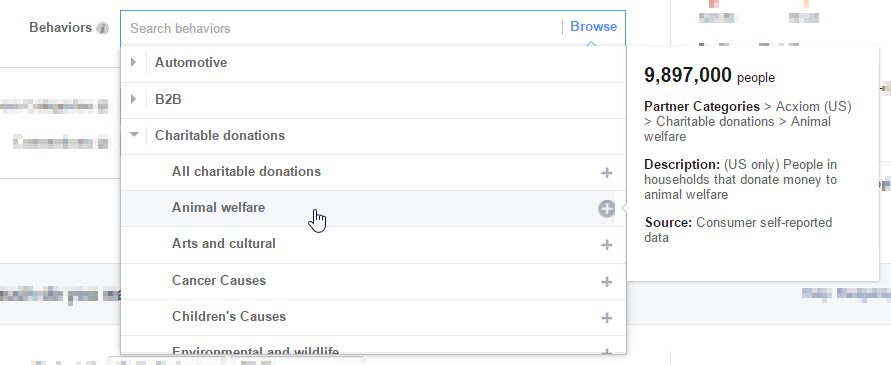
Most of what you'll find under the Behaviors targeting category is actually third party data from Acxiom, Datalogix, and Epsilon. You can either search for a Behavior by typing, or click the box to start browsing. Hovering on categories will give you a more in-depth description, as well as the data source:
facebook-third-party-data-providers-behaviors

#6 - There are four main ways to access Facebook ad management, with varying levels of difficulty.

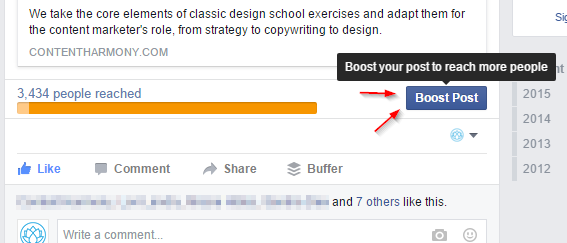
A - Boost Post
facebook-boost-post-button
(Found on posts and your business page)
The first is what most small business owners see — the Boost Post button. In the past, using the Boost Post button was generally overpriced and much like Adwords Express, you traded simplicity for limited control and a higher price. I haven't used the Boost Post button in a couple years, so that may no longer be the case, but regardless, I would suggest you spend 30 more minutes learning the next option instead.
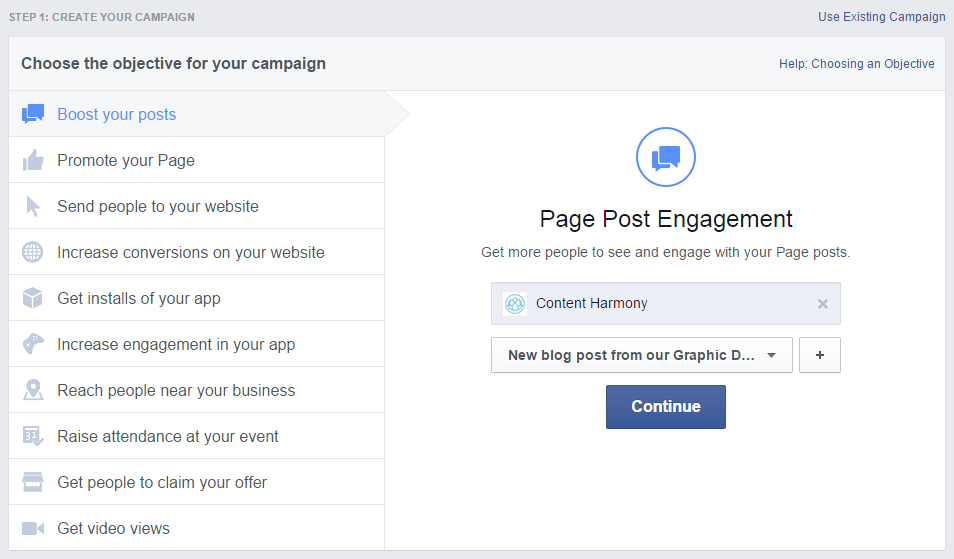
B - Facebook Ad Manager
facebook-ad-manager
Find it at: https://www.facebook.com/ads/manager/
The second is the normal ad editor. This interface is fairly straightforward to begin using and offers a lot of control over ads that you might run once in awhile. If you're just a casual Facebook advertiser, this offers the best combination of price, functionality, and ease-of-use.
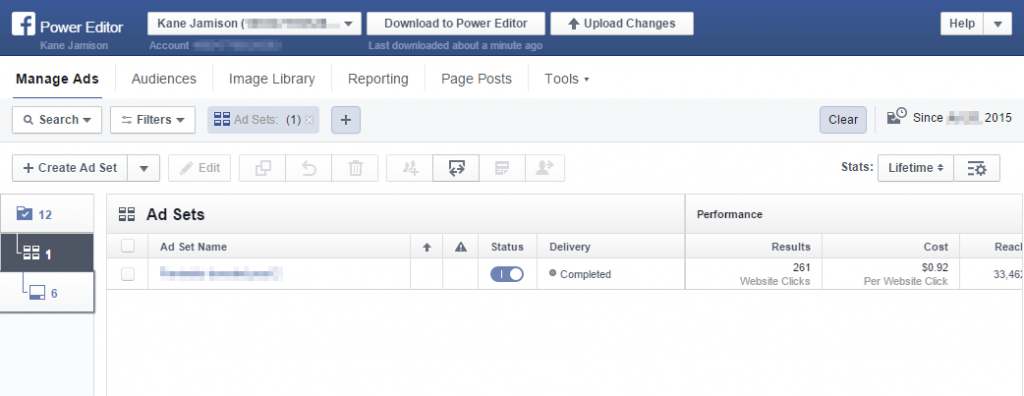
C - Facebook Power Editor
facebook-power-editor
Find it at: https://www.facebook.com/ads/manage/powereditor/
The third, and most advanced, is the Power Editor. Facebook Power Editor is not a good choice for beginner-level Facebook Advertisers and requires some training to get started with it.
However, for those willing to learn how to use it, there are a number of Power Editor features that are not available in the normal editor (like Import/Export so you can edit campaigns in a spreadsheet), and Power Editor users typically see new ad features months before the normal Ad Manager, likeInstagram Ads & Product Ads.
D - Facebook Advertising API & Facebook Ad Management Tools
The fourth level of accessing Facebook Ads would be through their advertising API. I haven't labeled this as advanced since I believe most advertisers using the API will be using third-party tools, like those found in the Facebook Partner Directory, rather than connecting to the API themselves. Like with Power Editor, API users often get advanced functionality earlier than normal ad editor users. There may be other benefits that I'm not aware of, so please feel free to mention those in the comments.

#7 - It's tempting to prefer desktop over mobile, but do your research first.

Even in the mobile-first marketing era that we live in, you might be surprised that 44% of Facebook users under age 35 only access Facebook from mobile devices. That's right — zero desktops or laptops in the past 30 days.
Regardless of the age or demographics of the audience you're targeting, don't assume that they're scanning through a laptop Facebook feed just because you're on a laptop all day while editing ads.
The vast majority of Facebook users are on mobile apps, and many of your ad sets may never get a click from desktop users.
2015-04-15 20_36_01-Audience Insights -18-35 versus average user by device
To get a better idea of your audience's device habits, take a look at the Audience Insights tool to gather market research, and use the ad builder tool to get a better estimate size of a more defined audience.

#8 - Get your pixels straight before you start running ads.

Facebook offers a variety of functions that require tracking pixels to be added to your website. The most common examples include building Custom Audiences to retarget users who have visited your website, tracking conversions from users who have seen your Facebook ads, and even using conversion pixels to stop showing ads to users who have already converted.
Recently, Facebook has released "one pixel to rule them all" simply called the Facebook Pixel, but we weren't always so lucky, and there are still some single-purpose pixels in the editor that you'll find marked as "(Old)." Make sure you install the new one, which is multipurpose and loads faster, and go through the process of upgrading any old pixels you currently have installed on your site.
An example of the Facebook Pixel code, found in Facebook's documentation. The red section 2 is the Facebook Pixel code, and the green section 3 is event code that needs to be customized, similar to Google Analytics' event and e-commerce tracking features.


#9 - Segment your creative!

Make sure the creative imagery and copy is tightly targeted to your audience. Instead of targeting an audience of 2,000,000 people, find a way to break them into smaller, more specific groups, and show them customized copy and graphics that will appeal to them.
For example, let's say you're advertising in the sporting goods market and your biggest audiences are runners and cyclists. One approach would be to show generic outdoorsy sports photography to both groups. But, in my experience, you'll probably have better luck by running separate ads with product photography highlighting each group individually.
learning-facebook-ads-segment-your-creative
A cyclist won't care about a photo of a runner, and the skateboarder wouldn't care about photos of a rock climber, so why would you show them the same ad?

#10 - Start using good naming conventions now.

In the beginning, it's easy to start using the generic names that Facebook autogenerates for campaigns, audiences, and other groupings. But, fast forward a couple years (and a couple of new ad managers or agency staffers), and things can get a little confusing.
Best practices are to start a naming convention now. Here's an example of how I might set up naming conventions for an auto dealership covering campaigns, ad sets, and audiences:

Campaign Menu Showing Multiple Clients:

Syntax:
  • "Client Name - Year-Month - Campaign Name"
Campaign Examples:
  • "Acme Auto Sales - 2015-10 - Fall Football Test Drive Promos"
  • "Acme Auto Sales - 2015-11 - November Charity/Giving Back Awareness"

Ad Set Within a Campaign:

Syntax:
(Note: This will vary a lot between campaigns — what's important is to customize and standardize it for your team and clients.)
  • "Campaign Title - Modifier 1 (eg Ad variation) - Modifier 2 (eg Location)"
Ad Set Examples:
  • "Fall Football Test Drive - Toyota Prius Kids Ad - Seattle"
  • "Fall Football Test Drive - Toyota Prius Pets Ad - Seattle"
  • "Fall Football Test Drive - Toyota Prius Kids Ad - Portland"
  • "Fall Football Test Drive - Toyota Prius Pets Ad - Portland"

Custom / Saved / Lookalike Audiences:

Syntax:
(Note: This will vary a lot between campaigns — what's important is to customize and standardize it for your team and clients.)
  • "Client Name - Custom/Lookalike/Saved - Primary Description - Modifiers"
Audience Examples:
  • "Acme Auto Sales - Custom - Moms - Yoga Fans"
  • "Acme Auto Sales - Custom - Moms - Dog & Kids"
  • "Acme Auto Sales - Custom - Sports Fans - Seahawks Fans"
  • "Acme Auto Sales - Custom - Sports Fans - Sounders Fans"
  • "Acme Auto Sales - Lookalike - Test Drive Conversions - Hybrids"
  • "Acme Auto Sales - Lookalike - Test Drive Conversions - Pickups"
When you take the time to set these up and maintain them, it makes life easier — especially when you're running ads for 20 clients or juggling dozens of customer segments.

Add your Facebook Ads tips to the comments!

Are You a Facebook Ads Veteran?
Please take the time to share a tip in the comments for anyone else still learning Facebook Ads.
Still Learning Facebook Advertising?
Let us know in the comments what questions you have!
To view the original article Click Here