Showing posts with label conversion optimization. Show all posts

Wednesday, 2 March 2016

The Marriage Between Conversion Optimization & SEO

marriage-marry-wedding-ring-ss-1920
As SEOs, our job is to increase the amount of qualified traffic to clients’ brands with the intention of having end users buy something, fill out a form, download a brochure or perform other actions on a site.
While improving traffic is great, it doesn’t necessarily result in more sales. So how do we actually get our clients more business through organic search? The answer is quite simple: conversion optimization.
Conversion optimization is the most powerful way to improve your clients’ revenue and conversions from end users. We can optimize every element of a site (e.g., technical, links, on-page, social and so on), but if users don’t convert, our efforts toward driving qualified traffic through organic search are not as valuable (unless traffic is your main KPI).
There is an extremely close correlation between SEO and conversion optimization. Therefore, the two must work together to turn visitors into customers.

How Do We Improve Conversion Through SEO?

This is the million-dollar question that a lot of us scratch our heads about. However, there are some things you should do to improve conversions through organic search.
Simply stated, it’s all about intent. Avinash Kaushik, Google’s Digital Marketing evangelist, came up with See-Think-Do: A Content, Marketing, Measurement Business Framework, a framework that categorizes users into different consideration stages based on intent.
See refers to your largest potential audience. Think is the audience “delineated by even the slightest amount of intent.” Do is the consideration stage for users who are actually looking to buy something.
Understanding and making sure you have the right content based on intent at all stages of the user journey can greatly improve your conversion rates. If you serve end users with something that they need in “the moment” — whether they are researching something, thinking about doing something or looking to purchase something — your chances of improving conversions will greatly increase.
Another way to increase conversions from SEO is to look at user behavior and work very closely with your analytics team to uncover why users are not converting.
Numbers don’t lie. Take a look at your analytics and see where users are bouncing at various landing pages on your site. Also, consider answering the following questions from an end-user perspective.
  • Is your site easy to navigate?
  • Do you use simple call-to-action statements?
  • Does your site have a one-step conversion process that makes it easy for end users to reach the ultimate end goal (e.g., a brochure download or purchase)?
  • Does your page load fast enough, and is your site mobile-friendly?
  • Does your site have content that meets the needs of end users, and is your content valuable?
If the answer to any of those questions is “no,” you need to take a closer look at your website and content strategy and make some changes.

Where Are Your Users Going? What Are They Doing On Your Site?

There are a number of different analytics tools, among them Crazy Egg, that will provide insights from a heat map on where users are clicking on your site.
If you determine that users are clicking on a certain part of your landing pages instead of your call-to-action triggers, make changes and keep testing until you come closer to reaching your conversion goals.
Of course, you should always test different landing pages and elements of your site using A/B and multivariate testing. There are a number of different tools, like Optimzely, that can help you determine what works best for your target audience.

What Are Users Saying?

Another way to find out why your users are not converting is to ask them by conducting surveys using different survey platforms and by conducting usability tests with tools like Clicktale.
This will enable you to find insights into what challenges users face when navigating through your site and find out why they don’t convert.

Final Thoughts

Conversion optimization and SEO are joined at the hip. SEOs must focus on increasing conversions when delivering qualified traffic to their clients’ websites.
In order to do that, we must make sure all of our clients have sound content strategies based on intent at all stages of the user journey and moment. Then we must work closely with the analytics team and review data, taking the necessary steps to find out why users are not converting and turn them into customers.
To view the original article Click Here

Thursday, 23 July 2015

6 Huge Marketing Pivots You Might Have To Make In The Next 12 Months

boss-management-meeting-ss-1920
At the beginning of each new year, you see a bunch of articles on marketing “trends” for the upcoming year — things that are supposedly changing that you have to know about.
These articles are important, which is why I’ve written a few myself. Even though they’re significant, we shouldn’t wait until January 1 to assess and respond to shifts in the marketing landscape.
The time to adapt is now — at the very time you recognize the changes. I’ve written this article because change is going on right now, and you need to know about it.
The first step is awareness. The second step is action. During the course of the next year, you should give serious attention to making the following marketing shifts. Doing so could save your business from decline or boost you to a new level of power and success.

1. Fire Your SEO Agency

Search Engine Optimization (SEO) is not dead, despite what some pundits may proclaim. SEO is changing. 
It is critical that every marketer be aware of what the SEO changes are and how they affect the marketing landscape. Unfortunately, some marketers conflate change withdeath, and they tell the world about it. And there are many SEO practitioners who insist on doing things the old way, even though the old way is extremely risky.
This is why you might need to fire your SEO agency — if they’re doing things the old way.
Here are the telltale signs that your SEO agency might be hurting rather than helping your business (I’ve explained these points in depth in an article on Search Engine Land.).
• Your SEO agency is doing things on your behalf, but they don’t explainwhat it is or how they’re doing it. When an SEO agency is transparent about their process and practices, they earn your trust. When they refuse to disclose their techniques and practices, they are suspect.
• Your link profile begins to gain more harmful backlinks. You should bemonitoring your link profile. If you notice an increase in the number of low-quality links, you have every right to question your SEO agency about it.
• The SEO agency doesn’t inform you about algorithm changes. The agency must stay up-to-date on Google’s algorithm changes. If your SEO agency doesn’t take the effort to tell you about PenguinPandaPigeon, or Google’s mobile-friendly algorithm, then they’re not serving you as they should be.
• They don’t give you data. SEO is all about the data. You should expect your agency to provide an accurate way for you to measure your SERP rankings, traffic, and other SEO KPIs.
• They don’t provide strategy. Some SEO agencies and individuals simply work through a prefabricated task list of things to do on your website. This may look and feel like SEO, but it’s not the most effective way of doing things.
Why not? Because SEO is a strategy, not a list of techniques. Optimization starts with uncovering the problems and then developing solutions. Anything short of this is a waste of time and money.
• They do just one thing. “SEO” has become a blanket term for “digital marketing.” An “SEO agency” may concentrate on creating content. Or they may employ a team of SEO-savvy developers who can remediate technical elements of your site’s SEO.
There are many facets of SEO, and the company that does all of them well is rare. Seek out agencies that can provide a breadth of SEO strategy for you, not merely work on a single, isolated component of SEO.
Here’s the bottom line: SEO is changing. You’ve got to change with it. Don’t rely on outdated tricks or old-school techniques to gain traction in the SERPs. If you’re going to “do SEO,” do it right.
Keep up with current standards, and make sure your service providers do the same.

2. Quit Link Building

I could have bundled this point with the previous one, but I want to make it a bigger deal. It deserves its own section.
“Link building” is one of those polarizing terms. When you hear it, you might recoil with horror or salivate with eagerness, depending on your experience.
To some, link building is a black-hat technique that will get your site penalized. To others, link building is nothing more than the tame and reputable practice of content marketing.
I want to warn against the link building of yesteryear. Often, such link building included indiscriminately submitting your site to directories or duplicating articles on content farms with links back to your site. These methods had their heyday, but now, they will earn you penalties, not higher ranking.
In lieu of old-school techniques, build your knowledge on the new era of link building, and discover how to gain legitimate traffic and rankingLearn how, and then get started.

3. Ignore The Best Practices

What’s the worst thing that could happen with your online presence? A PR disaster? A social media fiasco? A site penalty? A traffic decline?
There are plenty of scary things that could jeapordize your digital efforts, but here’s one of the worst things that you could do: Blindly follow someone else’s “best practices.”
Business professionals glibly spew out “best practices,” assuming and believing that these practices will grow a business. But who decided which practices are best? Who says that they will work for your business? What benchmarks are there for success? How do you prove “bestness?”
“Best practices” may ignore the most fundamental rule of marketing: Know your customer. Someone’s arbitrary best practice might actually be the worst practice for your particular website, industry, niche and audience.
The fact is, there are no such things as universal best practices. There are only best practices for your website.
Where do these “best practices” come from?
  • Articles on popular websites. Don’t believe or act on everything you read.
  • List-based advice that tells you about what you must do — e.g., “15 Things Guaranteed To Boost Conversions.”
  • Carte blanche recommendations drawn from some other industry or niche.
I encourage you to read widely and test eagerly. Don’t blindly follow best practices simply because they are labeled as such.
Stop trying all the best practices. What works for one business might not work for yours. Feel free to ignore the best practices and act based on your own data.

4. Do Conversion Optimization

If you’re unaware of conversion rate optimization (CRO), or if you haven’t yet used conversion optimization on your website, now is the time to start.
Most marketers have been slaving away on search optimization, thinking that more traffic will bring more revenue. Conversion optimization says, “Let’s take that traffic that you already have and make more conversions.”
Search traffic doesn’t create customers. Conversion optimization promises to turn traffic into conversions.
How does it work? It all comes down to testing. Testing compares two versions of a website, then implements the one that has higher conversions. By testing consistently, intentionally and carefully, CROs gradually lift a website’s conversion rate higher.
Why is conversion rate optimization growing right now? Because the cost of marketing is rising.
Most marketing methods are labor-intensive. Just think about how much time and effort it takes to write an article or develop an infographic. Conversion rate optimization isn’t cheap, of course, but it generally produces a higher ROI than other marketing methods.

5. Build Your Personal Brand

In the minds of some people, personal branding is nothing more than “thought leadership,” warmed up in the microwave and served under a different name.
Thought leadership is not personal branding. True, you may develop some level of thought leadership (whatever that is) from your personal branding efforts. But they aren’t the same thing.
Personal branding is foundational. It is the basis of your digital identity. Personal branding involves developing your online persona. When you do so thoroughly and effectively, it catapults you from workforce anonymity to niche-based popularity.
No longer are you simply a contributor or a worker — a producer without a voice. Instead, you become a person with a platform. You’re able to leverage the force of your brand to attract business, form relationships, strengthen a business brand, shape the industry, and make stuff happen.
Over the past decade, I’ve been blown away by the sheer power that personal branding can bring. My own personal brand, even though it’s relatively small compared with some others, has funneled millions of dollars into my various businesses.
Businesses ebb and flow, launch and fail, build and rebuild. But you — you’re the one who controls what you do, how do you it, and what happens. If you have a strong personal brand, you will be successful for the long term.

6. Pretend Google Doesn’t Exist

Eventually, we’re going to reach a point where search is driven less by the engines (I’m looking at you, Google.) and more by social interaction.
Wait a second. Maybe we’re already seeing the decline. The mighty Google itself shows signs of a gradual long-term decline:
image00
It’s not as if Google is losing market share to a competitor. All the major search engines are slipping.
image01
What’s the story behind the data? It’s a trend, and it suggests a pivot you should make. The trend is that search engines are declining. The pivot you should make is to explore alternative marketing channels.
Pretending Google doesn’t exist is hard. Google is gargantuan. However, there are other methods of marketing that sidestep its enormity. Find those methods — the ones that work for your niche and your audience — and you’ll find yourself on top by the time we reach the tipping point.

Conclusion

The best marketers are the ones who can pivot, switch tactics, change methods, and adapt to an undulating landscape.
How does someone do this? It comes down to education. If you can educate yourself about how and where the industry is changing, then you will be able to make the personal and professional changes that will earn success.
The question is not whether or not marketing is changing. It is. That’s a fact. The question is, What is changing? More importantly, the question you ought to be asking is,How can I adapt to the changes?
What do think? What’s changing in marketing, and what are you doing to adapt?
To view the original article Click Here

Sunday, 19 July 2015

7 Things You Should Learn From The Customer Who Doesn’t Convert

It’s the boogeyman of Internet marketing, the nemesis of conversion optimizers, and the headache of Internet sales. We fight it tooth and nail. We test incessantly. We optimize, reoptimize, and re-reoptimize, trying to defeat the rising tide of abandonments.
But for all our frenetic battles against shopping cart abandonment, could it be that we’re missing some very valuable information?
I think we are. Shopping cart abandonment is not the pure and unadulterated evil that we think it is. It is an opportunity to learn.
Here’s what we should learn from the customers who choose not to buy. This isn’t an article on techniques to obliterate abandonment. It’s not even about abandonment per se. It’s about all your website traffic and those pesky customers who don’t seem to convert.
Is there anything we can learn from them?

1. Learn about the buy cycle.

One reason why customers don’t convert is because they’re not at the right point in the buy cycle.
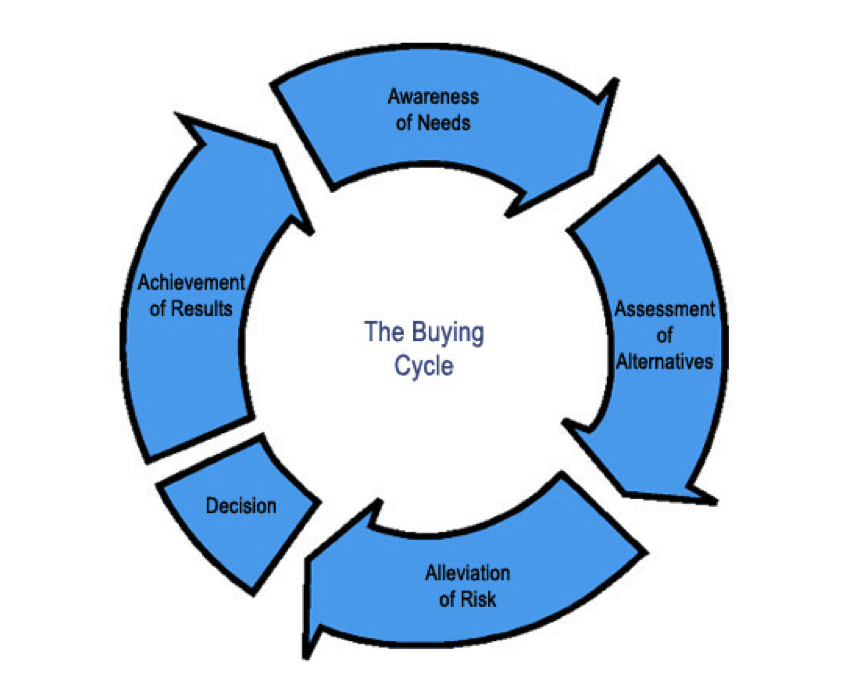
What’s the buy cycle you ask? It’s not a misspelling of a two-wheeled transportation device. The more clarifying term, “customer buying cycle,” describes the process that a customer takes when they are considering a purchase.
Here it is in all its visual glory.
the buying cycle
There are five basic stages to the customer’s buying cycle. I made them all start with c- and sound the same:
  1. Conception: The customer is aware that she needs or wants something.
  2. Comparison: The customer considers the various places to obtain this product or service
  3. Consideration: The customer evaluates the best and safest decision for her particular needs and situation.
  4. Conversion: BUY! The customer makes the decision to act on this decision.
  5. Continuation: The customer likes the experience, and decides to do it again sometime.
The reality of a customer buying cycle is that a customer can only be at one point on the cycle at a time. Accepting this fact is a basic realization of non-converting customers. Why didn’t they convert? Because they were in the conception, comparison, or consideration phase, that’s why.
That’s not bad. It just is.
Understanding the buy cycle is a key lesson, because you realize that the “lost” conversion may not be a lost conversion at all. It’s a future conversion from a customer who was in the conception phase of the buy cycle.
Obviously, not everyone is going to buy from your website the first time around. You wouldn’t want that anyway, because that would mean that you would have 1) far fewer return visitors, and 2) fewer future conversions.
The cycle, like most other life cycles, seems a little sad at first. But once you realize, hey, it’s a cycle, then you are able to deal with your grief and make more confident marketing decisions.

2. Learn that higher traffic does not equal higher sales.

Here is a saga that many SEOs and digital marketers have experienced.
The director of marketing says, “We need more traffic!” SEOs and writers start to hustle, working their magic and mixing their potions. Traffic starts to climb. KPIs are achieved. Goals are met.
And what happens? Sales plateau.
Why is this the case? Higher traffic does not equal higher sales. Normally, the more traffic you get, the more you tend to sell. In some situations, however, the increasing traffic is driving traffic that is not prepared to convert.
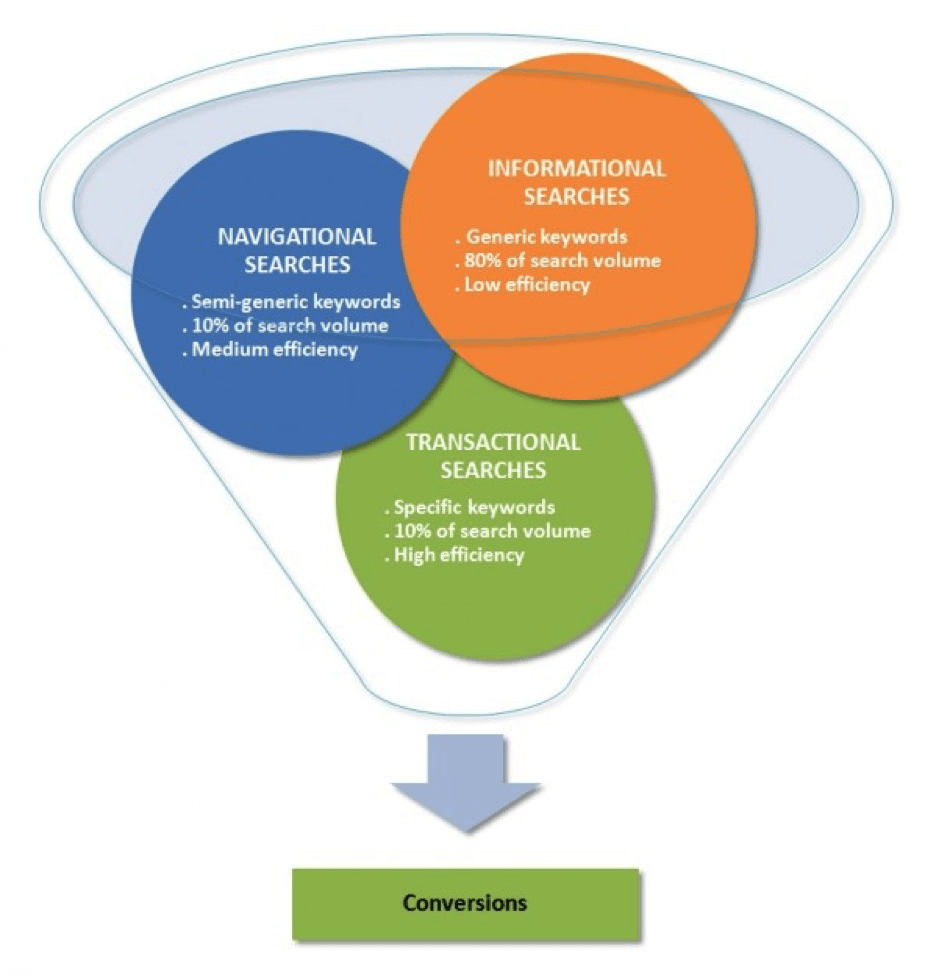
Look at the diagram below. There are three main types of searches, navigational, informational and transactional. If you increase traffic, you may be boosting navigational and informational searches.
types of searches
Source
Informational queries and the resulting traffic is precisely the type of traffic that is often produced by greater content marketing efforts. Since the nature of the queries is informational, it is likely that it may not drive high-converting traffic.
It’s important to realize that content marketing for all its effectiveness is not a guaranteed route to higher sales. Content marketing agrees to meet customers on their own turf, in their own time, and on their own terms.
More traffic is great. But it just might not translate into immediate sales.

3. Learn that there is such a thing as search query intent.

In keeping with the point above, we need to realize the truth about search queries.Not all queries are created equal. Every query has intent, and that intent impacts whether or not the customer who lands on your website is going to buy or not.
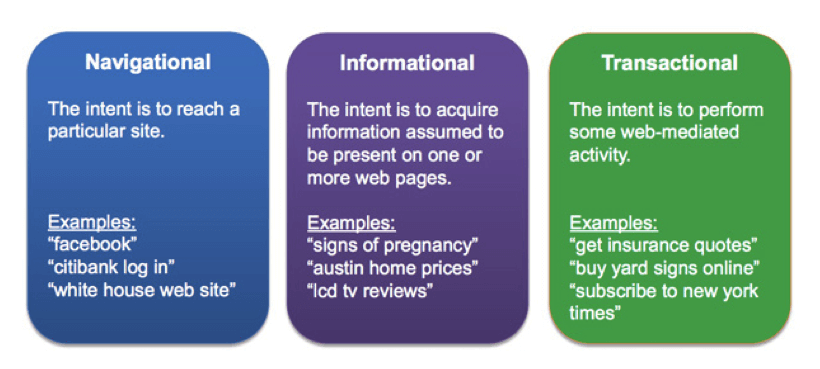
All the search traffic that is rushing into your funnel can be categorized in one of three ways:
  1. Transactional Queries – People who want to buy. They are looking to make a purchase right away or very soon. Many of these searchers will convert.
  2. Navigational Queries – People who are trying to find your website. They may or may not be ready to buy. More often than not, they’re doing pre-purchase research.
  3. Informational Queries – People who are looking for information. These searchers are the least likely to convert right away, but they comprise the largest percentage of website traffic.
navigational informational transactional
Source
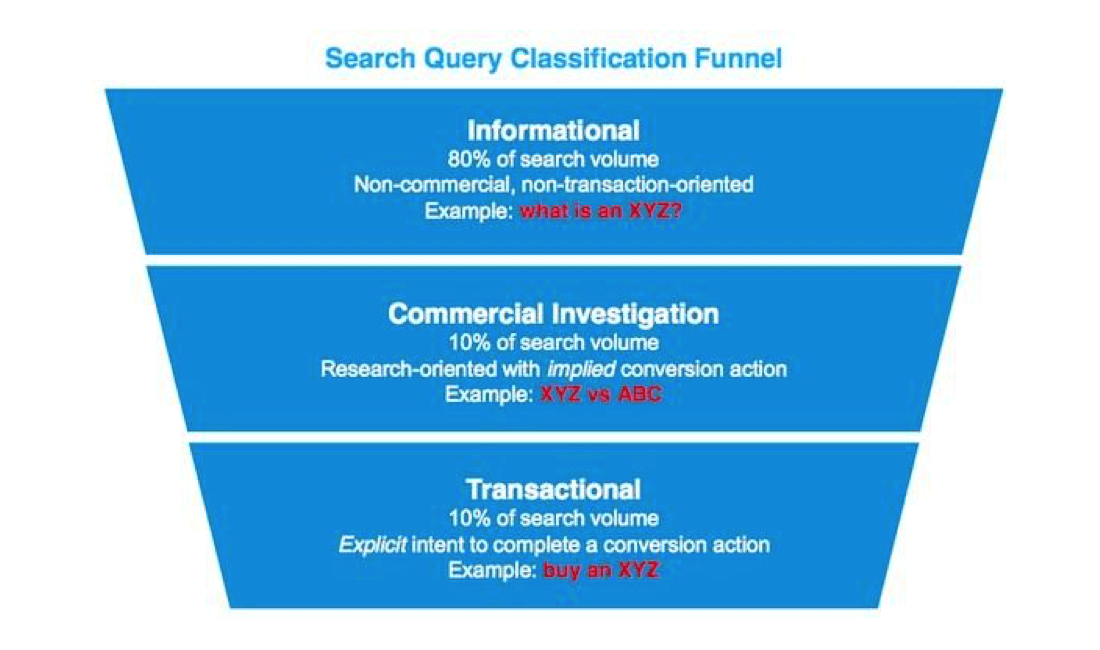
Brightedge estimates that a whopping 80% of searchers will land on your website with a desire to get information, not to buy. Only 10% are looking to buy, and therefore likely to convert.
search query classification funnel
Source
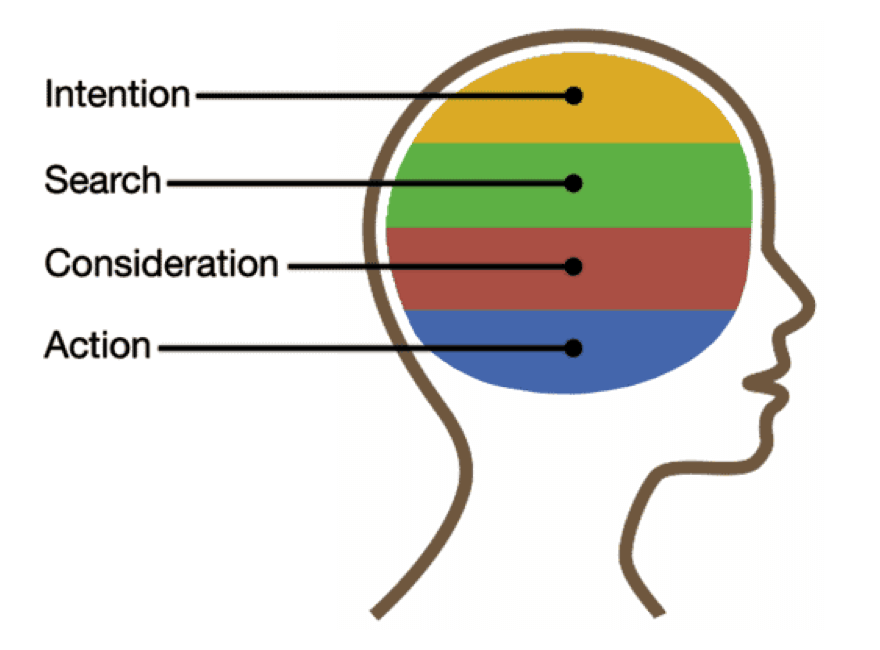
Every searcher starts with intent. This intent, one of the three above, will cause them to act in different ways when they encounter your website.
intention search consideration action
Source
The better you understand the different types of queries, the better you’ll be able to attract just the kind of search traffic that is most likely to convert.

4. Learn that conversion optimization is important.

All these points lead to an overarching lesson: Conversion optimization is really important.
Why? Because conversion optimization looks at the customer who doesn’t convert, and says, “How can we make you more likely to buy?”
Rather than rely on guesswork, conversion optimization begins a rigorous process of research, analysis, and optimization to turn that non-converting traffic into major conversion improvements.
Conversion optimization techniques “improve the effectiveness of your site to boost sales with the same amount of traffic you’re currently receiving.”
You don’t need more traffic to boost your sales. You just need to improve your website.
How does it work? By testing changes. Normally, conversion rate optimizers (CROs) test versions of a website, compare them, and use the one that converts higher.
It’s A/B testing, and it’s insanely effective.
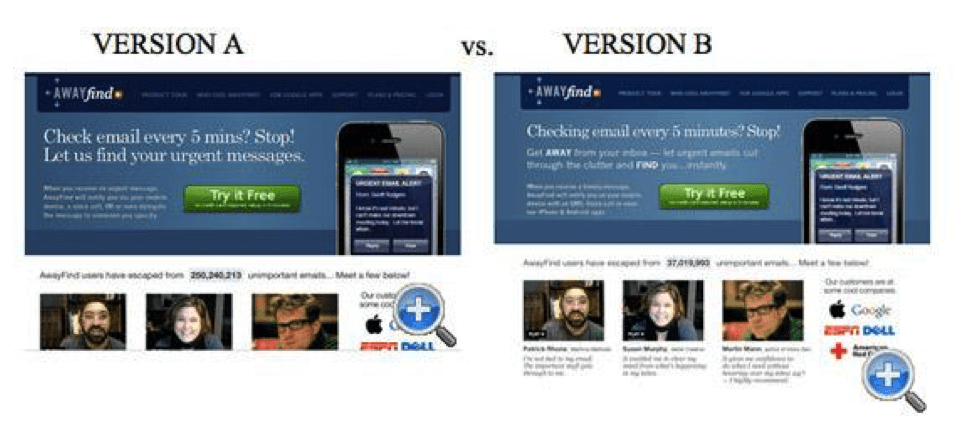
A/B testing, also known as split testing, can produce shocking results. For example, a little headline change pictured below, Version B, boosted conversions by 38%.
versiona versionb
Source
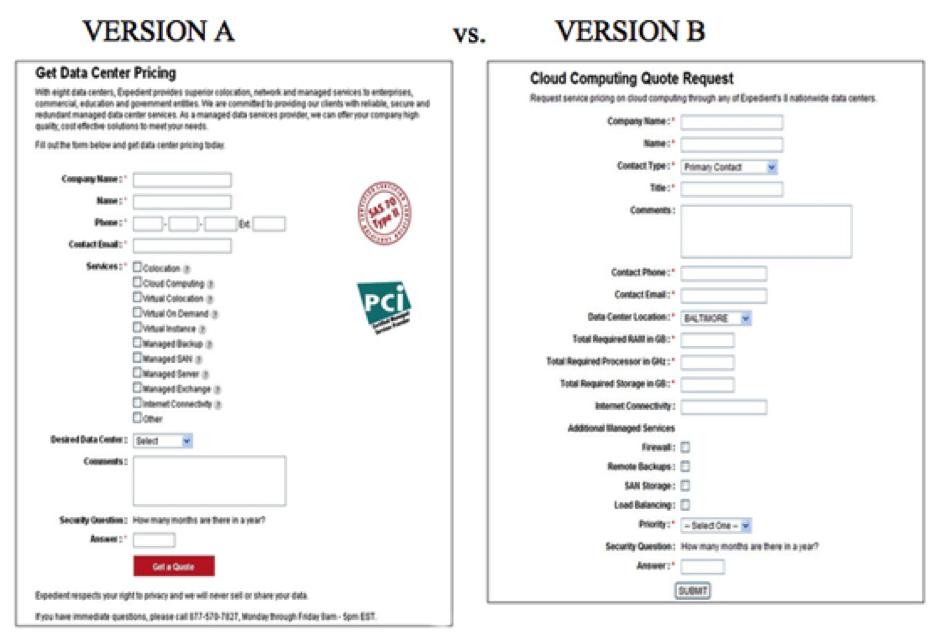
A new signup form increased this business’s leads by 368%.
versiona versionb 2
Source
Conversion optimization is the path to higher sales.
Sure, the non-converting customer is no fun. But moving the needle on conversion rates though some patient testing is amazing.

5. Learn more about your customers.

When you discover that your “customers” aren’t really customers after all, you start to wonder, what are they doing? That’s a great question. But it begs a deeper question: Who are my customers anyway?
One of the most effective methods of gaining more sales is understanding who your customers are. How do you do this?
You read their minds.
Reading your customer’s minds isn’t as sinister as it sounds. You can do this effectively, safely, and with zero hypnosis experience. It’s called the persona.
A persona in commerce is defined as “the ideal visitor you want to have take a specific action on your site.” The most popular way for digital marketers to shape personas is by using demographic characteristics such as age, income, location, gender, etc.
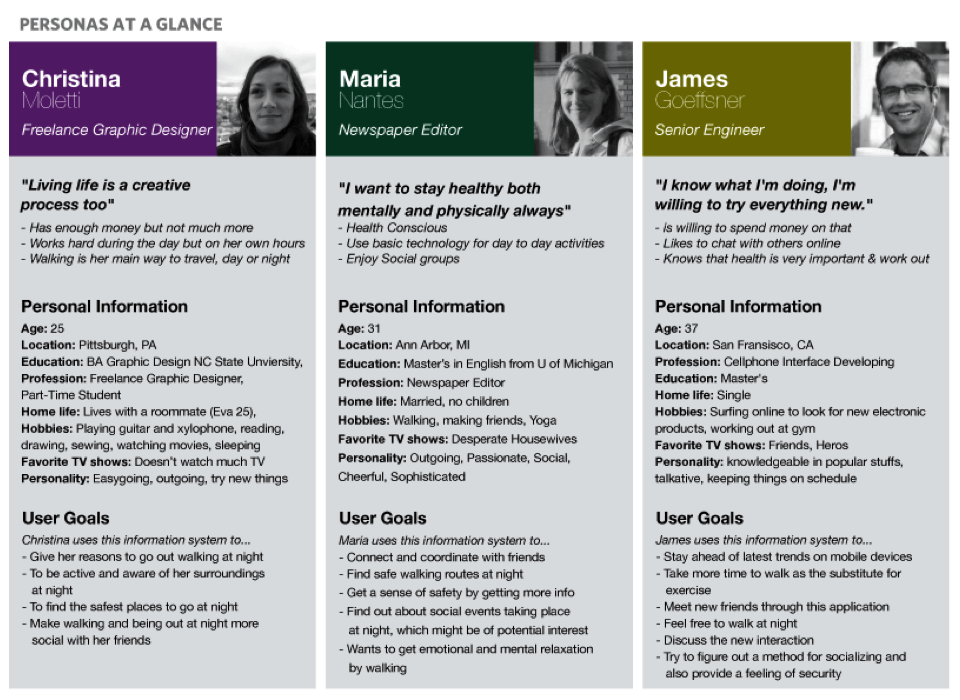
Here are some example personas.
personas at a glance
Look at how those personas define the ideal customer. They are focused. They’re not going after “men, aged 35-45.” They’re going after James, 37 who lives in San Francisco, and likes to watch Friends.
A persona needs to be specific because your product is specific. A persona needs to be specific, because you aren’t trying to sell to a mass of incoming search traffic. You’re trying to sell a product to the customer who needs and wants it.
Your persona can be as detailed and as visual as you want. This example persona uses a problem statement to define why the customer is visiting the site. The problem statement is “I’m just not sure what I need to know to get my first mortgage. How do I know I made the right choice?”
persona detail
This persona problem statement is helpful, because it allows marketers to hone in directly on solving the customer’s problems.
Different analytics platforms including Google Analytics can help you understand your customer demographics in order to make better marketing decisions.

6. Learn more about your competitors.

If your customers don’t convert on your website, then whose site are they converting on?
It’s time to scope out the competition. Chances are, you probably know who your competitors are. But do you know why your potential customers might be defecting to them?
What I recommend is spying on your competition, legally of course. You can use the same tools that you use to analyze your own website. Most of them are free. These tools and techniques can furnish you with a huge amount of information that puts you in complete control of the competition landscape.
The more you know about your competition, the better you can respond.

7. Learn that testing is important.

This is one of the most obvious things to learn from the customers who don’t convert: Testing is important.
Split testing is easily one of the most powerful techniques ever to happen to digital marketing. Although I’ve already spent some time drooling over it in this article, I want to point out here that testing indicates exactly what’s wrong with your website dand what fixes it.
The moment you run a test, identify a winning variable, and make a permanent change, things happen. You realize, “Wow! This is powerful stuff!”

Conclusion

If your customers aren’t converting, don’t panic. It’s typical. Instead of responding with frustration, dive in deeper. Discover the information that will make you a more informed and effective marketer.
Non-converting customers are one of the most valuable assets, because they can tell you what’s not working and how to fix it.
What have you learned from customers who don’t convert?
To view the original article Click Here

Tuesday, 14 July 2015

Optimizing the Free Trial Signup – How Flow Got a 17% Lift [Case Study]


totango
Free trials are to SaaS applications as keys are to locks. The right one gets you in right away, but sometimes you have to try a few before you find the one that works.
For many SaaS and cloud service providers, 100% of customers sign up for a free trial as part of the sales process — yet one study suggested that even the best-in-class of SaaS marketers were losing a staggering 75% of those who signed up for a free trial before they entered their credit card details.

Why the gap between signup and conversion? Let me take a guess: it’s in the quality of your leads and the signup process you’re guiding them through.

Your free trial signups are hardly equal

For the purpose of this post, we’re assuming two things: your product is great (it is, right?) and you’re executing targeted marketing campaigns that are garnering traffic. With that in mind, know this first: the user-commitment levels you find in the people who’ve completed the initial sign up for a free trial will vastly vary in range from “tire kickers” to “true evaluators.” The chart below, a benchmark study done by Totango, shows the typical ratio of tire kickers to true evaluators:
totango

As you can probably assume, it’s the true evaluators that show the greatest conversion rates. With that in mind, understanding the commitment levels of the people in your signup funnel is key to building out a lead generation model that increases the number of true evaluators in your signup pool in the first place.

How the signup funnel works

The basic free trial funnel can be thought of in four steps:
free trial funnel

We’d all rather shoot fish in a barrel when it comes to customer conversion. The first step in getting there is attracting more qualified leads. The strongest conversions have started even before a customer lands on your site, through strategic SEO practices and targeted inbound marketing.
With a goal of attracting a greater number of true evaluators, gathering data on who’s converted in the past and charting their entire purchase process gives you a foundation to work from.
Here are a few questions you should be able to answer based on the information gathered in your sign up form and/or via analytics:
  1. What was the traffic source for converted users?
  2. What demographics data can you extrapolate from your paying users?
  3. Is there an industry or job title (i.e. Manager, IT, Marketing) that is converting at a much higher rate? Is there an industry or role you are targeting that isn’t converting to your expectations?
  4. How many pages did converted users view before signing up?
Once you’ve built up at least one profile of converted users, you can then work to improve the lead gen process and implement A/B tests on signup forms and processes to: 1) attract and onboard more true evaluators, and 2) convert a higher number of them.

Who’s coming to your site?

One of the most important rules of any salesperson or marketer is know your audience. Gathering key data, and building goals around it, can prove incredibly valuable in optimizing the signup process if done properly.
An important characteristic of your audience will be the traffic source: direct, organic, referral or social. Your converted customer will inevitably pass through one (or more) of these sources with varying degrees of success. If you aren’t building landing pages for each,you are missing out on an opportunity to increase your conversions from the outset, as well as make tracking more manageable.
Another way to accurately track visitor source is by asking users to submit certain info in the free signup form. (i.e. How did you find us?) There are pros and cons to this approach. On one hand, you’re likely to get an accurate answer. On the other hand, it goes against the idea of frictionless signups. (More on that, later.)
Depending on your cost per lead acquisition, as well as conversion rates per traffic source, you’ll want to spend time A/B testing the amount of information asked for, the way it’s asked, and the order it’s asked in (among other things), while prioritizing specific sources.
A side note: your paid traffic should be highly qualified (assuming you are employing a proper PPC campaign), but can also result in a potentially high customer acquisition cost (CAC). If you’re finding the leads unqualified and tough to convert, it’s likely you’re either using the wrong keywords or need to completely re-evaluate your campaign.

Using past data to qualify leads

Using a comprehensive analytics platform is key to gathering and interpreting data to create, revise, and test both your lead gen and signup funnel. Be it Google Analytics (by far the most popular analytics provider), Adobe, Kiss, Moz, Marketo, Hubspot, Mixpanel, or any other options, the software is only as useful as you make it.
qualifying leads

KISSmetrics is a very powerful tool to experiment with, and can provide insights into individual users.
Once you’ve established measurable targets you’d like to work toward, you can create goals in your analytics to track what you’ve designated as key data points. (Check out this post on how to set up goals and conversion tracking in Google Analytics.)
In the initial signup phase, you can use a tool like Pew (see image below) to explore socio-demographics data from specific social or referral sources. During the signup process itself, tools like Mixpanel and CrazyEgg offer event/action-based tracking and heatmap/eye-tracking tools, respectively, so you can better understand where you’re losing customers in the process.
social networking demographics

Once you’ve converted a sample size of converted users, a new set of data can be drawn to analyze the difference between those who convert and those who drop off. Consider common traits amongst those who convert:
  • Do they mostly come from a specific traffic source? What keywords? What content?
  • How many emails did they receive? Open?
  • Did they have a personalized demo?
  • If you collected data in the free trial form, what data do they share that seems to have similarities?
  • How many page views were required to get them to convert?
  • What messaging may have triggered the conversion?
Once you have the data, you can track your leads through the process from lead to free trial to paying customer and look for improvements through A/B testing at each step of the way, from landing pages to calls to action and emails to direct support.

The complexity of your service makes a difference

When it comes to selling SaaS solutions, there are several factors regarding the software itself and your brand that impact the signup process. The complexity of the SaaS and level of service required, for example, is a huge factor. Consider the following:
  • Do users require training or can they use the software out of the box?
  • What level of financial commitment does buying your software require?
  • What industry are you operating in? Is there an inherent level of risk aversion within this industry?
  • Is your SaaS business-critical? Does your SaaS provide an immediate and direct impact on customer relationships (Salesforce)? Does it improve accounting processes (Freshbooks)? Or is it a “nice-to-have” (Buffer or Evernote)?
  • Does your brand have significant name recognition amongst potential users?
Each of these factors will determine the level of information and — for lack of a better term — hand-holding that’s needed in the signup process, ultimately either widening or narrowing your funnel. This will determine what kind of relationship you need to build and how narrow, top to bottom, your funnel will be.
A software with little complexity and a low price point will require less sales and service to onboard, allowing you to cast the net much wider at the top of your funnel. A high complexity, business-critical SaaS solution, on other hand, where the price model requires high service levels means your unqualified (organic) traffic will require a much higher degree of attention (and hand holding), and should therefore be more targeted.

The free trial signup process and how it influences conversions

With interested customers (from tire kickers to true evaluators) onboard, the focus shifts to the actual signup process. There are at least three steps I’ve identified to be crucial to gathering what’s needed, engaging the customer, and inspiring action. Only once you’ve solidified the necessary steps can you go about optimizing each one.
1. Information gathering. How much information do you request at the outset? This can range from a single-field form that requests an email address to a more detailed form that requires company, source, credit card info, and more.
Knowing that this is the first step for a potential customer once they’ve landed on your site, your goal here is to strike a balance between minimizing friction and collecting enough data to use later in customizing communications and tracking the conversion process.
The less fields, the better? Not always. Some may argue increased friction increases the quality of leads, balancing the ratio of true evaluators to tire kickers.
Consider this: one study suggests that free trial signups were more successful when credit card information was not required (10% of signups versus 2%). Seems predictable, yeah? Yet the same study found that 50% of people who enter a credit card in the free trial stage will convert to paying customers versus 15% when it’s not required. Suddenly your opinion might be swayed.
free trial a/b test results

The net result? End-to-end conversion came out ahead when credit card information was not required.
In another case study, Expedia removed just one field from its purchase form that was causing confusion, and therefore drop off — and that small change resulted in an extra $12M in profit year-over-year.
There’s no right or wrong answer — the key is testing to find what works. A workaround is to offer the option of social logins (sign in using networks such as Facebook, Google, or LinkedIn) and thereby skipping form friction. The jury is still out on which network is best for B2B versus B2C companies, but one thing’s certain: it’s still best to make this an option rather than a requirement, as some people will hesitate knowing their profile information will be shared.
2. Verify email. At the very least, you’ll be asking for the customer’s email address, adding a required verification step into the process.
3. Setting the user up for success. Consider what other crucial actions need to be taken to complete sign up and guarantee the best experience, thereby encouraging later conversion. In some cases, this might include building a profile. In others, it might include inviting team members. Still in others, it might include an intro to your SaaS solution (explainer videos and/or onboarding tools).
An important note here: true evaluators will likely have done their research on your service, so an “intro to your SaaS solution” may actually increase friction for the very group you’re optimizing for. With that in mind, offer the option to skip this step to get started right away — and make it prominent.

How we’ve optimized the free trial funnel at Flow

Once you’ve identified the process the customer needs to go through, it’s time to get to work optimizing each step of the way using the data you’ve collected. Let’s look at that in terms of what we do at Flow:
Step 1: Signup form
signup form

You can’t start a sign-up funnel without a sign-up form, and we know that our target market uses both options (Google authentication and email). As mentioned, it’s not yet clear which social login converts best for a B2B audience, but in the favor of keeping the signup form short, sweet, and to the point, we use just one social option — and avoid the credit card barrier.
Step 2: Verify email
verify email

Email verification (the above and below screenshots) may seem like unnecessary friction, but based on our pre-redesign completion rates, the risk associated with not verifying the identity of trial users outweighed our concern over increased friction. In the case of Flow, trial users have the ability to send other people invitations to our product and assign them tasks. Eliminating spammers and insincere tire kickers at this stage — i.e. someone posing as tim@apple.com — is well worth the risk of losing trial users by requiring verification.
confirm email

Step 3 – Intro to the SaaS solution
onboarding video

We know — based on our data — that 45% of visitors click to watch the video on our “intro to the SaaS” step. About half of those people watch the entire video. Despite potentially halving the conversion rate, we are adamant about including the video because seeing Flow in action gives a better understanding of how to use it in the trial period. It sets those users up for success, and a greater likelihood of conversion at the end of the line.
In optimizing this page, we shortened the copy to eliminate the potential for overwhelm, offered the option to skip it, and placed the CTA directly below the video.
Step 4 – Profile completion
profile completion

Based on a separate cohort analysis of what differentiates engaged users from those who try Flow for a day and never come back, we know that people are more likely to adopt Flow if they enter some professional and personal info (e.g., title, company, photo).
To optimize the page, we shortened the form by two fields, placed the CTA directly below it, and lightened up the copy in the photo box (who doesn’t love a good selfie?).
Step 5 – Team invites
saas referrals

Getting other team members to use Flow is critical to delivering on Flow’s value proposition — but we realize individual signups for free trials are common, so giving the option to skip this step is paramount. To optimize, we changed to a tab metaphor to toggle between email and Google+ invite options, changed the intimidating “Import Google Contacts” copy to “Select from Google Contacts”, and again placed the CTA prominently below the form.

Optimization for the win: the secrets of how we increased conversion by 17.3%

For the 30-day period prior to our design changes, the sign-up funnel completion rate was 55.31%:
a results

For the 29-day period following our design changes, the completion rate is 64.89%:
b results

The net increase in conversion is 17.3%.
As a small team, we had to choose between spending 2-3x as long building these changes into an A/B test or measuring any difference longitudinally (pre and post change). We decided on the latter due to constraints on time and resources. During the measured period, there were no changes in the type, source, or volume of traffic.

Our process for optimizing the sign-up funnel:

  1. Measure the step-by-step conversion rate in the sign-up funnel to understand (a) how the entire process is working and (b) where the opportunities exist for step-level improvements
  2. Gather on-page feedback about where each visitors clicks, how much she scrolls, where her mouse pauses, how much effort appears to go into completing forms, whether she struggles to find where to click
  3. Invite visitors to provide feedback about the sign-up process — immediately after they complete the funnel. Keep in mind that by doing so, you’re only getting feedback from people who are successful — so it’s somewhat self selecting (even still, we did hear some negative feedback). Also, you’re taking a risk that by asking people for feedback, you’re interrupting their desired goal, which in our case is to try the application. But it was more important to get the feedback for a short period of time than to worry about the impact on short-term conversion.
  4. For the entire process and for each step within, develop hypotheses about problems in the UI that are hindering people’s progress toward their goal.
  5. Work with a designer and copywriter to take what’s been learned and any theories about what needed to be addressed — and turn them into new designs. We make sure to draw a clear line between every design change and the data to which it’s targeted. Additional design “ideas” (which inevitably come up) are measured against what we learned during the data gathering process.
  6. We ranked the design fixes based on impact and effort required. Our timeline and available resources were limited so we had to be thoughtful about what to change.
  7. New designs are built, tested thoroughly, and then rolled out — all at once. Since we decided to run this “test” as a before/after comparison, we needed to turn off any campaigns well before the test begun and keep them off during the period following deployment of the new designs.
In terms of tools used (besides Flow — which we use to keep projects on track) we leaned heavily on the following tools during the optimization process:
  • Mixpanel: Used to capture the data for the various sign-up funnel steps.
  • Intercom: Used to acquire direct, qualitative feedback from visitors who just completed the funnel.
  • Inspectlet: Used to capture data (session recording, click maps, attention maps, scroll maps) on how visitors interact with the sign-up pages.

The bells and whistles

Keeping the process simple is key, but it shouldn’t be at the expense of customer satisfaction. Here are a few more tactics to consider in the plight to increase conversion after sign up:
  • Live chat. A form of active support, live chat opens the doors to increase questions, which furthers engagement. The focus should be on helpfulness, not sales.
  • Tutorials and FAQs. Onboarding tools make on-screen tutorials possible, while clever FAQs can answer questions and reduce hesitations.
  • Extended trials. Certain (qualified) clients just need that little extra. Look for customers who have actively used your SaaS during trial and are nearing the end to measure purchase intention and see if they’d like to explore the product more.
In any case of additions to the signup process, the key is to help, not hinder.

Keeping the magic alive

Both during and after the signup process, touchpoints are everything. Striking the balance between staying top of mind and being overaggressive is, of course, the goal.
Consider this: someone who actively uses your product past the first three days of the trial is four times more likely to convert.
So, when you notice that after two days into the trial the account is inactive, what are you doing to get the user to sign back in?
Implement triggered email marketing. Suppose your user signs up, goes through five page views, yet doesn’t complete an important task (such as uploading a piece of content or filling out an important form). There’s interest, but a nudge for completion might be necessary. Likewise, suppose your user signs up but 24 hours later, they haven’t yet logged in.
In both situations, an automated email system would trigger an email, of course targeted and worded accordingly, to gently nudge the customer towards a desired action. There is a lot to be done in this area to encourage engagement. Triggered emails can have a 152% increase in click through rates compared to ordinary emails. How many conversions is that to you?

Always be testing

Across all your touchpoints, A/B testing should be constant — with innovation and new ideas being constantly implemented. One step at a time, you can play with variables, testing to see which elicits higher response rates, and conversions, much like we did at each step of the signup process. Where can you start? Here are a few ideas:
  • Frequency of emails, and where they fall in the signup process.
  • Length of trials (one company argues that 99% of all SaaS should be providing 14 day trials, maximum).
  • Providing extensions to trials to increase conversions.
  • Offer users a discount if they provide their credit card before the trial is over. The logic is that there are certain customers who are unsure of making the purchase, and this could make it an easier decision.

Conclusion

There is no one-size-fits-all answer to guaranteeing signup success or conversion. It comes down to how much you’re paying attention to your customer during the lead generation process, how you’re actively encouraging them to move into your funnel, and the steps you have in place to push them toward conversion.
Formulate the goal, gather the data, test different variables, and more than anything, stay authentic to your brand.

To view the original article Click Here